The absolute Galois group of the rational number field is, of course, a central object in number theory. However, it is known to be deficient in some respects. In 1951, André Weil defined what came to be known as the Weil group. This is a topological group refining the Galois group: it surjects onto the absolute Galois group with nontrivial connected kernel. The Weil group provides an extension of the theory of Galois representations, allowing for a closer connection with automorphic forms.
In this course, I will explain that there remain further deficiencies of the Weil group, which must be corrected by a further refinement. Our motivation comes from cohomological considerations, and the refinement we discuss is homotopy-theoretic in nature and goes in an orthogonal direction from the conjectural refinement proposed by Langlands (known as the Langlands group). Yet, as we will explain, it does have relevance for the Langlands program.
Gravitational Waveforms from Differential Equations
Seed Seminar of Mathematics and Physics
Winter ’26: Flavors of Amplitudes
The direct detection of gravitational waves has put the relativistic two-body problem in the spotlight and stimulated progress in perturbative approaches that provide analytic insight into its dynamics. Two strategies that have been witnessing interesting developments to this end are the ones based on scattering amplitudes, which apply to binary scatterings at large impact parameter, and on black-hole perturbation theory, which applies to extreme-mass-ratio binaries. In this talk, I will discuss how two very different kinds of differential equations have been playing a key role in such recent developments, in particular with the goal of characterizing the gravitational waves emitted and (re)absorbed by these systems.
========
Pour être informé des prochains séminaires vous pouvez vous abonner à la liste de diffusion en écrivant un mail à sympa@listes.math.cnrs.fr avec comme sujet: « subscribe seminaire_mathematique PRENOM NOM »(indiquez vos propres prénom et nom) et laissez le corps du message vide.
Tropical Quantum Field Theory and Asymptotics of Perturbation Theory
Seed Seminar of Mathematics and Physics
Winter ’26: Flavors of Amplitudes
To compute properties of phase transitions in condensed matter or the interactions of elementary particles, quantum field theory is typically solved perturbatively. This expansion produces divergent series, so the extraction of meaningful results (resummation) is not straightforward. In fact, very little is known about the actual asymptotic behaviour of these series. In this talk, I will introduce a new limit of quantum field theory (the „tropical“ limit), which is easily computable to very high orders in perturbation theory, yet at the same time captures the full complexity of subdivergences, renormalization, and scheme dependence. I will illustrate that the values of Feynman integrals and their tropical limit are highly correlated. Based on data up to 400 loops, we can precisely determine the asymptotic growth of the (tropical) beta function in different renormalization schemes. In particular, we find unexpectedly complicated instantons, and we confirm the absence of renormalons in the minimal subtraction scheme.
========
Pour être informé des prochains séminaires vous pouvez vous abonner à la liste de diffusion en écrivant un mail à sympa@listes.math.cnrs.fr avec comme sujet: « subscribe seminaire_mathematique PRENOM NOM »(indiquez vos propres prénom et nom) et laissez le corps du message vide.
Seed Seminar of Mathematics and Physics
Winter ’26: Flavors of Amplitudes
========
Pour être informé des prochains séminaires vous pouvez vous abonner à la liste de diffusion en écrivant un mail à sympa@listes.math.cnrs.fr avec comme sujet: « subscribe seminaire_mathematique PRENOM NOM »(indiquez vos propres prénom et nom) et laissez le corps du message vide.
Seed Seminar of Mathematics and Physics
Winter ’26: Flavors of Amplitudes
========
Pour être informé des prochains séminaires vous pouvez vous abonner à la liste de diffusion en écrivant un mail à sympa@listes.math.cnrs.fr avec comme sujet: « subscribe seminaire_mathematique PRENOM NOM »(indiquez vos propres prénom et nom) et laissez le corps du message vide.
Seed Seminar of Mathematics and Physics
Winter ’26: Flavors of Amplitudes
========
Pour être informé des prochains séminaires vous pouvez vous abonner à la liste de diffusion en écrivant un mail à sympa@listes.math.cnrs.fr avec comme sujet: « subscribe seminaire_mathematique PRENOM NOM »(indiquez vos propres prénom et nom) et laissez le corps du message vide.
From Polylogs to Calabi–Yau: Canonical Differential Equations and Intersection Theory
Seed Seminar of Mathematics and Physics
Winter ’26: Flavors of Amplitudes
Feynman integrals whose associated geometries extend beyond the Riemann sphere, such as elliptic and Calabi–Yau geometries, are becoming increasingly relevant in modern precision calculations. They arise not only in collider cross-section computations, but also in gravitational-waves scattering. A powerful approach to compute such integrals is based on systems of differential equations, in particular when these can be brought into a canonical form, in which their singularity structure is manifest. In this talk, I will show that canonical Feynman integrals do enjoy similar properties, albeit different associated geometries, and I will illustrate how intersection theory can be used to further study and constrain the functions appearing in the amplitudes.
Plus d’informations : https://seedseminar.apps.math.cnrs.fr/program/#february-4-2026
========
Pour être informé des prochains séminaires vous pouvez vous abonner à la liste de diffusion en écrivant un mail à sympa@listes.math.cnrs.fr avec comme sujet: « subscribe seminaire_mathematique PRENOM NOM »(indiquez vos propres prénom et nom) et laissez le corps du message vide.
2026 IHES Summer School – Cosmological Correlators
Organizing Committee: Daniel Baumann (Amsterdam and National Taiwan Univ.), Daniel Green (UC San Diego), Austin Joyce (Univ. of Chicago), Guilherme Pimentel (SNS Pisa).
Scientific Committee: Eiichiro Komatsu ((Max Planck Inst. for Astrophysics), Marilena LoVerde (Univ. of Washington), Eva Silverstein (Stanford Univ), Raman Sundrum (Univ. of Maryland).
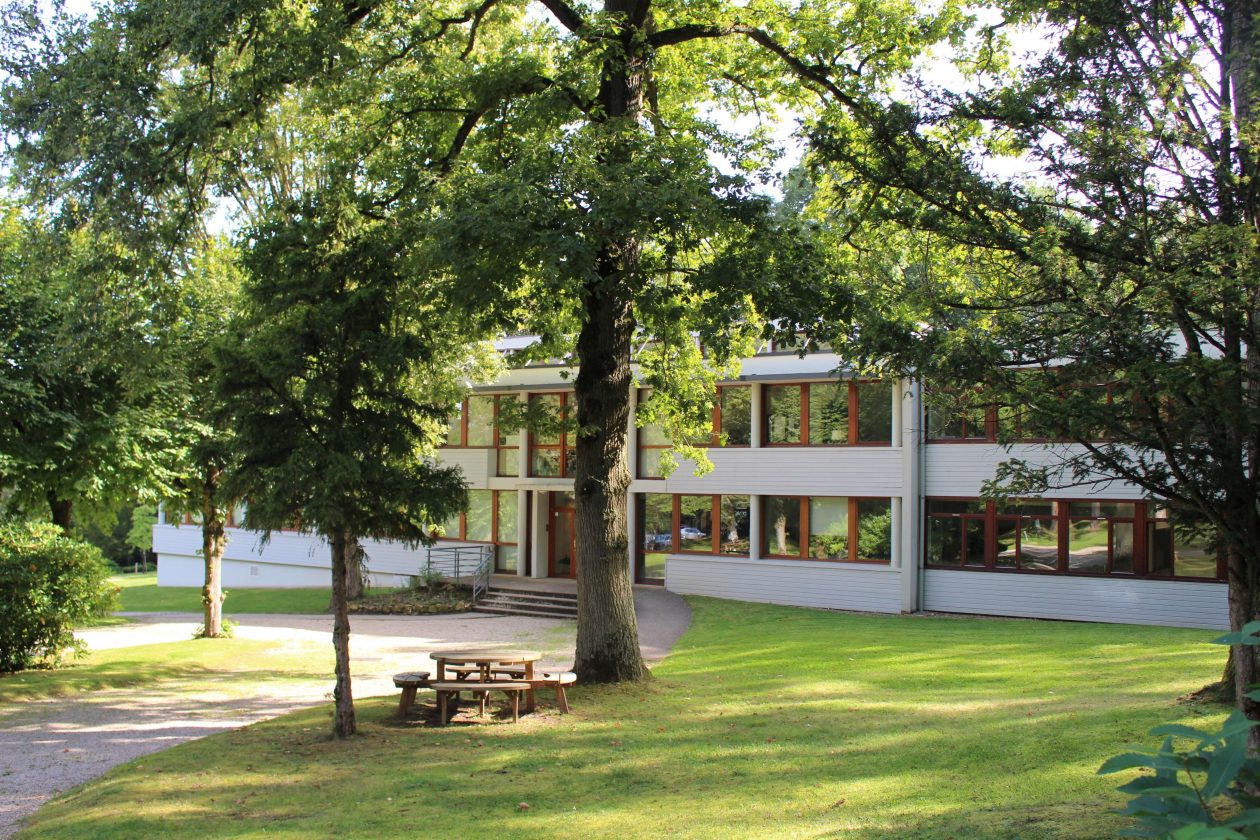
The Summer School will be held at the Institut des Hautes Études Scientifiques (IHES) from July 6 to 17, 2026. IHES is located in Bures-sur-Yvette, south of Paris (40 minutes by train from Paris) – Access map
This school is open to everybody but intended primarily for young participants, including Ph.D. students and postdoctoral fellows.
Deadline for applications: March 1, 2026
2026 IHES Summer School – Cosmological Correlators
The goal of this IHES school is to prepare students to make contributions to the study of cosmological correlations, both in the early and late universe. Theoretical cosmology as a discipline is increasingly crossing traditional subfield boundaries within high-energy physics. As a result, the full spectrum of topics and expertise students require cannot be simply contained in a single course.
This school aims to fill this gap by providing a holistic viewpoint on the diverse set of topics that students need to know, with an eye towards their applications in cosmology. There has been a remarkable amount of progress in the study of cosmological quantum field theory in the last few years, and a dedicated school focused on the diverse set of skills needed to contribute is much needed.
The school will have a set of courses given by world leaders in the subject, with the first week focused on EFT and bootstrap methods to compute cosmological correlators, and the second week devoted to more advanced topics and connections at the interface of particle theory and cosmology.
Speakers:
Dionysios Anninos (King’s College)
Scott Dodelson (Carnegie Mellon & Chicago Univ.)
Scott Melville (Queen Mary Univ. of London)
Enrico Pajer (DAMTP, Cambridge Univ.)
Claudia de Rham (Imperial College)
Marko Simonovic (Florence Univ.)
Charlotte Sleight (Univ. of Naples)
Massimo Taronna (Univ. of Naples)
Raffaele Tito D’Agnolo (IPhT CEA & ENS Paris)
Andrew Tolley (Imperial College)
Matias Zaldarriaga (IAS)
A Covariant Formulation of Logarithmic Supertranslations at Spatial Infinity
Séminaire Amplitudes et Gravitation sur l’Yvette (IHES/IPhT)
I will begin this talk by reviewing asymptotic symmetries. I will then introduce a new symplectic structure and conservative boundary conditions at spatial infinity that accommodate regular logarithmic translations and log-supertranslations. The associated charges are finite and conserved, and I will show that the asymptotic symmetry algebra is an enhancement of the BMS algebra and that it acquires a central extension between supertranslations and log-supertranslations, which together form a Heisenberg algebra. I will conclude with some interesting avenues that this work opens.
Pour être informé des prochains séminaires vous pouvez vous abonner à la liste de diffusion en écrivant un mail à sympa@listes.math.cnrs.fr avec comme sujet: « subscribe seminaire_physique PRENOM NOM »(indiquez vos propres prénom et nom) et laissez le corps du message vide.
Slices of Representations of Surface Groups in $G_2$ and Associated Geometric Structures
In this talk we will consider two families of representations from the fundamental group of a closed surface of genus at least 2 into the exceptional Lie group G2, and more precisely into its real split form G2′. Representations in these families correspond to Higgs bundles of a very special form introduced by Collier and Toulisse. They come with associated equivariant objects: they admit an alternating almost-complex map into the pseudosphere S2,4, which can be reinterpreted as a parallel distribution of planes along a minimal surface in the symmetric space.
From the Higgs bundle description of these families, however, it is far from clear whether these representations have good geometric properties. In joint work with Parker Evans, we use the equivariant objects to construct explicitly a geometric structure associated to some of these representations.
After an introduction to the geometry of G2′ and to these two families of representations, I will present our results explaining how to construct for every representation ρ in the first family a geometric structure modelled on a flag manifold of G2, the Einstein universe Ein2,3, whose holonomy is ρ. This is a structure on a fiber bundle over the considered surface with fiber diffeomorphic to Ein2,1.
Geometry of Large Genus Flat Surfaces
Gluing the opposite sides of a square gives a flat torus: a torus endowed with a flat metric induced by the Euclidean metric on the square. Similarly, one can produce higher genus surfaces by gluing parallel sides of several squares. These « square-tiled surfaces » inherit from the squares a flat metric with conical singularities. In this talk we will present several recent results and conjectures on the large genus asymptotics of these surfaces, and more generally of some families of flat surfaces (joint work with V. Delecroix, P. Zograf and A. Zorich). We will also see how these results can be interpreted in the language of closed curves on surfaces. We will finish with some recent results joint with E. Duryev and I. Yakovlev that should allow to generalize these results to a larger family of flat surfaces.
On the mod-p Cohomology of Certain p-saturable Groups
Séminaire de géométrie arithmétique
The mod-$p$ cohomology of equi-$p$-saturable pro-$p$ groups has been calculated by Lazard in the 1960s. Motivated by recent considerations in the mod-$p$ Langlands program, we consider the problem of extending his results to the case of compact $p$-adic Lie groups $G$ that are $p$-saturable but not necessarily equi-$p$-saturable: when $F$ is a finite extension of $mathbb{Q}_p$ and $p$ is sufficiently large, this class of groups includes the so-called pro-$p$ Iwahori subgroups of $SL_n(F)$. In general, using the work of Serre and Lazard one can write down a spectral sequence that relates the mod-$p$ cohomology of $G$ to the cohomology of its associated graded mod-$p$ Lie algebra $mathfrak{g}$. We will discuss certain sufficient conditions on $p$ and $G$ that ensure that this spectral sequence collapses. When these conditions hold, it follows that the mod-$p$ cohomology of $G$ is isomorphic to the cohomology of the Lie algebra $mathfrak{g}$.
========
Pour être informé des prochains séminaires vous pouvez vous abonner à la liste de diffusion en écrivant un mail à sympa@listes.math.cnrs.fr avec comme sujet: « subscribe seminaire_mathematique PRENOM NOM »(indiquez vos propres prénom et nom) et laissez le corps du message vide.