Extracting black-hole rotational energy : The generalized Penrose process
Relativistic jets are often launched from the vicinity of accreting black holes. They are observed to be produced in stellar-mass black-hole binary systems and are believed to be the fundamental part of the gamma-ray burst phenomenon. Powerful relativistic jets are also ejected by accreting supermassive black holes in some active galactic nuclei. There is no doubt that the jet-launching mechanism is related to accretion onto black holes, but there has been no general agreement as to the ultimate source of energy of these spectacular high energy phenomena. In principle, relativistic jets can be powered either by the black hole gravitational pull or by its rotation (spin), with large-scale magnetic fields invoked as energy extractors in both cases. In the context of strongly magnetized jets Blandford & Znajek (1977) proposed a model of electromagnetic extraction of black hole’s rotational energy based on the analogy with the classical unipolar induction phenomenon. The physical meaning of this process has been subject to a long controversy. I will show that the Blanford-Znajek process is a Penrose process of black-hole energy extraction. I will first consider the case of arbitrary fields or matter described by an unspecified, general energy-momentum tensor and show that the necessary and sufficient condition for extraction of a black hole’s rotational energy is analogous to that in the mechanical Penrose process: absorption of negative energy and negative angular momentum. I will show that a necessary condition for the Penrose process to occur is for the Noether current to be spacelike or past directed (timelike or null) on some part of the horizon. In the particle (« mechanical ») case, the general criterion for the occurrence of a Penrose process reproduces the standard result. For stationary, force-free electro-magnetic field one recovers the condition obtained by Blandford and Znajek in their original article. In the case of relativistic jet-producing « magnetically arrested disks » I will show that the negative energy and angular-momentum absorption condition is obeyed when the Blandford-Znajek mechanism is at work, and hence the high energy extraction efficiency up to ~300 % found in recent numerical simulations of such accretion flows results from tapping the black hole’s rotational energy through the Penrose process. I will show how black-hole rotational energy extraction works in this case by describing the Penrose process in terms of the Noether current.
Testing General Relativity in the solar system with planetary ephemerides
Current knowledge of Mercury orbit is mainly brought by the direct radar ranging obtained from the 60s to 1998 and five Mercury flybys made by Mariner 10 in the 70s, and MESSENGER made in 2008 and 2009. On March 18, 2011, MESSENGER became the first spacecraft orbiting Mercury. The radioscience observations acquired during the orbital phase of MESSENGER drastically improved our knowledge of the Mercury orbit. An accurate MESSENGER orbit is obtained by fitting one-and-half years of tracking data using GINS orbit determination software. The systematic error in the Earth-Mercury geometric positions, also called range bias, obtained from GINS are then used to fit the INPOP dynamical modeling of the planet motions. An improved ephemeris of the planets is then obtained, INPOP13a, and used to perform general relativity test of PPN-formalism. Monte Carlo simulations will be introduced for estimating the most significant levels of GR violations in terms of PPN parameters and their correlated parameter (oblateness of the sun) and of time-varying Gravitational constant G.
Positive Configurations of Flags and Limits of Positive Representations
Parreau compactified the Hitchin component of a closed surface S of genus greater or equal to two in such a way that a boundary point corresponds to the projectivized length spectrum of an action of pi_1(S) on an R-building. We will explain how to use the positivity properties of Hitchin representations introduced by Fock and Goncharov to explicitly describe the geometry of a preferred collection of apartments in the limiting building.
Geometry of integrable systems
Nous organisons un petit groupe de travail pour essayer de mieux comprendre les liens entre la méthode de BKW complexe, la correspondance de Hodge nonabélienne sauvage et la récursion toplogique d'Eynard-Orantin.
The basic aim is to try to better understand the relation between exact WKB, wild nonabelian Hodge theory and the topological recursion of Eynard-Orantin, as well as links to the (nonlinear) Stokes phenomenon.
Green Forms for Special Cycles on Shimura Varieties
The arithmetic geometry of Shimura varieties has been intensively studied since, about twenty years ago, Kudla made some conjectures relating their arithmetic Chow groups with derivatives of Eisenstein series and of Rankin-Selberg L-functions. The conjectures concern special cycles in orthogonal and unitary Shimura varieties and predict in particular that Green currents for these cycles should exist satisfying some additional properties, including an explicit expression for archimedean height pairings.
I will explain how to attach a natural superconnection to each special cycle and how results of Quillen and further developments by Bismut, Gillet and Soule allow to define natural Green forms for special cycles. For compact Shimura varieties with underlying group O(p,2) or U(p,1) I will explain how to compute the resulting archimedean heights and relate them to derivatives of Eisenstein series, essentially settling the archimedean aspect of Kudla's conjectures in this case. This is joint work with Siddarth Sankaran.
Milnorian and non-Milnorian Representations
In 1977, Milnor formulated the following conjecture: every discrete group of affine transformations acting properly on the affine space is virtually solvable. We now know that this statement is false; the current goal is to gain a better understanding of the counterexamples to this conjecture. Every group that violates this conjecture "lives" in a certain algebraic affine group, which can be specified by giving a linear group and a representation thereof. Representations that give rise to counterexamples are said to be non-Milnorian. We will talk about the progress made so far towards classification of these non-Milnorian representations.
Bi-Lagrangian Structures and Teichmüller Theory
A bi-Lagrangian structure on a manifold is the data of a symplectic form and a pair of transverse Lagrangian foliations. Equivalently, it can be defined as a para-Kähler structure, i.e. the para-complex analog of a Kähler structure. After discussing interesting features of bi-Lagrangian structures in the real and complex settings, I will show that the complexification of any Kähler manifold has a natural complex bi-Lagrangian structure. I will then specialize this discussion to moduli spaces of geometric structures on surfaces, which typically have a rich symplectic geometry. We will see that that some of the recognized geometric features of these moduli spaces are formal consequences of the general theory while revealing new other features, and derive a few well-known results of Teichmüller theory. Time permitting, I will present the construction of an almost hyper-Kähler structure in the complexification of any Kähler manifold. This is joint work with Andy Sanders.
Topological recursion and WKB formal asymptotic expansion. From ODE’s to loop equations, and the notion of « quantum curve ».
Nous organisons un petit groupe de travail pour essayer de mieux comprendre les liens entre la méthode de BKW complexe, la correspondance de Hodge nonabélienne sauvage et la récursion toplogique d'Eynard-Orantin.
The basic aim is to try to better understand the relation between exact WKB, wild nonabelian Hodge theory and the topological recursion of Eynard-Orantin, as well as links to the (nonlinear) Stokes phenomenon.
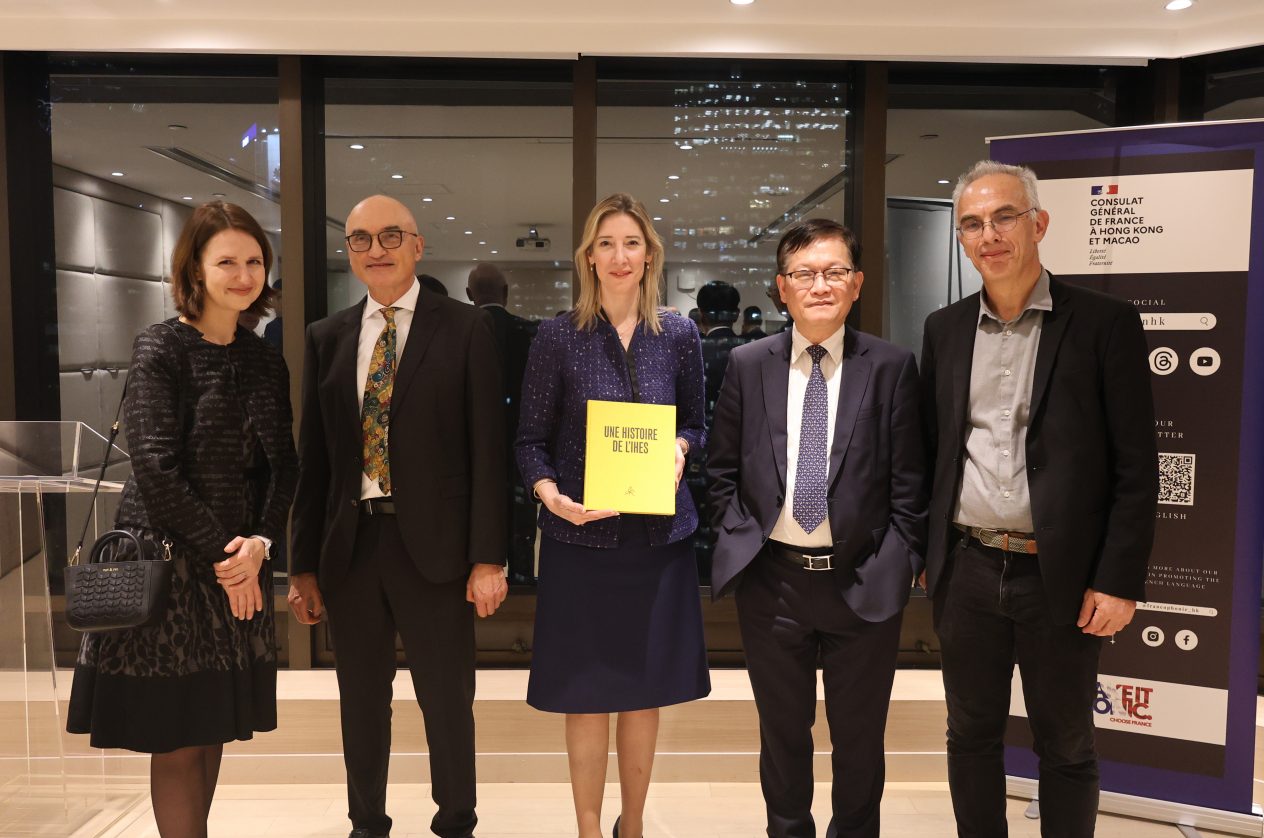
Institut des Hautes Études Scientifiques: some history and histories
I will present some history and histories around the first years of the IHES and answer (briefly) the questions: By whom? Why? How? Where? When? was the IHES created, with documents from the archives – letters, administrative as well as mathematical documents – and people's memories.
On the Ramanujan Conjecture for Automorphic Forms over Function Fields
Let G be a reductive group over a function field of large enough characteristic. We prove the temperedness at unramified places of automorphic representations of G, subject to a local assumption at one place, stronger than supercuspidality. Such an assumption is necessary, as was first shown by Saito-Kurokawa and Howe-Piatetskii-Shapiro in the 70's. Our method relies on the l-adic geometry of BunG, and on trace formulas. Work with Will Sawin.