
Monodromy of Bethe Ansatz Equation for the Gaudin Magnet Chain

Séminaire « Equations différentielles »

Gaudin model is the simplest case of the quantum Hitchin system corresponding to the rational curve with marked points. Algebraic Bethe ansatz provides a general way to solve the eigenproblem of this quantum integrable system, it expresses the eigenvectors and the eigenvalues as some explicit functions on the auxiliary parameters which satisfy  Bethe ansatz equations. The solutions of Bethe ansatz equations depend on the parameters of the integrable system, and this dependence is highly multivalued. We describe the monodromy of solutions of the Bethe ansatz equations and relate it to the RSK combinatorics of Young tableaux.

==================================================================

IHES Covid-19 regulations:

– all the participants who will attend the event in person will have to keep their mask on in indoor spaces
and where the social distancing is not possible;
– speakers will be free to wear their mask or not at the moment of their talk if they feel more comfortable
without it;
– Up to 70 persons in the conference room, every participant will be asked to be able to provide a health pass
– Over 70 persons in the conference room, every participant will be asked to provide a health pass which will
be checked at the entrance of the conference room.

==================================================================

Pour être informé des prochains séminaires vous pouvez vous abonner à la liste de diffusion en écrivant un mail à sympa@listes.math.cnrs.fr avec comme sujet: « subscribe seminaire_mathematique PRENOM NOM »
(indiquez vos propres prénom et nom) et laissez le corps du message vide.
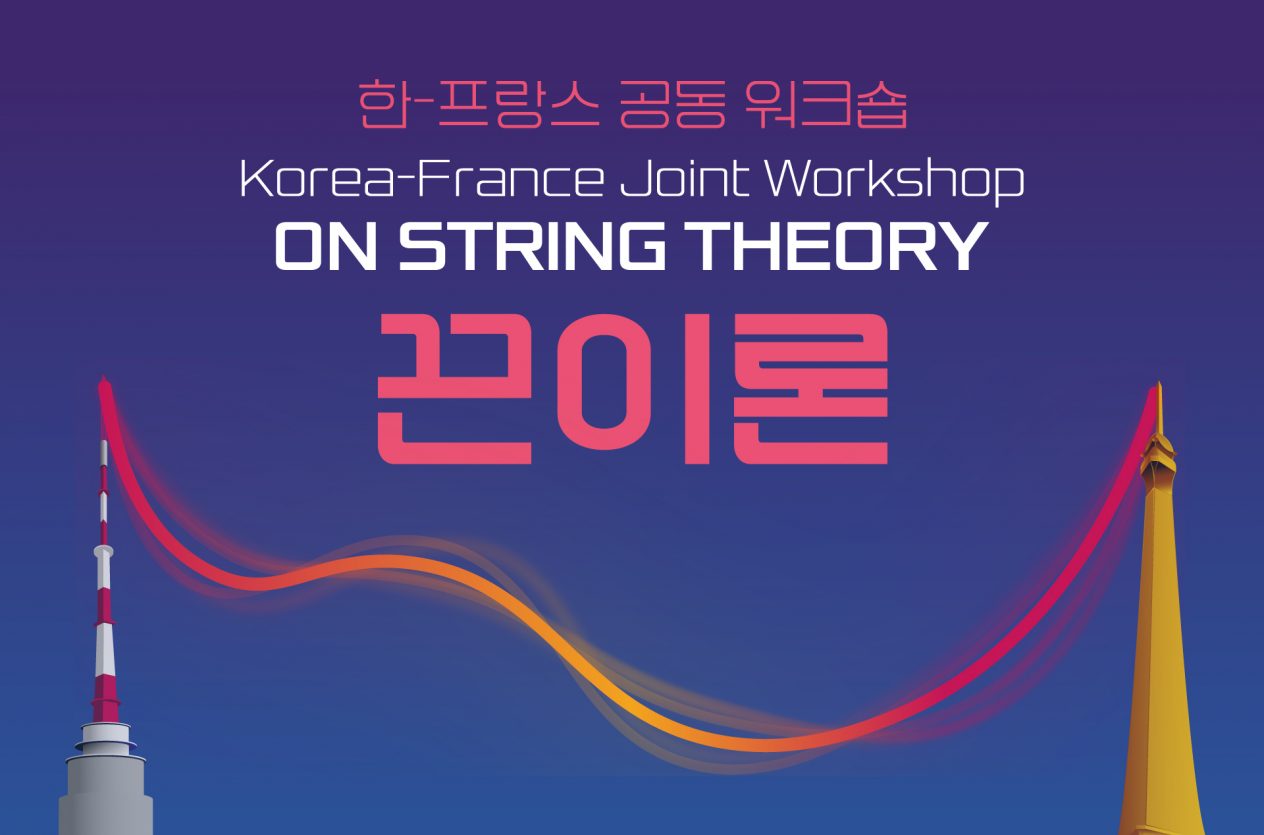
Different Aspects of Frobenius Manifolds

Séminaire « Equations différentielles »

The aim of this talk is to give an overview on Frobenius Manifolds and its different facets. Frobenius manifolds arose in the process of axiomatisation of Topological Field Theory (TFT) and play a central role in the mathematical vision of mirror symmetry. However, recent results allow to go beyond this panorama.  In particular, we will discuss the existence of a new source of Frobenius Manifolds, which shows an unexpected bridge between algebraic geometry—involving moduli spaces of curves, Gromov—Witten like invariants, Saito’s space—and statistical manifolds, coming from information geometry.

==================================================================

IHES Covid-19 regulations:

– all the participants who will attend the event in person will have to keep their mask on in indoor spaces
and where the social distancing is not possible;
– speakers will be free to wear their mask or not at the moment of their talk if they feel more comfortable
without it;
– Up to 70 persons in the conference room, every participant will be asked to be able to provide a health pass
– Over 70 persons in the conference room, every participant will be asked to provide a health pass which will
be checked at the entrance of the conference room.

==================================================================

Pour être informé des prochains séminaires vous pouvez vous abonner à la liste de diffusion en écrivant un mail à sympa@listes.math.cnrs.fr avec comme sujet: « subscribe seminaire_mathematique PRENOM NOM »
(indiquez vos propres prénom et nom) et laissez le corps du message vide.
Un résultat d’unicité pour les ondes progressives de l’équation de Gross-Pitaevskii

Séminaire Laurent Schwartz — EDP et applications

==================================================================

IHES Covid-19 regulations:

– all the participants who will attend the event in person will have to keep their mask on in indoor spaces
and where the social distancing is not possible;
– speakers will be free to wear their mask or not at the moment of their talk if they feel more comfortable
without it;
– Up to 70 persons in the conference room, every participant will be asked to be able to provide a health pass
– Over 70 persons in the conference room, every participant will be asked to provide a health pass which will
be checked at the entrance of the conference room.

==================================================================

Decompositions of High-frequency Helmholtz Solutions via Functional Calculus, and Application to the Finite Element Method

Séminaire Laurent Schwartz — EDP et applications

==================================================================

IHES Covid-19 regulations:

– all the participants who will attend the event in person will have to keep their mask on in indoor spaces
and where the social distancing is not possible;
– speakers will be free to wear their mask or not at the moment of their talk if they feel more comfortable
without it;
– Up to 70 persons in the conference room, every participant will be asked to be able to provide a health pass
– Over 70 persons in the conference room, every participant will be asked to provide a health pass which will
be checked at the entrance of the conference room.

==================================================================

Universality Results for a Class of Nonlinear Wave Equations

Séminaire Laurent Schwartz — EDP et applications

==================================================================

IHES Covid-19 regulations:

– all the participants who will attend the event in person will have to keep their mask on in indoor spaces
and where the social distancing is not possible;
– speakers will be free to wear their mask or not at the moment of their talk if they feel more comfortable
without it;
– Up to 70 persons in the conference room, every participant will be asked to be able to provide a health pass
– Over 70 persons in the conference room, every participant will be asked to provide a health pass which will
be checked at the entrance of the conference room.

==================================================================

Wegner-Wilson Loops in String-Nets

Lattice gauge theories, when restricted to the pure gauge sector (i.e. no matter, only gauge fields), typically show a phase transition between a topologically-ordered deconfined phase at weak coupling and a trivial confined phase at strong coupling (cf. Wegner 1971, Wilson 1974, Fradkin and Shenker 1979). The diagnosis for such a topological phase transition is a non-local gauge-invariant order parameter known as a Wegner-Wilson loop (WWL) defined along a chosen contour. The WWL features a perimeter law exp(-#P) in the topological phase and an area law exp(-#A) in the confined phase, where P is the perimeter and A the area of the contour. The trivial phase is described as having confined charges (“quark confinement”) and condensed fluxes. Whereas, the topological phase has free (deconfined) charges and fluxes. Two-dimensional quantum lattice gauge theories are special in that the excitations in the deconfined phase are anyons (cf. toric code model, Kitaev 2003). In the toric code, WWL were studied in detail by Halasz and Hamma 2012.

Here we extend such a study of WWL from lattice gauge theories built on gauge groups to string-net models (Levin-Wen 2005) built on more general objects known as unitary modular tensor categories. We use these WWL to study the different kind of anyonic excitations that are believed to be described at low-energy by a topological quantum field theory of the doubled achiral type.

Ref: A. Ritz-Zwilling, J.-N. Fuchs and J. Vidal, arxiv:2011.12609,  Phys. Rev. B 103, 075128 (2021).

==================================================================

IHES Covid-19 regulations:

– all the participants who will attend the event in person will have to keep their mask on in indoor spaces
and where the social distancing is not possible;
– speakers will be free to wear their mask or not at the moment of their talk if they feel more comfortable
without it;
– Up to 25 persons in the conference room, every participant will be asked to be able to provide a health pass
– Over 25 persons in the conference room, every participant will be asked to provide a health pass which will
be checked at the entrance of the conference room.

==================================================================

Pour être informé des prochains séminaires vous pouvez vous abonner à la liste de diffusion en écrivant un mail à sympa@listes.math.cnrs.fr avec comme sujet: « subscribe quantum_encounters_seminar PRENOM NOM »
(indiquez vos propres prénom et nom) et laissez le corps du message vide.
Worldline Approach to Gravitational Bremsstrahlung

The need to improve the analytical knowledge of the gravitational waveforms emitted by binary systems has recently sparked a fervent activity in the application of  (classical and/or quantum) post-Minkowskian perturbation methods (expansion in G) to the  two-body relativistic gravitational dynamics and radiation. We shall discuss how the use of a classical Effective-Field-Theory worldline approach to gravitational scattering, combined with modern Quantum-Field-Theory integration techniques, allows one to compute both the gravitational-wave amplitude and the associated radiated four-momentum.

==================================================================

IHES Covid-19 regulations:

– all the participants who will attend the event in person will have to keep their mask on in indoor spaces
and where the social distancing is not possible;
– speakers will be free to wear their mask or not at the moment of their talk if they feel more comfortable
without it;
– Up to 25 persons in the conference room, every participant will be asked to be able to provide a health pass
– Over 25 persons in the conference room, every participant will be asked to provide a health pass which will
be checked at the entrance of the conference room.

==================================================================

Pour être informé des prochains séminaires vous pouvez vous abonner à la liste de diffusion en écrivant un mail à sympa@listes.math.cnrs.fr avec comme sujet: « subscribe seminaire_physique PRENOM NOM »
(indiquez vos propres prénom et nom) et laissez le corps du message vide.

Lefschetz, Hodge and combinators: an account of a fruitful cross-pollination

Almost 40 years ago, Stanley noticed that some of the deep theorems of algebraic geometry have powerful combinatorial applications. Among other things, he used the hard Lefschetz theorem to rederive Dynkin’s theorem, and to characterize face numbers of simplicial polytopes.
Since then, several more deep combinatorial and geometric problems were discovered to be related to theorems surrounding the Lefschetz theorem. One first constructs a ring metaphorically modelling the combinatorial problem at hand, often modelled on constructions for toric varieties, and then tries to derive the combinatorial result using deep results in algebraic geometry. For instance:
– a Lefschetz property for implies that a simplicial complex PL-
embedded in R4 cannot have more triangles than four times the number of it’s edges. (Kalai/A.)
– a Hodge-Riemann type property implies the log-concavity of the coefficients of the chromatic polynomial. (Huh)
– a decomposition type property implies the positivity of the
Kazhdan-Lusztig polynomial. (Elias-Williamson)
At this point one can then hope that indeed, algebraic geometry provides the answer, which is often only the case in very special cases, when there is a sufficiently nice variety behind the metaphor.
It is at this point that purely combinatorial techniques can be attempted to prove the desired. This is the modern approach to the problem, and I will discuss the two main approaches used in this area: Firstly, an idea of Peter McMullen, based on local modifications of the ring and control of the signature of the intersection form. Second, an approach based on a theorem of Hall, using the observation that spaces of low-rank linear maps are of special form.

Lefschetz, Hodge and combinators: an account of a fruitful cross-pollination

Almost 40 years ago, Stanley noticed that some of the deep theorems of algebraic geometry have powerful combinatorial applications. Among other things, he used the hard Lefschetz theorem to rederive Dynkin’s theorem, and to characterize face numbers of simplicial polytopes.
Since then, several more deep combinatorial and geometric problems were discovered to be related to theorems surrounding the Lefschetz theorem. One first constructs a ring metaphorically modelling the combinatorial problem at hand, often modelled on constructions for toric varieties, and then tries to derive the combinatorial result using deep results in algebraic geometry. For instance:
– a Lefschetz property for implies that a simplicial complex PL-
embedded in R4 cannot have more triangles than four times the number of it’s edges. (Kalai/A.)
– a Hodge-Riemann type property implies the log-concavity of the coefficients of the chromatic polynomial. (Huh)
– a decomposition type property implies the positivity of the
Kazhdan-Lusztig polynomial. (Elias-Williamson)
At this point one can then hope that indeed, algebraic geometry provides the answer, which is often only the case in very special cases, when there is a sufficiently nice variety behind the metaphor.
It is at this point that purely combinatorial techniques can be attempted to prove the desired. This is the modern approach to the problem, and I will discuss the two main approaches used in this area: Firstly, an idea of Peter McMullen, based on local modifications of the ring and control of the signature of the intersection form. Second, an approach based on a theorem of Hall, using the observation that spaces of low-rank linear maps are of special form.

Lefschetz, Hodge and combinators: an account of a fruitful cross-pollination

Almost 40 years ago, Stanley noticed that some of the deep theorems of algebraic geometry have powerful combinatorial applications. Among other things, he used the hard Lefschetz theorem to rederive Dynkin’s theorem, and to characterize face numbers of simplicial polytopes.
Since then, several more deep combinatorial and geometric problems were discovered to be related to theorems surrounding the Lefschetz theorem. One first constructs a ring metaphorically modelling the combinatorial problem at hand, often modelled on constructions for toric varieties, and then tries to derive the combinatorial result using deep results in algebraic geometry. For instance:
– a Lefschetz property for implies that a simplicial complex PL-
embedded in R4 cannot have more triangles than four times the number of it’s edges. (Kalai/A.)
– a Hodge-Riemann type property implies the log-concavity of the coefficients of the chromatic polynomial. (Huh)
– a decomposition type property implies the positivity of the
Kazhdan-Lusztig polynomial. (Elias-Williamson)
At this point one can then hope that indeed, algebraic geometry provides the answer, which is often only the case in very special cases, when there is a sufficiently nice variety behind the metaphor.
It is at this point that purely combinatorial techniques can be attempted to prove the desired. This is the modern approach to the problem, and I will discuss the two main approaches used in this area: Firstly, an idea of Peter McMullen, based on local modifications of the ring and control of the signature of the intersection form. Second, an approach based on a theorem of Hall, using the observation that spaces of low-rank linear maps are of special form.

Lefschetz, Hodge and combinators: an account of a fruitful cross-pollination

Almost 40 years ago, Stanley noticed that some of the deep theorems of algebraic geometry have powerful combinatorial applications. Among other things, he used the hard Lefschetz theorem to rederive Dynkin’s theorem, and to characterize face numbers of simplicial polytopes.
Since then, several more deep combinatorial and geometric problems were discovered to be related to theorems surrounding the Lefschetz theorem. One first constructs a ring metaphorically modelling the combinatorial problem at hand, often modelled on constructions for toric varieties, and then tries to derive the combinatorial result using deep results in algebraic geometry. For instance:
– a Lefschetz property for implies that a simplicial complex PL-
embedded in R4 cannot have more triangles than four times the number of it’s edges. (Kalai/A.)
– a Hodge-Riemann type property implies the log-concavity of the coefficients of the chromatic polynomial. (Huh)
– a decomposition type property implies the positivity of the
Kazhdan-Lusztig polynomial. (Elias-Williamson)
At this point one can then hope that indeed, algebraic geometry provides the answer, which is often only the case in very special cases, when there is a sufficiently nice variety behind the metaphor.
It is at this point that purely combinatorial techniques can be attempted to prove the desired. This is the modern approach to the problem, and I will discuss the two main approaches used in this area: Firstly, an idea of Peter McMullen, based on local modifications of the ring and control of the signature of the intersection form. Second, an approach based on a theorem of Hall, using the observation that spaces of low-rank linear maps are of special form.

Lefschetz, Hodge and combinators: an account of a fruitful cross-pollination

Almost 40 years ago, Stanley noticed that some of the deep theorems of algebraic geometry have powerful combinatorial applications. Among other things, he used the hard Lefschetz theorem to rederive Dynkin’s theorem, and to characterize face numbers of simplicial polytopes.
Since then, several more deep combinatorial and geometric problems were discovered to be related to theorems surrounding the Lefschetz theorem. One first constructs a ring metaphorically modelling the combinatorial problem at hand, often modelled on constructions for toric varieties, and then tries to derive the combinatorial result using deep results in algebraic geometry. For instance:
– a Lefschetz property for implies that a simplicial complex PL-
embedded in R4 cannot have more triangles than four times the number of it’s edges. (Kalai/A.)
– a Hodge-Riemann type property implies the log-concavity of the coefficients of the chromatic polynomial. (Huh)
– a decomposition type property implies the positivity of the
Kazhdan-Lusztig polynomial. (Elias-Williamson)
At this point one can then hope that indeed, algebraic geometry provides the answer, which is often only the case in very special cases, when there is a sufficiently nice variety behind the metaphor.
It is at this point that purely combinatorial techniques can be attempted to prove the desired. This is the modern approach to the problem, and I will discuss the two main approaches used in this area: Firstly, an idea of Peter McMullen, based on local modifications of the ring and control of the signature of the intersection form. Second, an approach based on a theorem of Hall, using the observation that spaces of low-rank linear maps are of special form.