The Simons Foundation makes a record pledge to support IHES

James and Marilyn Simons, the co-founders of the Simons Foundation, have recently pledged 25m€ to support IHES over ten years: this is a record gift both for the Institute and for fundamental research in France.

Press release – October 27, 2021

James and Marilyn Simons, the co-founders of the Simons Foundation, have recently pledged 25m€ to support IHES over ten years: this is a record gift both for the Institute and for fundamental research in France.

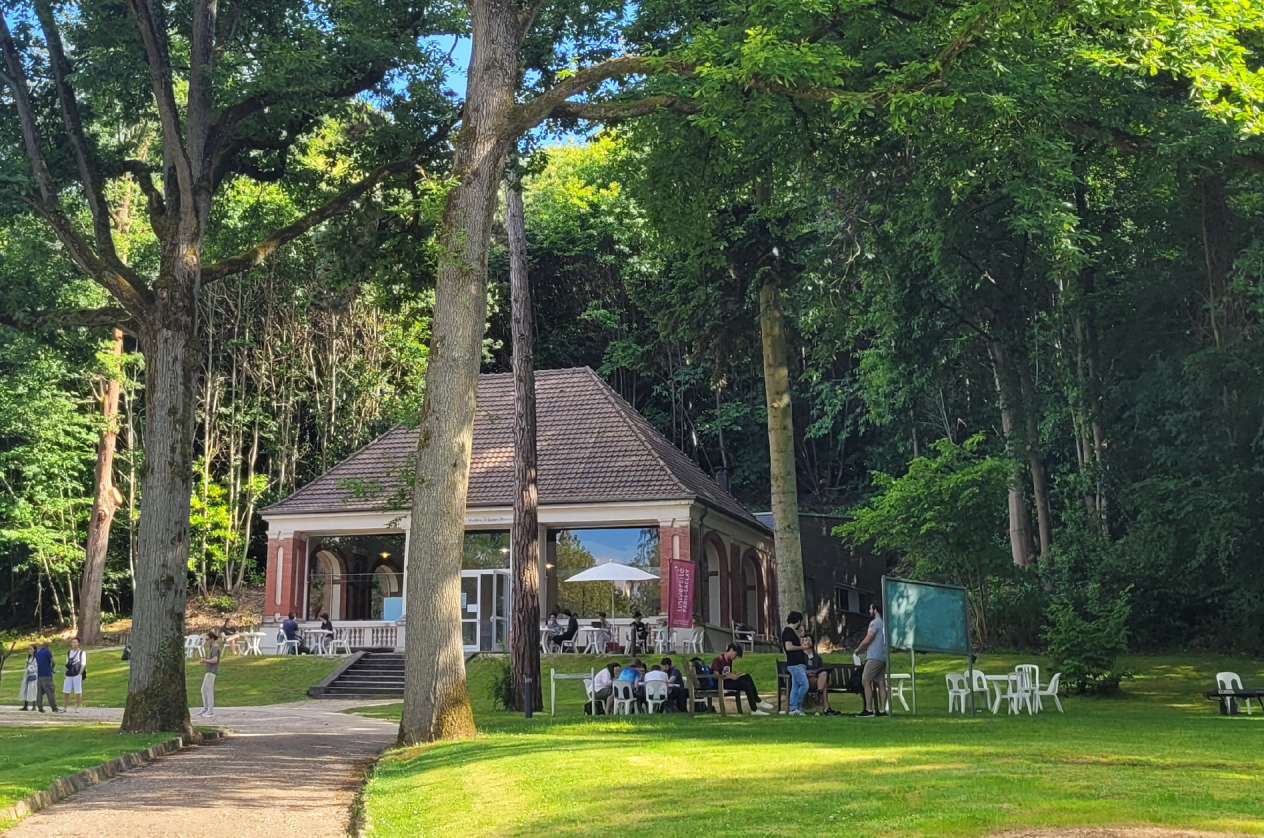
James and Marilyn Simons have supported the Institute since the early days of its fundraising efforts. Having already given more than 25m€ overall, they are the Institute’s main donors. To acknowledge the great generosity they showed during the first fundraising campaign, the Institute’s most iconic building was named after them and is now called the Marilyn and James Simons Conference Center.

This new exceptional gift from the Simons Foundation International is intended primarily for the Institute’s scientists, at all levels of their careers. In addition to doctoral and post-doctoral fellowships, the funds will support a prestigious position for a talented young scientist with an outstanding track record, as well as allow leading researchers to spend long sabbaticals at the Institute.

This grant will also allow IHES to continue to develop initiatives to promote diversity and inclusion in mathematics and theoretical physics, by raising awareness of these issues within the scientific and mathematical communities as well as at the Institute. It will also contribute to the financing of projects that promote the dissemination of science and knowledge to the general public.

A significant portion of the donation, given more specifically by Simons Foundation International, will also strengthen the Institute’s endowment to ensure its financial independence and stability over the long-term.

On top of being major donors, the Simons are personally involved in ensuring the success and development of the Institute. James Simons has been a member of the IHES Board of Directors since 2014. At the end of 2021, James and Marilyn Simons will succeed Michael R. Douglas as co-presidents of Friends of IHES, the IHES partner association in the United States.

Frédérique Vidal, French Minister of Higher Education, Research and Innovation, praised James and Marilyn Simons’ commitment: “This major gift to one of the gems of Université Paris-Saclay, IHES, is a tribute to the dynamism and attractiveness of research in mathematics and theoretical physics in France, which are recognized and valued internationally. We thank the Simons Foundation for its support, which helps to strengthen our ties with our American partners and collaborators”.

“We are delighted to have stood by the Institute’s side for over 20 years. We know that basic research is crucial to the development of our society. We’ve always believed that,” say James and Marilyn Simons.

David Spergel, president of the Simons Foundation, adds: “We are glad to renew and strengthen our support for IHES so that it can continue its essential role as an intellectual center for mathematics and theoretical physics.”

“This is a historic gift, the result of a long-term relationship between IHES and the Simons. It is another step towards financial independence, which is essential for an institute such as ours,” says Marwan Lahoud, President of the IHES Board of Directors.

“In addition to being major donors, Jim and Marilyn have always had the Institute’s best interest at heart. It is also thanks to their encouragement that we have been able to push our ambitions further and enjoy such success in our fundraising endeavors, some of which is relatively recent and marked by new major corporate and individual donors,” comments Emmanuel Ullmo, Director of IHES.

Laure Saint-Raymond joins IHES as a permanent professor

Laure Saint-Raymond will join the Institut des Hautes Études Scientifiques (IHES) as a permanent professor of mathematics in September 2021.

Press release – 8 February 2021

Born in 1975, Laure Saint-Raymond was admitted to École normale supérieure (ENS) in 1994. She obtained a DEA (a doctoral degree delivered in France until 2011), in numerical analysis at Pierre and Marie Curie University and another in plasma physics at Versailles-Saint-Quentin-en-Yvelines University, as well as a teaching diploma (agrégation) in mathematics. She then earned a PhD on the kinetic theory of gases at the ENS Department of Mathematics and its Applications, under the supervision of mathematician François Golse. She was recruited as a researcher by CNRS in 2000.

Laure Saint-Raymond was then appointed professor at Pierre and Marie Curie University She was seconded to Ecole Normale Supérieure from 2007, where she headed the analysis team before taking over as deputy head of the mathematics department.

She was elected member of the French Academy of Sciences in 2013, then member of the Academia Europaea in 2014 and became a junior member of the Institut universitaire de France in 2015, after a sabbatical year in the United States, where she worked at both Harvard University and MIT. In 2016, she obtained a transfer to Ecole Normale Supérieure in Lyon as a university professor. In 2017, she was elected member of the European Academy of Sciences.

Laure Saint-Raymond’s work focuses mainly on the asymptotic analysis of systems of partial differential equations, in particular those governing the dynamics of gases, plasmas or fluids. In particular, she has made fundamental contributions to Hilbert’s sixth problem on the axiomatization of mechanics, one of the 23 problems proposed by David Hilbert at the 1900 International Congress of Mathematics, which has not yet been solved: with various collaborators, she has shown that there is a continuous transition between the models of non-equilibrium statistical physics and the equations of fluid mechanics, and more recently she has studied the validity of these statistical models based on Newtonian mechanics. She is working in parallel on models in fluid mechanics that describe ocean currents, including the effect of fluid rotation and stratification on wave propagation and boundary layer phenomena.

She has received numerous awards. In particular, she received the European Mathematical Society Prize in 2008, the Ruth Lyttle Satter Prize of the American Mathematical Society in 2009, the Irène Joliot-Curie “Young Female Scientist” Prize from the French Academy of Sciences and the French Ministry of Higher Education and Research in 2011, and the Fermat Prize from the Midi-Pyrénées region in 2015. In 2019, she was awarded the title of Chevalier of the French Legion of Honor and in 2020 she was awarded the Bôcher Prize by the American Mathematical Society.

Emmanuel Ullmo, Director of IHES, said: “We are delighted to welcome Laure Saint-Raymond, a brilliant mathematician whose innovative work has already been rewarded with numerous international prizes. Her arrival further broadens the fields of research developed at IHES.’’

Laure Saint-Raymond adds: ‘’I am seizing the opportunity I was offered to join IHES. This is indeed an institute that provides not only the ideal environment to carry out independent research, but also the means to develop collaborations and encourage a more collective work style. The institute has a long tradition in theoretical physics, algebra and geometry, and has more recently opened to probabilities. My own small challenge will be to also establish analysis, which brings other angles of approach to many problems at the interface with physics.’’

Launch of the Huawei Young Talents Program

The online ceremony celebrating the official launch of the Huawei Young Talents Program was recently held. This program aims to support the work of talented researchers in mathematics and theoretical physics, at the beginning of their career.

Press release – 13 November 2020

The online ceremony celebrating the official launch of the Huawei Young Talents Program at the Institut des Hautes Etudes Scientifiques was recently held. This program aims to support the work of talented researchers in mathematics and theoretical physics, at the beginning of their career. Every year, the Huawei Young Talents Program will fund on average 7 postdoctoral fellowships that will be awarded by the Institute’s Scientific Council, only on the basis of scientific excellence. The fellows will collaborate with the Institute’s permanent professors and work on topics of their interest.

Five brilliant young researchers have already joined the Huawei Young Talents program. Three of them presented their work during the ceremony. Yue WANG gave a talk about “Inference on tissue transplantation experiments”; Zhe SUN’s presentation was about “Webs and tropical coordinates on surfaces” and Vasilisa NIKIFOROVA concluded the ceremony by a talk on “Generalized Einstein-Cartan theory of gravity”.

The Huawei Young Talents Program also gives IHES the possibility to create a prestigious 5-year position reserved to a particularly gifted young researcher. “Through this competitive post, the first of its kind at IHES, the Institute intends to reward exceptional talent and attract in France outstanding young researchers who might otherwise begin their careers elsewhere.” – comments Emmanuel ULLMO, Director of IHES.

Huawei renews its support to IHES for the next ten years
The creation of the Huawei Young Talents Program at IHES has been made possible thanks to the financial support from Huawei Technologies France. The company thus renews its trust to the Institute with a 6-million-euro pledge over the next ten years. For its larger part (5 million euros), this gift will finance the new Huawei Young Talents Program at IHES. It will also further finance the Huawei Chair in Algebraic Geometry (1 million euros). This Chair was created in 2019 to acknowledge the first 1M€ gift from Huawei to IHES. The first chairholder is Prof. Laurent LAFFORGUE, 2002 Fields medalist and a permanent professor at IHES since 2000. Prof. Laurent LAFFORGUE has been working closely with Huawei for several years, and presented a talk on “The creative power of categories: History and some new perpectives” at the ceremony.

During the ceremony, Marwan LAHOUD, Chairman of the Institute, expressed his gratitude to Huawei: “At a time when the global pandemic has brought much uncertainty and made it more challenging to plan ahead, Huawei’s generous support to IHES is ever more precious as it allows the Institute to take the long view and make plans to sustain a thriving scientific activity.

“Because research is at the heart of our DNA, we believe that there can be no great breakthrough innovations without fundamental research. This is a strong conviction that we share with the Institut des Hautes Études Scientifiques, and that is why we are delighted to sign with them the opening of the Huawei Young Talents program. IHES has created a fertile scientific environment. We are proud that Huawei is part of it.” – commented Zishang XIANG, Vice-President executive of Huawei European Research Institute.

“Since our installation 17 years ago, Huawei has chosen France as a land of excellence in research and development. In fact, we support the French scientific community and have built a relationship of trust with them based on a continuous exchange of knowledge. – said Weiliang SHI, Managing Director of Huawei France. “This was the meaning of our approach when we inaugurated the Lagrange Research Center on October 9 in Paris. Today, it is the raison d’être of the Huawei Young Talents program, which we are fortunate enough to set up with our long-time partner, IHES.” – concluded Weiliang SHI.


Watch the introduction speeches and the scientific talks of the Huawei Young Talents Program launch ceremony

Here is Laurent Lafforgue’s talk on “The creative power of categories”:

Gravitational waves from binary neutron stars detected

IHES congratulates the LIGO/Virgo project team which announced, on October 16th, the first observation of a gravitational wave signal from the merging of a system of two neutron stars.

Press release – 17 October 2017

The observation of gravitational waves from binary neutron stars opens the way to new science.

IHES congratulates the LIGO/Virgo project team which announced, on October 16th, the first observation of a gravitational wave signal from the merging of a system of two neutron stars. The detection was jointly made on August 17th by the two LIGO interferometers, located in the US, and by Virgo, a third Franco-Italian interferometer that joined the network on August 1st. This was the strongest, closest and most precisely localized gravitational wave signal detected so far and it was accompanied by electromagnetic signals in all wavelengths. It is the first time that such an event is seen both in gravitational and electromagnetic waves, thus marking the start of multi-messenger astronomy.

A gravitational wave signal from Binary Neutron Stars
Five gravitational wave signals were observed since September 2015. Four of them originated from the coalescence of Binary Black Holes. The LIGO-Virgo network has now observed the gravitational signal generated by binary neutron stars, as they spiraled together before colliding. Neutron stars are small but extremely dense objects, essentially constituted of neutrons. The ~100s long gravitational wave signal allowed for the measurements of the masses, thereby establishing the nature of the two colliding objects. Two seconds after the end of the gravitational wave signal a gamma-rays burst, lasting only a few seconds, was observed. This prompt electromagnetic emission was followed, 11 hours later, by an optical signal of the kilonova type. It is the first time that such a multi-messenger observation is made.

Many relevant theoretical results obtained at IHES
IHES is particularly pleased to note that some of the theoretical research started or undertaken here contributed to the discovery made by the LIGO/Virgo team. On the one hand, the development of the Multipolar Post-Minkowskian Method (L. Blanchet, T. Damour, B. R. Iyer) has led to the analytical description of the gravitational wave signal during the inspiral phase, which was used to extract physical parameters from the noisy raw data. On the other hand, the Effective One Body (EOB) method (A. Buonanno, T. Damour, 2000) was extended to account for the effect of the tidal deformability of the two neutron stars, which becomes increasingly important as the two objects get closer (T. Damour, A. Nagar 2009; S. Bernuzzi, A. Nagar, T. Dietrich, T. Damour, 2015). This tidal extension of the EOB model might allow, in the near future, to extract precise quantitative information about the equation of state of nuclear matter (T. Damour, A. Nagar, L. Villain, 2012).

IHES particularly congratulates Alessandro Nagar (Raymond And Beverly Sackler Visiting Chair at IHES), now a member of the Virgo collaboration, for being one of the authors of the discovery paper (PRL 119, 16 October 2017).

Thibault Damour awarded France’s highest scientific distinction.

Thibault Damour receives the 2017 CNRS Gold Medal for his key contributions to the discovery of gravitational waves.

Press release – 27 September 2017

Thibault Damour receives the 2017 CNRS Gold Medal for his key contributions to the discovery of gravitational waves.

Born in Lyon, on February 7th, 1951, Thibault Damour joins the École normale supérieure in Paris, in 1970. After obtaining his PhD from the University of Paris VI in 1974, he works for two years as a post-doc at Princeton University (USA). Between 1977 and 1989, he works as a CNRS researcher and is recruited as a permanent professor in theoretical physics at the Institut des Hautes Études Scientifiques (IHES) in 1989.

Thibault Damour is a theoretical physicist working on relativistic gravity (Einstein’s theory of general relativity), cosmology, and the extensions of relativistic gravity suggested by string theory. He made innovative contributions to the theory of black holes, the relativistic motion of binary pulsars, the emission of gravitational waves, the evolution and coalescence of various binary systems of compact bodies (black holes, neutron stars), as well as to several aspects of primordial cosmology. His work has created new links between Einstein’s theory of general relativity and observations.

In particular, he introduced, with various collaborators, in 2000 at IHES a new method, called Effective One Body (EOB), which gave the first description of the complete gravitational signal emitted by the coalescence of two black holes. This analytical approach (later completed by the results of numerical simulations) was used by the LIGO-Virgo collaboration to extract from the noise and analyze in terms of physical parameters (mass, spin) the gravitational wave signals that have been detected since September 2015.

The EOB method has been recently extended to the description of the gravitational signal emitted by the coalescence of binary neutron stars until they become so close that they collide. This precise theoretical description could allow one to obtain information on the equation of state of nuclear matter from the gravitational signal.

Exceptionally, this year the CNRS awards two Gold Medals: one to Thibault Damour for his “theoretical works (…) that were key to analyzing the data coming from gravitational-wave detectors”; the other one to Alain Brillet, a “visionary in the development of gravitational waves detectors, [and] one of the fathers of the European experiment Virgo”.

The Institute sincerely congratulates Thibault Damour on obtaining this prestigious distinction. ‘’We are very proud of this Gold Medal. Beyond the recognition of Thibault’s extraordinary contribution to contemporary physics, this prize acknowledges the essential role of theoretical research in major scientific discoveries” said the director, Emmanuel Ullmo

The CNRS Gold Medal
The CNRS Gold medal is the highest scientific research award in France. It is presented annually by the French National Centre for Scientific Research (CNRS). Since its creation in 1954, it is awarded to a scientific personality whose work has made an exceptional contribution to the vitality and influence of French research.

For more information :
Mini website on gravitational waves
Cours de l’IHES on gravitational waves given by Thibault Damour
Public lecture on gravitational waves given by Thibault Damour (in French)
Press contact: Marie Caillat, director of communication +33 1 60 92 66 67 • caillat@ihes.fr

Watch here the short film (in French) about Thibault Damour made by CNRS and shown during the Gold Medals ceremony.

Hugo Duminil-Copin receives three new International Awards

Hugo Duminil-Copin just received the Loève Prize (Berkeley, USA) and the Grand Prix Jacques Herbrand from the French Academy of Sciences. The European Research Council also awarded him a prestigious ERC Starting Grant.

Press release – 7 September 2017

A permanent professor at the IHES since 2016, Hugo Duminil-Copin just received the Loève Prize (Berkeley, USA) and the Grand Prix Jacques Herbrand from the French Academy of Sciences. The European Research Council also awarded him a prestigious ERC Starting Grant. Barely recruited, Hugo Duminil-Copin received two international prizes last year: the European Mathematical Society Prize and the New Horizons Prize in Mathematics from the Breakthrough Foundation. The excellence and originality of his works continue to attract the attention of the scientific community. “The IHES has always bet on young mathematicians – 31 years on average – et the hiring of Hugo keeps this tradition alive. The prizes he continues to receive confirm the relevance of our policy” said Emmanuel Ullmo, director of the Institute.

The Grand Prix Jacques Herbrand is a prestigious award from the French Academy of Sciences which distinguishes young researchers under 35 years of age. It is allocated every two years to a mathematician and salutes the importance of his works to the progress of the mathematical sciences or their peaceful applications. Great names of mathematics and physics received this prize before him: Laurent Lafforgue, Nikita Nekrasov, Cédric Villani and Wendelin Werner to name a few.

Every two years, the Loève Prize honors researchers under 45 years of age for their work in the field of probabilities. Founded in memory of mathematician Michel Loève, the prize is awarded at Berkeley where the later created and animated a large school of probabilities. Hugo Duminil-Copin was also awarded a highly competitive grant from the European Research Council (ERC). The pioneering project he defended before the ERC proposes to use multiple techniques from probability, combinatorics, analysis and integrable systems to break new grounds in the understanding of phase transition.

The Grand Prix Jacques Herbrand
The Grand Prix Jacques Herbrand is awarded by the French Academy of Sciences alternatively to a mathematician or a physicist under 35 years of age. Created in 1996, the prize was awarded for the first time in 1998 and until 2002, both to a physicist and a mathematician.

The Loève Prize
The Line and Michel Loève Prize for Probability Theory was created in 1992 by Line Loève in memory of her late husband, Michel Loève, an American mathematician and statistician, who was a professor at Berkeley from 1948 until his death, in 1979.

The ERC Starting Grants
Those ERC grants are awarded to young researchers (between 2 and 7 years after the PhD) who have already produced excellent work and are ready to work independently and lead a research team within a European institution (or associated member of the EU).

Hugo Duminil-Copin, permanent professor, receives the “New Horizons in Mathematics Prize”

The recognition, awarded by the Breaktrough Prize Foundation, celebrates young mathematicians who have obtained important results at the beginning of their careers. The winners were announced last December 4th, on the occasion of the award ceremony.

The recognition, awarded by the Breaktrough Foundation, celebrates mathematicians who have obtained important results since the beginning of their careers.

Press Release – 5 December 2016

Founded by the Silicon Valley entrepreneurs Sergey Brin and Anne Wojcicki, Mark Zuckerberg and Priscilla Chan, and Yuri and Julia Milner, the different Breakthrough Prizes have been recognising the contribution of scientists in the domains of Mathematics, Physics and the Life Sciences for 5 years. The “New Horizons in Mathematics Prize”, celebrates mathematicians who have obtained important results since the beginning of their careers.

“If you think about the important fundamental research 100 years ago — from quantum theory leading to semiconductors, leading to integrated circuits — that is what we built everything we do on,” said Sergey Brin, co-founder of Google. “If those people weren’t developing their theories 100 years ago, we’d be living that same life, today.”

IHES is extremely happy about this international award for Hugo Duminil-Copin, after the prize he obtained last July from the European Mathematical Society. These prizes reward the Institute for its willingness to recruit young permanent professors. Aged only 31, Hugo Duminil-Copin joined the group of IHES permanent professors last September. He also benefited from prestigious support from Paris Saclay (IDEX Chair) to facilitate his installation and enhance his work environement.

This is the fourth time that the work of one of the Institute’s permanent members receives recognition from the Breakthrough Prize Foundation. Maxim Kontsevich had been one of the five awardees of the Inaugural Prize in Physics in 2012. Two years later he was awarded the Inaugural Prize in Mathematics and no one has achieved as much so far. “Mathematics is essential for driving human progress and innovation in this century. This year’s Breakthrough Prize winners have made huge contributions to the field and we’re excited to celebrate their efforts.” said then Mark Zuckerberg, the Facebook founder and CEO.

This year, Thibault Damour was awarded a “Special Breakthrough Prize in Fundamental Physics” that celebrates the detection of gravitational waves. This prize was assigned to the three creators of the Laser Interferometer Gravitational Wave Observatory (LIGO) as well as to the 1005 co-authors of the article on the discovery of gravitational waves, and to seven more scientists who contributed significantly to the success of this experiment. Thibault Damour is one of them.

BNP Paribas announces a 1 m€ gift to IHES and is the first to contribute to the Director’s Chair

As IHES prepares to launch a third international fundraising campaign, BNP Paribas' commitment once again proves the importance of IHES's scientific mission for French companies.

Press release – 20 May 2016

BNP Paribas wanted to support French science by choosing to become one of the first donors of the third fundraising campaign at IHES. “With 7 Fields medallists among the 10 permanent professors that joined IHES since its foundation, the Institute attracts some of the most renowned researchers in the world. For a big group such as BNP Paribas, which applies advanced mathematics day in and day out in order to manage its risks and the ones of its clients, it is important to support this scientific excellence” said Jean-Laurent Bonnafé, the BNP Paribas CEO.

This gift to the IHES endowment will reinforce its independence, an essential point to allow the success of the institute as a central player in academic research. Marwan Lahoud, the IHES President, explains that “The director plays a key role, since he is in charge at the same time of the scientific strategy, of managing the institute and of animating its international development”. “It is of fundamental importance to secure the funding of this role, essential to the future of IHES through a specific fund, and I thank BNP Paribas for being its first contributor.”

As IHES prepares to launch a third international fundraising campaign, BNP Paribas’ commitment once again proves the importance of IHES’s scientific mission for French companies. “The latter contributed to 30% of the last IHES fundraising campaign. We want to reinforce their participation in the Institute’s ambitious projects and to the importance of our research” highlights Emmanuel Ullmo, the IHES Director.

Jean-Laurent Bonnafé joins the Campaign Committee of IHES whose presidents are Philippe Camus and André Lévy-Lang.

Thibault Damour is one of the winners of the “Special Breakthrough Prize in Fundamental Physics”

The "Special Breakthrough Prize in Fundamental Physics" recognises the scientists and engineers who have contributed to the historic detection of gravitational waves.

Press Release – 3 May 2016

Permanent Professor Thibault Damour is one of the laureates of the Special Breakthrough Prize in Fundamental Physics for the detection of Gravitational Waves

The Selection Committee of the Breakthrough Prize in Fundamental Physics today announced a Special Breakthrough Prize in Fundamental Physics recognising scientists and engineers contributing to the momentous detection of gravitational waves – a detection announced on February 11, 2016.

Edward Witten, the chair of the Selection Committee, commented, “This amazing achievement lets us observe for the first time some of the remarkable workings of Einstein’s theory. Theoretical ideas about black holes which were close to being science fiction when I was a student are now reality.”

The laureates are the three founders of the Laser Interferometer Gravitational Wave Observatory (Ronald W. P. Drever, Caltech, Kip S. Thorne, Caltech, and Rainer Weiss, MIT). The contributors sharing the prize include 1005 authors of the paper describing the discovery of gravitational waves from the numerous institutions involved in LIGO and its sister experiment, the Virgo Collaboration. Also sharing the prize are seven scientists who made important contributions to the success of LIGO. Thibault Damour is listed among those later contributors.

In recent weeks, two international awards also recognised Professor Damour’s crucial contributions to contemporary physics. On 20 April 2016 he was elected Foreign Honorary Member to the American Academy of Arts and Sciences, and was also awarded the 2016 Lodewijk Woltjer Lecture for his “outstanding career on theoretical implications of General Relativity and in particular on the prediction of the newly-observed gravitational wave signal of coalescing binary black holes” on 12 April 2016 by the European Astronomical Society.

Thibault Damour is a theoretical physicist working on consequences of Einstein’s theory of general relativity, and its string theory extensions. He has made lasting contributions on: the theory of black holes, the dynamics and relativistic timing of binary pulsars, the generation of gravitational waves, the motion and coalescence of black holes, as well as several aspects of early cosmology. He introduced in 2000 (with several collaborators) a new method for describing the motion and gravitational radiation of coalescing binary black holes, which gave the first prediction of the gravitational wave signal observed by LIGO in September 2015. His work was crucially used for interpreting the observed signal and measuring the masses and spins of the two coalescing black holes.

Maxim Kontsevich, Permanent Professor of mathematics at IHES was one the five winners of the inaugural Breakthrough Prize in Mathematics in 2014, as well as one of the nine winners of the inaugural Breakthrough Prize in Fundamental Physics in 2012.


Permanent professor Thibault Damour received two international distinctions

He is elected Foreign Honorary Member to the American Academy of Arts and Sciences for 2016 and awarded the 2016 Lodewijk Woltjer Lecture by European Astronomical Society.

On 20 April 2016 Thibault Damour was elected Foreign Honorary Member to the American Academy of Arts and Sciences. He was also awarded the 2016 Lodewijk Woltjer Lecture for his "outstanding career on theoretical implications of general relativity and in particular on the prediction of the newly-observed gravitational wave signal of coalescing binary black holes" on 12 April 2016 by the European Astronomical Society.

Press release – 21 April 2016

Thibault Damour is a theoretical physicist working on consequences of Einstein’s theory of general relativity, and its string theory extensions. He has made lasting contributions on: the theory of black holes, the dynamics and relativistic timing of binary pulsars, the generation of gravitational waves, the motion and coalescence of black holes, as well as several aspects of early cosmology. He introduced in 2000 (with several collaborators) a new method for describing the motion and gravitational radiation of coalescing binary black holes, which gave the first prediction of the gravitational wave signal observed by LIGO in September 2015. His work was crucially used for interpreting the observed signal and measuring the masses and spins of the two coalescing black holes.

Thibault Damour is a French theoretical physicist born in 1951 in Lyon. After studies at the Ecole Normale Supérieure de la rue d’Ulm (1970-1974), he obtained his Thèse de Doctorat de troisième cycle in 1974 (Université de Paris VI), and, later, his Thèse de Doctorat d’Etat ès Sciences Physiques (Université de Paris VI, 10 janvier 1979). He started his career (1977-1989) as researcher at the Centre National de la Recherche Scientifique (CNRS). Since 1989 he has been permanent professor at the Institut des Hautes Études Scientifiques.

Professor Thibault Damour has won many awards in his career: Laureate of the Fondation Singer-Polignac (1978), CNRS Bronze medal (1980), “Paul Langevin” Theoretical Physics Prize of (1984), First Award of the Gravity Research Foundation (1994), ­Mergier-Bourdeix Prize, Einstein Medal (1996), Cecil F. Powell Medal (2005), Amaldi Prize (2010).He is a member of the Academie des Sciences de Paris and the Institut de France.

On 20 April 2016 Thibault Damour was elected Foreign Honorary Member to the American Academy of Arts and Sciences, along with 213 new members including 36 Foreign Honorary Members. They include some of the world’s most accomplished scholars, scientists, writers, artists, as well as civic, business, and philanthropic leaders.

Among Foreign Honorary Members, many are affiliated to IHES: Former permanent professors Pierre Deligne, Mikhail Gromov, and David Ruelle, Louis Motchane Professor Alain Connes. James H. Simons, IHES Director of the Board who is also a Member of the American Academy of Arts and Science.

Thibault Damour was also awarded the 2016 Lodewijk Woltjer Lecture for his “outstanding career on theoretical implications of General Relativity and in particular on the prediction of the newly-observed gravitational wave signal of coalescing binary black holes” on 12 April 2016 by the European Astronomical Society.

The Institute congratulates permanent professor Damour for those two distinctions. “Scientific knowledge knows no borders, and I am very proud for those international recognitions that show Thibault’ remarkable contributions to contemporary physics” says Director Emmanuel Ullmo.

Gravitational waves and black hole coalescence

IHES salutes the first observation of gravitational waves emitted by a black hole binary system by the two US LIGO interferometers from the LIGO/Virgo international network.

Press Release – 11 February 2016

The Institut des Hautes Études Scientifiques (IHES) salutes the first observation of gravitational waves
emitted by a black hole binary system by the two US LIGO interferometers from the LIGO/Virgo international network. The Institute is very much looking forward to the extraordinary progress that gravitational wave astronomy, following these observations, will make. It hopes to contribute to analysing the data it provides on the cosmos, black hole physics and more generally, on the new Universe invented by Einstein a century ago.

A century of progress in general relativity

This major discovery from the LIGO/Virgo team comes one century after Einstein predicted the existence of gravitational waves in the theory of general relativity, and after the discovery of the Schwarzschild solution, now called a Schwarzschild black hole. Many subsequent theoretical investigations provided a better understanding of these waves, a distortion of space-time geometry: the first mathematical proof of generic solutions to Einstein’s equations incorporating wave propagation (Yvonne Fourès-Bruhat, 1952), the first attempts at building gravitational wave detectors (Joseph Weber, 1958) and the proof in the 1980-90 period that gravitational interaction propagates at the speed of light in the form of waves, a proof achieved by observing the motion of several binary pulsars and its comparison to the predictions of Einstein’s theory.

Many theoretical results obtained at IHES

IHES is particularly pleased to note that much of the theoretical research started or undertaken here contributed to the discovery made by the LIGO/Virgo project team. The design and development of the Effective One-Body method, EOB (A. Buonanno and T. Damour, 2000) can be mentioned first; it paved the way for an analytical description of the complete gravitational signal emitted by the coalescence of two black holes, comprising both the quasi-sinusoidal wave emitted during the inspiralling period and the signal emitted during and after the merger. As early as 2000, before the numerical codes capable of computing this existed, the EOB method gave the first representation of the coalescence signal; it also gave the first estimate of the angular momentum of the final black hole resulting from the merger of two back holes. The development of this method at IHES (T. Damour and A. Nagar, 2006-2016), drawing on new theoretical concepts (factorisation and resummation of wave amplitude) and interacting closely with the results of numerical simulations, enabled a new set of precise waveforms to be defined for the detection and analysis of gravitational signals emitted by the coalescence of black hole binary systems. Some of these waveform templates have been used to look for and analyse the signals discovered by LIGO, in the version of the EOB formalism developed in parallel by A. Buonanno in the LIGO collaborative scientific project.
We should also mention the Multipolar Post-Minkowskian method (L. Blanchet, T. Damour and B. Iyer) for the precise computation of the amplitude of gravitational waves emitted by a binary system, and the ever more precise computation of the equations of motion for binary systems (especially by T. Damour, P. Jaranowski and G. Schäfer).

For more information:
https://ondes-gravitationnelles.ihes.fr/

Watch Thibault Damour 2016 Cours de l’IHES  “Gravitational Waves and Binary Systems”:

Institut des Hautes Études Scientifiques to receive the largest gift in the Institute’s 57-year history

IHES confirmed receipt of an unrestricted grant to the upcoming Capital Campaign of €7.5 million. The €7.5 million pledge is the largest gift ever received at the Institute.

Press release – 9 December 2015

IHES confirmed receipt of an unrestricted grant to the upcoming Capital Campaign of €7.5 million. The €7.5 million pledge is the largest gift ever received at the Institute.

This pledge of €7.5 Million to IHÉS reflects continued support of the Institute by IHÉS Trustee James H. Simons, who along with his wife Marilyn H. Simons, the Simons Foundation and other related philanthropic organizations are responsible for total contributions in excess of €21 Million: a record of American generosity to a French nonprofit. These extremely generous donations will reinforce the recent endowment – less than two decades old – the Institute has strived to build as Fundamental Research has witnessed growing constraints on financing.

“The Institute is deeply grateful for these extraordinary gifts”, said Emmanuel Ullmo, Director of the Institute. “James and Marilyn and the foundations’ exceptional commitments have funded major aspects of the Institute’s scientific life, including the building of the Marilyn and James Simons Conference Center in 2001 and the launch of the Simons Funds in Biology in 2007. Their support was essential in successfully achieving two capital campaigns in the past.” To honor this generosity, the Institute will permanently name a professorship the “Simons Professor in Mathematics”.

This commitment arrives after IHÉS successfully finalized a Matching Challenge of €5 Million made by the Simons Foundation a year ahead of the initial target. “In recent years, the Simons’ support was decisive to create the endowment. These generous gifts hold the key to moving towards the goal of obtaining financial independence. It is also an extraordinary vote of confidence in IHÉS’ capacity of remaining a reference point for the scientific community,” said Marwan Lahoud, Chairman of IHÉS’ Board of Trustees. “At a moment when IHÉS is preparing a new Capital Campaign, this is very encouraging.”

This latest gift initiates a campaign that will ensure that IHÉS will be able to fulfill its mission in the future, sustaining a unique environment to attract and support world-class researchers. “IHÉS is dedicated to the discovery of human understanding at its deepest level, playing a key part in the worldwide chain of knowledge. Marilyn and I have been proudly supporting the Institute for the last 15 years and we wanted to participate to the next step towards the Institute’s financial independence,” James H. Simons said. “The amount of the gifts are large, but so are the IHÉS’ needs and ambitions.”