
Arthur Parzygnat, a post-doc at IHES, reflects on his experience during lockdown

He has been a postdoc at IHES since September 2019 and lives at the Ormaille residence, where he spent the lockdown.

Arthur Parzygnat was born and raised in New York City by his parents Tadeusz and Ewa, who independently went to the United States from Poland and met in New York. Before becoming a postdoc at the Institut des Hautes Études Scientifiques, he was a Research Assistant Professor in the mathematics department at the University of Connecticut, and before that he was a graduate student at the CUNY Graduate Center in New York, where he obtained a PhD in physics. He works on topics ranging from category theory and quantum information theory to differential geometry, algebraic topology, and their applications in physics. The topic that interests him most recently is the application of category theory towards entropy and a Bayesian theory for quantum mechanics. Besides work, he also enjoys cooking, bouldering, snowboarding, painting, hiking, running, gardening, and a few other things.

The past two months during France’s COVID-19 lockdown have provided a unique experience of growth for me. I came to France in September 2019 for a postdoc, and I have felt very much at home since. The IHES and my friends at the Ormaille have made the COVID-19 situation as comfortable as possible, and I would have to say that we are incredibly fortunate to be in the situation we are in given the circumstances around the world. I’m grateful for everyone here, especially Mr. Hermand who has been with us at the Ormaille and has been very helpful during this time.

While jogging outside in early April, I had a thought that came to mind: this may be one of the rarest moments in our lives, where the world has essentially come to a halt. Although some of us have gone through great hardship, this can also be viewed as a unique time for self exploration and reflection. How should I spend my time? How can I grow as an individual from this? What can I learn? How can I contribute to a greater cause? How do I enjoy spending my time the most? Who or what do I miss the most? What do I value? We might not often find the time to think about these things with the normal speed and pressure in our usual lives. When things return to normalcy, we might look back at this time and wonder if we made the most of our time. We might even be nostalgic.

My typical day begins roughly between 6h00 and 7h30 with some tea, breakfast, and either French practice or, more commonly, writing down some thoughts from the night before or chatting with my friends in New York who have not yet gone to sleep. I also usually open my window to feel the fresh air and to hear all the birds chirping as I relax and work. From 7h30 on, I work pretty intensely, generally focusing on one project/topic on a given day to be as productive as possible. Interspersed throughout this time, I usually exercise for about 45 minutes to one hour, either by running, at-home exercises, yoga, or going bouldering outside. Depending on the day, I might meet with collaborators or participate in a seminar. I have been trying to cook something new every week, but I make enough so that I have leftovers for several days to avoid spending too much time cooking. Because I have been so interested in my projects, I generally do spend most of my days working, which I greatly enjoy. However, it took a while to turn this into my typical day.

The first week of COVID-19 lockdown caused some anxiety for me. I was worried about family and friends, especially those in New York and London. I was also concerned about having contracted the virus as well. I created an online forum for those of us at the Ormaille to support each other during this difficult time. I began my quarantine about four days before France ordered lockdown and obtained enough food for about one month to ensure I could not get anyone sick in case I was. Another moment of difficulty for me took place around Easter, when I would have otherwise been with family in Poland. But besides these two negative periods, my experience has been overwhelmingly positive.

The supply of food I obtained led to many interesting experiments. I had to plan all my meals based on the food I had. I learned to combine ingredients in interesting ways based on what food remained. I got to make pizza for my first time here and accidentally learned how cooking down tomatoes for a long time makes for a rich sauce. I also found out how simple it is to make hummus directly from chickpeas and sesame seeds. I even learned how to efficiently cut a pepper (if you’re curious, I recommend looking up how Gordon Ramsay does it). I also experienced some failures, such as when I attempted to make gnocchi, because all the starch from the potatoes made it nearly impossible to form nice shapes. Nevertheless, I hope these experiences help me expand my cooking/baking skills.

Sometime towards the end of the first week of lockdown, I suddenly began working fanatically. I was able to contribute more intensely to projects with my collaborators Byungdo Park, Augusto Stoffel, and Benjamin Russo, and I revisited old problems I was passionate about, namely the functorial properties of quantum entropies, while simultaneously pursuing some projects on quantum Bayesian inference. Together with Benjamin Russo, we recently completed a paper combining many areas of mathematics and physics including linear algebra, quantum information theory, category theory, operator algebras, probability theory, and positive matrix completions. We are currently in the final stages of editing before submission to a journal. I also found two online seminars on applied category theory, which I have been attending regularly, and a class taught by one of my professors, Mahmoud Zeinalian, from when I was in graduate school. I would say that it has been an incredibly productive time for me. A part of the reason for my productivity is the wonderful environment we have at the Ormaille and that I have found an ideal schedule for myself. For example, I learned that I enjoy taking an exercise break either before lunch or before dinner, and that I am more productive when I take this break as soon as the urge comes or I become tired. Taking such breaks gives me the energy to work longer and more efficiently overall.

Although we are allowed outside only within a kilometer from our residence, and for a maximum of one hour, I discovered a wonderful, and mostly isolated, section of a small forest nearby. Walking through these woods with all the lavender plants, birds, and other creatures, I have this surreal moment of peace. I had this experience so far several times during my stay in France (which is amazing considering that I don’t often have such moments). Once was out in Saint-Rémy-lès-Chevreuse in October during a long hike through the countryside and another was in the woods of the IHES. I was also fortunate to find several beautiful large rocks in the forest nearby, and have been going there on occasion to boulder. This has so far been my best substitute since I have gone to self-isolation and since the rock climbing gyms have closed.

Towards the past few weeks, a few of us at the Ormaille started participating in vegetable basket deliveries organized by Kate [Vokes]. I think this is a great way to minimize our interactions with those we would otherwise encounter in supermarkets and to help support these businesses. It also offers us an opportunity to have some social interactions in addition to the tea time organized by Diana [Davis]. It is certainly getting to the point that I miss everybody at IHES and interacting with everybody there. However, whenever I have this feeling, I remember that this period of time will pass, and there will be a time at which we will reconnect again. For now, this is the time to focus on different aspects of life and learn something about ourselves.
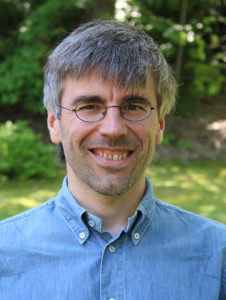
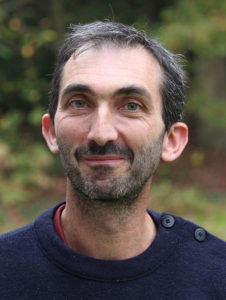
Mathematician Lucien Szpiro passed away at the age of 78

It is with great sadness that the Institute learnt of the passing of Lucien Szpiro, a world-renowned researcher in commutative algebra, Diophantine geometry and arithmetic geometry.

It is with great sadness that the Institute learnt of Lucien Szpiro’s passing. A world-renowned researcher in commutative algebra, Diophantine geometry and arithmetic geometry, he defended his PhD at Paris-Sud University in 1971, under the supervision of Pierre Samuel. In his first works on commutative algebra, he obtained a solution of the Auslander conjecture and, together with Christian Peskine, developed the theory of liason on algebraic varieties. His interests then focused on Diophantine geometry, first for function fields and then in the case of number fields.

In the early 1980s, he was the first to realise the importance of a paper by Arakelov for questions of Diophantine geometry, and brought out a new subject that would have had a decisive impact on Faltings’ proof of the Mordell conjecture. He then showed the link between the positivity of the dualising sheaf of a curve and the Bogomolov conjecture. The latter states that the algebraic points of curves of genus at least 2 in the Neron-Tate topology of its Jacobian variety are discrete.

In 1981, Lucien Szpiro made a famous conjecture that compares discriminant and conductors of elliptic curves. An equivalent form of this statement is the “abc” conjecture, later proposed by Masser and Oesterlé, which remains a central question in number theory. More recently, Lucien Szpiro got interested in dynamical systems for Diophantine geometry.

After a short stay as an assistant professor in the Department of Science in Paris, Lucien Szpiro worked as a CNRS researcher between 1969 and 1999 at Jussieu, ENS Ulm and then at Paris-Sud University. He later held a professorship at the CUNY graduate center in New York.

At every stage of his career, he was able to gather an active group of researchers around himself and organised several memorable seminars and working groups. He also directed the thesis of 17 mathematicians including those of Shouwu Zhang, Laurent Moret-Bailly and of Ahmed Abbes and Emmanuel Ullmo, both now at IHES.

The mathematical community has lost a charismatic personality, the source of inspiration for a generation of arithmetic geometers. Our thoughts are with his wife Beth and his family.

Diana Davis shares her reflections on life at the Institute during lockdown

A mathematician and invited researcher at IHES, she arrived at the Institute one week before the beginning of lockdown in France and spent the whole lockdown period at the Ormaille residence.

Diana Davis completed her Ph.D. at Brown University in 2013 under the direction of Richard Schwartz. She was a postdoc at Northwestern University for three years, and she is currently a visiting assistant professor at Swarthmore College, just outside of Philadelphia. This is her second visit to IHES; she frequently visits France, and this area in particular, to work with Samuel Lelièvre at Paris-Saclay, and other local mathematicians in the billiards and flat surfaces community. 

While a graduate student, she won an international award for the video she created [1] to explain her PhD thesis result using colors and dance, which “went viral” in the mathematical community. Diana Davis has published over a dozen papers, mostly on aspects of mathematical billiards and dynamical systems, and has given over 100 talks in 22 states and 9 countries. She is also an educational innovator, creating and teaching problem-centered, discussion-based math courses of all levels, and studying their pedagogical effectiveness. Outside of research and teaching, she enjoys long-distance running, recreational sailing, traveling, and thinking about how to build community and create a sustainable world.

I feel extraordinarily fortunate to be visiting the IHES at this time. It is an idyllic setting at the best of times, and it is a delightful place to be even during this pandemic.

I came to the IHES in early March from the United States, originally planning to visit only for the week of my spring vacation. Shortly after I arrived, my institution decided to hold classes online for the remainder of the semester, meaning that I did not need to return. The IHES then generously allowed me to extend my visit for the duration of my Schengen visa. This decision was perhaps made easier by the fact that France’s border was closed and the IHES was not accepting any more visitors, so no one would need the office or the studio that I was using.

During my first week here, while everything was still mostly normal, I worked each day with my long-time collaborator Samuel Lelièvre from Paris-Saclay, gave a talk at Jussieu, and talked with other members of the Institute at lunch and at the daily tea.  At the end of that week, France went on lockdown (confinement) and subsequently the IHES was closed until further notice.

Immediately thereafter, our lives became restricted to the Ormaille Residence and video conferencing. I continued working with Samuel, for a couple of hours each evening on Skype. I taught my classes on Zoom for a couple of hours a day, three days a week, in the afternoons (during the morning on the U.S. east coast), and I held Zoom office hours and attended Zoom meetings with colleagues in my department.

Every weekday, I have been hosting a daily tea, to replace the IHES tea that is no longer occurring. For about a month, this took place on Zoom, with three or four of us showing up each day on the screen, with our own teacup and snack. Sometimes others joined us from outside the Ormaille — Fanny Kassel, for example. Now that the weather is beautiful, we have been having the tea outdoors, sitting 4 meters apart in a large square or pentagon in the grassy area at the Ormaille.

Life is different during the confinement, but it is still quite wonderful. Here in Bures-sur-Yvette, we have everything we need: two grocery stores (Auchan and La Fourmi Verte) within easy walking distance, nice places to walk within a 1-km radius from our home, and several large grassy areas within the Ormaille Residence. The farmer’s markets are closed, so now the farmers are doing delivery, and several of us have combined to order a weekly box of vegetables from Potagez-moi. We gather outside, with the box on a picnic table and us spaced out in a large circle around it, and we spend an enjoyable hour chatting and dividing the bounty.

The weather has been sunny and warm, so I have been able to keep my big windows open, and a warm breeze flows through my apartment all day. I have been doing a lot of running, and there are two great places to run within our 1-km radius: the Orsay campus of Université Paris-Saclay, and the trails in the forest just north of the university. In early April, the ground was covered in small purple flowers. In the middle of April, the flowering trees bloomed, and purple lilacs and wisteria lined the streets of Bures-sur-Yvette. Now in late April, the bushes are blooming, and the paths of the university are lined with white flowers on both sides.

Being able to work in the afternoons, due to the 6-hour time difference with the U.S. east coast, is fantastic. It allows me to wake up naturally, go for a run, have some breakfast, do some work, and then start teaching at 3:30pm, which is far easier than getting to the classroom by 9:30am.

Because everything is remote, I was able to give a joint talk with my colleague Samuel, on our joint research. We have never given a talk together, because we are rarely in the same place, but under these circumstances we were both able to show up in the Zoom meeting and give different parts of the talk. I gave an introduction and described our methods and results, and then Samuel did a live demo of our software.

This confinement has been an interesting social experiment. Over the years, people have speculated that “in the future, we will all stay in our houses and just interact with people online,” but this period has shown that such a life is really not desirable. People also say, “young people these days prefer talking with their friends over apps and texting, instead of spending time with them in person,” but I can say for sure that my nieces and nephews would give just about anything to be able to see their friends in real life.

On the other hand, many times I have traveled great distances to give a talk, or shown up at a meeting with my colleagues even though it was inconvenient for me to attend. Now I am able to do these from my living room, with no burning of fossil fuels, no travel costs, no hotel costs, and no commuting time. I hope that we will continue to be able to do these things in the future — that more talks will be recorded, that people will be able to Skype or Zoom into a conference or meeting, and that this will be seen as a reasonable choice.

I am very grateful to the IHES for welcoming me during this period, and for the friendships that I have made with Katie, Aaron, Alex, Ariyan, Ami and Arthur here at the Ormaille during this strange and wonderful time.


[1] Cutting Sequences on the Double Pentagon, explained through dance

During lockdown, the scientific community continues to meet and collaborate online

Mendes Oulamara, a PhD student at Paris-Saclay University, working at IHES, reflects on the collective efforts made by the scientific community to continue exchanging through seminars and conferences at this exceptional time.

While the spread of COVID-19 has forced the scientific community to cancel seminars and conferences around the world, researchers are getting organised and recreating this essential part of their community life. They are finding new ways to meet, discuss and share ideas, through online seminars held across the world.

Mendes Oulamara, a doctoral student at the University of Paris-Saclay working at IHES, reflects on the collective efforts made by the scientific community at this exceptional time.

When I was a child, a few years ago, I thought that mathematical research was a mainly solitary activity where mathematicians found themselves alone with a blank piece of paper and a magma of ideas. When I set foot in research as it is practiced, I understood that if this phase exists, it is far from being the most important one and that working days can become synonyms for days spent discussing with friends in front of a chalkboard.

At a time when most of the scientific community is in lockdown, it is quite moving to see how new practices are being introduced to keep these interactions alive and maintain a dimension of collective effort even at a distance. Discussions via Skype and the like have been around for a long time, but the extent of the current confinement pushes us to improve on improvised solutions. That’s how I learned to use a smartphone or a tablet as shared whiteboards to scribble, erase, share sketches. Some of this acquired knowledge will certainly remain useful after the epidemic has subsided.

I was able to attend the first session of the One World Probability Seminar, a weekly online seminar that brought together more than 400 people. Despite all the problems related to the use of Zoom, it was held without any technical glitches, and we discovered together how best to use it: a discussion and questions in the written chat in parallel with the presentation, links to online resources and a free discussion slot at the end.

Similar initiatives are taking place in other research communities, more specialised meetings, and university seminars for instance. Let’s hope that these new forms of exchange, allowing to both fight climate change as well as become a stronger scientific community, will survive after the end of the pandemic.


For more information, please visit:

A message from the Director of IHES

Dear colleagues, partners, and friends of IHES, as we try to come to terms with the impact of the COVID-19 virus on our personal and professional lives, I want to let you know that here at IHES we are hard at work doing everything possible to mitigate the effects of the virus.

Dear colleagues, partners, and friends of IHES,

These are unprecedented times for us all as we try to come to terms with the impact of the COVID-19 virus on our personal and professional lives. The situation is evolving daily, but I want to let you know that here at IHES we are hard at work doing everything possible to mitigate the effects of the virus. First and foremost is the health, safety and well-being of our community – researchers and staff members. Our goal is to enable the Institute to function in the best possible fashion during this time of uncertainty.

Following the announcements made by the French government on Monday, we have been obliged to take the difficult decision to suspend all upcoming seminars and conferences and to limit access to Bois-Marie to the strict minimum. At times like this, the natural reaction is to come together as a community; being unable to gather and stay close is therefore difficult, as it is for everyone, but we are finding new ways to stay in touch. Every effort is being made to support our permanent staff and our visitors, particularly those who are far from home.

As we all learn to adapt, my thoughts are with all of you, wherever you find yourself. The IHES community is precious and in these challenging times I will continue to keep you all updated on life at the Institute.

I trust that you and your families remain safe and well.

With my warmest regards,
Emmanuel Ullmo
Director of IHES

Coronavirus COVID-19 Information

In the face of the current health situation, the IHES is implementing a series of measures to protect all its members.

Due to the actual health situation related to the spread of the Coronavirus in France and in accordance with the government decisions:

All visits of researchers invited to IHES whose arrival was planned until mid-April are cancelled and will be postponed at a later date.

All events (seminars, conferences…) to be held until mid-April are cancelled and will be postponed to a later date to be determined.

Staff members, professors and visiting researchers are requested to postpone or limit their travels as much as possible and not to plan visits by collaborators from outside the IHES until further notice.

These measures could be extended and further restrictions could be decided if the evolution of the situation so requires.

The IHES Management

IBM France joins forces with IHES to support fundamental research

IHES is proud to announce that IBM France has joined the "avant-garde de la science", the Institute's fundraising campaign.

Press release – 22 January 2020

The Institut des Hautes Études Scientifiques (IHES) is proud to announce that IBM France has joined the “avant-garde de la science”, the Institute’s fundraising campaign.

IBM was one of the first sponsors to support IHES in the 1960s,” said Emmanuel Ullmo, IHES Director. “It is very encouraging to see that a technology company finds our model still relevant to the research ecosystem and that it is renewing a partnership with the Institute.”

For more than 60 years, the IHES funding model has combined private and public support, in France and abroad. Officially launched in 2018, this third fundraising campaign aims to support scientific research in the advanced fields of mathematics and theoretical physics.

Jean-Laurent Bonnafé, Director and Chief Executive Officer of BNP Paribas, and Chairman of the IHES campaign, said: “It is essential for our country to continue to invest in fundamental research at the highest level. This is not only a knowledge challenge, it is also an innovation challenge.

The Institute has set itself the objective of raising €30 million from companies and individuals to maintain the IHES model: excellence, interdisciplinarity and freedom of research. “IBM’s commitment is hugely encouraging for our researchers and I would like to warmly thank IBM for its support,” added Emmanuel Ullmo.

Success of the 2019 Friends of IHES gala

On Tuesday, November 5, more than 150 guests joined Michael R. Douglas and Emmanuel Ullmo at the Harvard Club of New York City for the 2019 Friends of IHES gala. The theme this year was Game Theory: The Science of Strategy.

On Tuesday, November 5, more than 150 guests joined Michael R. Douglas, President and Chairman of Friends of IHES, and Emmanuel Ullmo, Director of IHES, at the Harvard Club of New York City for an exceptional event.

The theme this year was Game Theory: The Science of Strategy. Based in mathematics, Game Theory helps us understand the strategic reasoning at play in competition, and gives us the tools and language to analyse different paths and examine multiple solutions.

Honored guest speakers were Constantinos Daskalakis, professor at MIT and the 2018 Rolf Nevanlinna Prize recipient, and Neil A. Chriss, founder of Omnis Quantitative, a Millennium Platform Company, focused on quantitative investing. Alternating on stage, they guided an absorbed audience through the intricacies of game theory.

Master of Ceremony Sylvia Nasar hosted the evening. She is the author of A Beautiful Mind, the biography of mathematician and Nobel laureate John Nash, and the John S. and James L. Knight Professor Emerita at Columbia University’s Graduate School of Journalism.

We are profoundly grateful to our main benefactors for their generous support of our mission. In particular, we thank deeply the Simons Foundation, premier sponsor BNP Paribas and Gala Chairs Florence & David Faucon and Barbara Amonson & Vincent Della Pietra. Thank you also to Bristol Assurances, Benjamin Servenay, Bank of America Merrill Lynch and to all the gala participants.

Thanks to their great generosity, Friends of IHES could collect almost 500k$, which will help funding various projects at IHES.

As 2019 marks the 20th anniversary of Friends of IHES, this was the perfect occasion to celebrate such a milestone together, through entertainment and learning, and by honoring our shared mission to support fundament research at its highest.

Check this link to have a look at some of the pictures.

Mathematician John T. Tate died aged 94

It is with great sadness that the Institute learned of the passing of American mathematician John Torrence Tate. He was known worldwide for his work in number theory and algebraic geometry.

It is with great sadness that the Institute learned of the passing, at age 94, of American mathematician John Torrence Tate. He was known worldwide for his work in number theory and algebraic geometry.

His influence in these areas is reflected in the many concepts bearing his name: Tate torsion, Tate-Shafarevich group, Tate module, Tate algebras, Tate cohomology, Tate duality theorem, Tate trace, Hodge-Tate theory, and Sato-Tate conjecture, are some examples.

After completing a master’s degree in mathematics at Harvard University and a PhD at Princeton on “Fourier analysis in number fields and Hecke’s zeta function”, under the supervision of Emil Artin, Tate taught at Harvard for 36 years. In 1990, he joined the University of Texas at Austin, from which he retired in 2009.

Throughout his career, John T. Tate developed strong connections with the French mathematical community. From the 1950s, and for about ten years, he was part of the Bourbaki group. He gave seminars at Collège de France and was a visiting professor at IHES on several occasions. He is co-author, together with J.-P. Serre, of the theory that now bears their names, the Serre-Tate theory. From the 1950s onwards, they maintained a long scientific correspondence, which was partly published in 2015 by the Société mathématique de France.

One episode in particular relates his theory of rigid analytical spaces to the Institute. In 1962 IHES circulated Tate’s text on rigid geometry, at the request of J.-P. Serre but without his agreement. The text was then published in the mathematical journal Inventiones Mathematicae and served as a basis for the development of rigid geometry. Tate came up with the idea that his p-adic uniformization of elliptic curves indicated the existence of a general theory of p-adic analytical spaces. This idea was so radically new that even Grothendieck was very sceptical at first, changing his mind once Tate began to develop his theory in 1961 [1].

Since 1992 John T. Tate was an associate foreign member of the Academy of Sciences. He was also a member of the National Academy of Sciences, the American Mathematical Society, the Norwegian Academy of Sciences and Humanities, and an honorary member of the London Mathematical Society.

In 2010 he was awarded the Abel Prize, one of the two most prestigious awards in mathematics, for “his vast and lasting impact on the theory of numbers“. The Wolf Prize (2002), the Steele Prize (1995), and the Cole Prize in Number Theory (1956), are some of the several other honors he received throughout his career.

The IHES extends its deepest condolences to his family.


[1] J.S. Milne, The work of John Tate, arXiv:1210.7459, p.28

Two IHES researchers awarded prizes by the French Academy of Sciences

IHES congratulates Slava Rychkov, permanent professor, winner of the Mergier-Bourdeix Grand Prize and Bertrand Eynard, CEA researcher at the IHES, winner of the Claude Berthault Prize.

Press release (French only) – 16 October 2019

IHES congratulates Slava Rychkov, permanent professor, winner of the Mergier-Bourdeix Grand Prize and Bertrand Eynard, CEA researcher at the IHES, winner of the Claude Berthault Prize.

Slava Rychkov is a particle theorist. After studying mathematics at the Moscow Institute of Physics and Technology, and a PhD at Princeton (under the supervision of Alexander Polyakov), he worked in Pisa, then at CERN. He became a professor at UPMC, then at ENS-Paris and joined IHES as permanent professor in 2017.


His work focused first on possible extensions of the standard model that could have experimental implications, such as supersymmetry, composite Higgs boson models, or the production of black holes in a high-energy collision. For several years now, he has also started a school all over the world that studies the quantitative consequences of conformant invariance in a relativistic field theory. Using crossover symmetry and positivity inequalities related to unity, he obtained bounds on the anomalous dimensions of extraordinarily precise fields. Thus, in dimension three, he obtained the critical exponents of famous models such as the Ising model with greater precision than any previous method. This method known as “conformal bootstrap” has revolutionized contemporary theoretical physics.


Bertrand Eynard is a theoretical physicist. After a PhD on random matrices (under the supervision of Jean Zinn-Justin), he became a researcher at the CEA (French Alternative Energies and Atomic Energy Commission) in 1995. Still affiliated to CEA, he has been working at IHES since September 2018.


His work began with random matrices where he made important contributions and wrote and taught several courses. In 2004, he introduced a new algebraic method for calculating the asymptotic development of large random matrices, called “topological recurrence”. This method has been very successful because it has proved to be much more general than random matrices: it appears in many fields of mathematical physics, such as enumerative geometry, Gromov-Witten invariants, node theory, string theory and integrable systems. Topological recurrence has become a mathematical subject in its own right, taught in master’s degrees and the subject of several annual conferences. Together with M. Kontsevich, B. Eynard was the 2019 winner of the European ERC Synergy Fellowship for the ReNewQuantum project, focusing on the study of topological recurrence.

The Mergier-Bourdeix Grand Prix

A biennial prize awarded alternately in the Division of Mathematical and Physical Sciences, Universe Sciences and their Applications (this is the case in 2019) and in the Division of Chemical, Biological and Medical Sciences and their Applications, to a young French researcher engaged in fundamental research on a non-profit, non-profit basis, with no immediate application and whose results reveal exceptional talents.

The Claude Berthault Award

The income is allocated by the Institut de France, on proposals from the French Academy, the Academy of Sciences and the Academy of Moral and Political Sciences, either as an incentive to families of farmers or sailors along the Channel and Ocean coasts, or as a reward for artistic or scientific works that could enhance the reputation of the French nation.

Science and Society: The case of Venice

Vasilisa Nikiforova, a physicist and a post-doctoral fellow at IHES, presents an unknown facet of Galileo's work through his discussions with the Arsenal of Venice.

Vasilisa Nikiforova, a physicist and a post-doctoral fellow at IHES, presents an unknown facet of Galileo’s work through his discussions with the Arsenal of Venice.

Generalities on the importance of science in the development of modern societies abound. It is, however, interesting to turn to the past, and to examine specific examples. Here, I would like to offer some brief remarks from a non-specialist perspective, on Science and Venice.

476, 1204, 1453: The end of the Western Roman Empire (marked by the abdication of its last emperor, Romulus Augustulus), the capture of Constantinople by the army of the 4th Crusade (led by Venetians), the capture of Constantinople by the Ottomans. Byzantium is the successor of the Roman Empire, while Venice is considered as the successor of Byzantium. Not because of the huge amount of treasures which Venetians removed from Constantinople after the 4th Crusade (notably the famous horses on displayed on the roof of San Marco). But rather because Venice was two-headed, and one of the Venice’s heads always looked towards the East, and was part, and transmitter, of Byzantine culture.

The close trade contacts between Venice and Constantinople made the former an important transmitter of the Greco-Roman philosophical tradition to the West. Thanks to her, in the 12th – 13th centuries, Western Europe discovered many of Aristotle’s treatises. This role of Venice was also later (after the arrival of typographical art in Venice in 1469) provided by the fact that, being at the junction of a very active net of commercial relations and relatively independent of the censorship of the Catholic Church in Rome, Venice was one of the most important publishing centres of the time. At the decline of Constantinople and after its fall, many of its best minds flocked to western Europe (and notably to Venice). It is generally accepted that this influx of Byzantine scholars after 1453 was one of the important factors in the humanistic Renaissance. Venice was one of the few centres in Europe which welcomed Byzantine scholars in large numbers. As John J. Norwich writes in his book, “when, even before Constantinople finally fell [meaning 1453], refugees from all over the crumbling Empire were settling in Venice, recognizing her as the most Byzantine city in the West, and bringing with them their libraries, their works of art, and a new spirit of learning and scholarship” (John J. Norwich. A history of Venice).[1] This way Venice played a major role in preserving ancient knowledge.

But was Venice receptive to the importance of humanistic culture and in particular, was Venice interested in theoretical knowledge, or was she too practically minded to foster abstract knowledge?

Galileo and the Arsenal of Venice

The development of technology in shipbuilding and navigation allowed Venice to become the leader of Mediterranean seafaring for centuries. At the beginning of the book that launched the modern scientific revolution, namely the Discourses on Two New Sciences, Galileo praises the artisans of Venice’s Arsenal:

“Frequent experience of your famous arsenal, my Venetian friends, seems to me to open a large field to speculative minds for philosophizing, and particularly in that area which is called mechanics, inasmuch as every sort of instrument and machine is continually put in operation there. And among its great number of artisans there must be some who, through observations handed down by their predecessors as well as those which they attentively and continually make for themselves, are truly expert and whose reasoning is of the finest.”

Many science historians have tended to downplay the importance of this praise, but modern science historians have, however, revisited the real meaning of Galileo’s praise of Venice’s arsenal. Indeed, in their fascinating work “Galileo and the Challenge of the Arsenal[2] Jürgen Renn and Matteo Valleriani convincingly argue that Galileo should be thought of as a Renaissance “engineer-scientist” of a similar type to those who could also be found in the Arsenal.  Moreover, both of the “two new sciences” that Galileo pioneered in his Discorsi[3] were spurred by Galileo’s genuine interest for practical (especially technological or military) issues. His researches (mainly conducted in Padua) on dynamics (the second of his two new sciences) were prompted by his interest in artillery.

Of most importance to the present article is the fact, proven by Renn and Valleriani, that the first of Galileo’s two new sciences, dealing with the strength of materials, was prompted by definitely very technical questions coming from high-level engineers from the Arsenal. Indeed, by analysing a newly found document, namely a letter from Galileo to a Commissioner of the Arsenal (Giacomo Contarini), Renn and Valleriani reconstruct how Galileo’s theory of the strength of materials emerged from the practical challenges of construction technology, which became particularly evident at the Arsenal during this period.[4] Most remarkable is the fact that the exchange between Galileo and Contarini was no casual event at all, rather it was the result of a deliberate and systematic policy of the Arsenal’s high commissioners who, faced with technological challenges of high military relevance, would seek advice from some of the best engineer-scientists of the time.

One often emphasises the importance of theoretical knowledge for the development of technological breakthroughs. It is, however, interesting to highlight that the path to new knowledge sometimes goes the other way around…

But empires crumble. Knowledge can only remain if it is passed on. I  have highlighted here the great role Venice played in preserving, disseminating and enhancing knowledge. Her part in the history of world science lies hidden in the halo of glory of that miracle city on the water.

Vasilisa Nikiforova


[1] Let us recall in this respect the crucial impact on Copernicus’ work of having learned Greek during his studies in Italy, and notably at the University of Padua (1501-1503) which was then part of the Republic of Venice.

[2] Delivered in Florence, 21 March 2001, and available here.

[3] Conceived and first developed in Padua, though they were published much later while Galileo was under house arrest in Arcetri.

[4] The problem was linked to the use of bigger oars needed to manoeuvre the increasingly larger galleys produced by the arsenal, and the difficulty of making sufficiently resistant, longer oars.

Interview with Joseph Ayoub

Joseph Ayoub, Professor of Mathematics at the University of Zurich, is the first holder of the "Alexzandria Figueroa and Robert Penner" Chair. He is interested in the cohomology of algebraic varieties and the theory of motives.

Joseph Ayoub, Professor of Mathematics at the University of Zurich, is the first holder of the “Alexzandria Figueroa and Robert Penner” Chair. He is interested in the cohomology of algebraic varieties and the theory of motives.

How did your interest in mathematics start?

I’ve always been very interested in maths. In my early teens, I had good grades in all subjects but maths was always a special interest of mine: in my spare time, I enjoyed solving maths problems. When I ran out of them, I made new ones up. I was particularly keen on plane geometry but I also liked calculating things and solving equations. During breaks, I often disappeared into the library to look through the Encyclopaedia Universalis in search of maths articles. This is how I became familiar with a number of modern concepts such as the classification of finite simple groups.
I was able to access bits of “advanced mathematics” at a very young age, when I found some papers in the storage room of our small apartment in Beyrouth. They were notes of the lectures on general topology which my father – a maths professor – had followed at the university. My mother, who was a librarian at the science faculty, knew someone who helped me lay my hands on a copy of Differential Geometry and Symmetric Spaces by Helgason. I remember having spent most of the summer holidays compulsively going through that book. I ended up reading it from start to finish and feeling I had understood everything!
In 1998, straight after my baccalaureate, I was lucky enough to be admitted to Lycée Louis‑le‑Grand in Paris. That’s when I understood that you could earn a living from mathematical research, which was a real revelation for me. It was my maths teacher, Hervé Gianella, who made me realise this and who encouraged me to take the École normale supérieure entrance examination. I had previously seen myself as becoming an engineer with a “proper” job and an “eccentric” hobby: reading maths books.

What is your connection with IHES?

The first time I heard about IHES was in connection with Alexandre Grothendieck. His name is inextricably linked with that of IHES. In a way, I first discovered IHES with the élément de Géométrie Algébrique and the “Séminaire de Géométrie Algébrique”, which were largely prepared and drafted at IHES. It was much later that I came to IHES, and that was for a conference in honour of Luc Illusie.
I am very grateful to the scientific council for having chosen me as the first holder of Alexzandria Figueroa and Robert Penner Chair. It is a great honour of course and I am already looking forward to the time I will be spending at IHES. I don’t yet know what impact my visits will have on my work but I will try to extract the maximum benefit from them.

How would you summarise your main contributions?

For a long time, I worked on a particular and crucial conjecture in motive theory called the “conservativity conjecture.” The conjecture is very easy to state and offers a bridge, or rather a return path to two different kinds of objects. One is a motive, which is a very rich algebraic geometric object, the other is its realisation which is a topological object with no additional structure.
The conservativity structure turned out to be very difficult. Nonetheless, I devised a strategy to demonstrate it. Even if I haven’t managed to make it work yet, I consider this unfinished business to be my most important contribution.

What inspired you so much to pursue your research and what do you find most exciting in what you do?

What I love most in mathematics is the coherence that emanates from a well‑constructed theory. Once the right point of view has been identified, the right definition, the right context, what follows is more or less inevitable and the result is very coherent. I think I really value that coherence. Luckily, there is no shortage of well-constructed theories in algebraic geometry, which is probably one of Grothendieck’s legacies.
I also like the writing stage. In fact, I think doing and writing maths are activities which cannot be separated. It’s only when I write an article that I really understand the demonstration of a problem and the cogs and wheels in a theory. Unfortunately, the big questions I’ve addressed so far have turned out to be very tough. This is naturally the source of some disappointment but I am an optimist. What inspires me to carry on is definitely the hope of seeing the solution to these great questions one day. Another source of hope and inspiration is to have been witness to spectacular progress on other topics and in other mathematics fields.