On December 16th, 2020, Prof. Robert Penner, René Thom Chair at IHES, will host the conference SciTech Central COVID-19 , the 11th International Virtual Seminar on COVID-19 Part II.
On December 16th, 2020, Prof. Robert Penner, René Thom Chair at IHES, will host the conference SciTech Central COVID-19, the 11th International Virtual Seminar on COVID-19 Part II. It will be a one-day seminar featuring academics, researchers, scientists, students, faculty members, healthcare executives, and doctors who will share their perspective and reflections on the impact of COVID-19 on our lives. The topics discussed will range from treatment and healthcare to the economic repercussions of the pandemic.
Robert Penner’s welcome message to the conference:
“With the advent of mRNA vaccines for covid, we have entered a new age of antiviral technology, and it comes not a moment too soon. In its impact on human health and society as a consequence, I believe this will be as profound for our species as was the development of antibiotics. Let us hope this quickly and resolutely is a turning point in our fight against covid and more generally against the countless other viral diseases which threaten humanity. These aspects of vaccinology are among the many timely topics across the health sciences, biomedicine, and social repercussions of covid to be presented in this SciTech Central COVID-19 Virtual Conference.”
Test your knowledge on the history of maths with a quiz offered by IHES
IHES invites all math enthusiasts to test their knowledge on mathematics and its history and to discover the Institute with a series of fun questions!
Do you know after whom the equation that many consider to be the most beautiful in mathematics is named? Or how many women have won the Fields Medal since it was awarded for the first time in 1936?
You will be able to answer these and many other questions in a quiz realized by IHES, which will be an occasion to test your knowledge and learn more about the history of mathematics and the Institute in a fun way.
By offering you this quiz, IHES is taking part in the #GivingTuesday initiative, the worldwide movement that encourages generosity and sharing.
Stay connected with IHES on its website and social networks to participate in this initiative and help us spread the spirit of #GivingTuesday. You too will have the opportunity to unleash your generosity and contribute to the advancement of research in mathematics and theoretical physics by making a gift to the Institute.
On December 1st (starting in the morning right after midnight, French time), the first person to donate 300€ (or $300 for US residents) or more will receive a copy of ‘A history of IHES‘, a book retracing the first 60 years of the history of IHES through images and historical texts, explained and commented by Anne-Sandrine Paumier and Josselin Blieck, two historians who worked on the Institute’s archives.
Let us celebrate together our passion for mathematics and sharing. Join us online and take the quiz of IHES!
Sixty years of history of IHES
On the occasion of its 60th anniversary, IHES wanted to highlight the treasures of its archives by gathering them in a book.
On the occasion of its 60th anniversary, IHES wanted to highlight the treasures of its archives by gathering them in a book.
Anne-Sandrine Paumier, a science historian and specialist in French mathematical life, and Josselin Blieck, a historian and archivist, worked together to write this book. During several months, they had access to all available public documents but also to all the archives still unpublished.
The book was also enhanced by the insights of numerous actors, including researchers and historians, of the history of the Institute, especially Barry Mazur, a renowned mathematician and IHES visitor since the early years, who wrote the preface.
Marie Caillat, then Director of communications and development of the Institute, followed up and carried this project through its completion.
The production of this book was made possible thanks to the financial support of Société Générale. “A history of IHES” has obtained the patronage of UNESCO.
The online ceremony celebrating the official launch of the Huawei Young Talents Program was recently held. This program aims to support the work of talented researchers in mathematics and theoretical physics, at the beginning of their career.
The online ceremony celebrating the official launch of the Huawei Young Talents Program at the Institut des Hautes Etudes Scientifiques was recently held. This program aims to support the work of talented researchers in mathematics and theoretical physics, at the beginning of their career. Every year, the Huawei Young Talents Program will fund on average 7 postdoctoral fellowships that will be awarded by the Institute’s Scientific Council, only on the basis of scientific excellence. The fellows will collaborate with the Institute’s permanent professors and work on topics of their interest.
Five brilliant young researchers have already joined the Huawei Young Talents program. Three of them presented their work during the ceremony. Yue WANG gave a talk about “Inference on tissue transplantation experiments”; Zhe SUN’s presentation was about “Webs and tropical coordinates on surfaces” and Vasilisa NIKIFOROVA concluded the ceremony by a talk on “Generalized Einstein-Cartan theory of gravity”.
The Huawei Young Talents Program also gives IHES the possibility to create a prestigious 5-year position reserved to a particularly gifted young researcher.“Through this competitive post, the first of its kind at IHES, the Institute intends to reward exceptional talent and attract in France outstanding young researchers who might otherwise begin their careers elsewhere.” – comments Emmanuel ULLMO, Director of IHES.
Huawei renews its support to IHES for the next ten years
The creation of the Huawei Young Talents Program at IHES has been made possible thanks to the financial support from Huawei Technologies France. The company thus renews its trust to the Institute with a 6-million-euro pledge over the next ten years. For its larger part (5 million euros), this gift will finance the new Huawei Young Talents Program at IHES. It will also further finance the Huawei Chair in Algebraic Geometry (1 million euros). This Chair was created in 2019 to acknowledge the first 1M€ gift from Huawei to IHES. The first chairholder is Prof. Laurent LAFFORGUE, 2002 Fields medalist and a permanent professor at IHES since 2000. Prof. Laurent LAFFORGUE has been working closely with Huawei for several years, and presented a talk on “The creative power of categories: History and some new perpectives” at the ceremony.
During the ceremony, Marwan LAHOUD, Chairman of the Institute, expressed his gratitude to Huawei: “At a time when the global pandemic has brought much uncertainty and made it more challenging to plan ahead, Huawei’s generous support to IHES is ever more precious as it allows the Institute to take the long view and make plans to sustain a thriving scientific activity.”
“Because research is at the heart of our DNA, we believe that there can be no great breakthrough innovations without fundamental research. This is a strong conviction that we share with the Institut des Hautes Études Scientifiques, and that is why we are delighted to sign with them the opening of the Huawei Young Talents program. IHES has created a fertile scientific environment. We are proud that Huawei is part of it.” – commented Zishang XIANG, Vice-President executive of Huawei European Research Institute.
“Since our installation 17 years ago, Huawei has chosen France as a land of excellence in research and development. In fact, we support the French scientific community and have built a relationship of trust with them based on a continuous exchange of knowledge.” – said Weiliang SHI, Managing Director of Huawei France. “This was the meaning of our approach when we inaugurated the Lagrange Research Center on October 9 in Paris. Today, it is the raison d’être of the Huawei Young Talents program, which we are fortunate enough to set up with our long-time partner, IHES.” – concluded Weiliang SHI.
Here is Laurent Lafforgue’s talk on “The creative power of categories”:
IHES and Huawei announce a collaboration to support young talents
Every year, the Huawei Young Talents Program will fund on average 7 postdoctoral fellowships that will be awarded by the Institute’s Scientific Council, only on the basis of scientific excellence.
Huawei Technologies France has recently pledged 6M€ to support the Institute over ten years. Part of this generous gift will extend the Huawei Chair in Algebraic Geometry, which was created in 2019 to acknowledge a 1M€ gift from Huawei and whose first chairholder is Prof. Laurent Lafforgue, 2002 Fields medalist and a permanent professor at IHES since 2000.
The remaining 5M€ will finance the Huawei Young Talents program, which aims to support the work of talented researchers in mathematics and theoretical physics, at the beginning of their careers. Every year, the Huawei Young Talents Program will fund on average 7 postdoctoral fellowships that will be awarded by the Institute’s Scientific Council, only on the basis of scientific excellence. The fellows will collaborate with the Institute’s permanent professors and work on topics of their interest.
“IHES’ unique and inspiring scientific environment constitutes the most fertile ground to foster young talents. Postdoctoral researchers, still at the beginning of their career, have all the potential to make the most of their stay at the Institute.” – said Emmanuel Ullmo, IHES Director, who, since the beginning of his mandate, in 2013, has made a real effort to expand the Institute’s postdoctoral offer.
The Huawei Young Talents Program also gives IHES the possibility to create a prestigious 5-year position reserved for a particularly gifted young researcher. “Through this competitive post, the first of its kind at IHES, the Institute intends to reward exceptional talent and attract in France outstanding young researchers that might otherwise begin their careers elsewhere.” – continued Emmanuel Ullmo.
“Early-stage researchers constitute an invaluable resource to IHES. Their dynamism and diverse research experience inject new life into the Institute’s scientific activity. Through the Young Talents Program at IHES, Huawei endorses once again IHES’ research model, thus standing on the side of free and disinterested research and taking part in the development of fundamental research in France”.
Slava Rychkov proposes a rigorous approach to the Renormalization group
Slava Rychkov has recently gone back to the Renormalization group. His aim is to give new life to the philosophy behind its original formulation and to go back to a rigorous approach.
Critical phenomena permeate physics and Slava Rychkov has long been interested in tackling their complexity. After having achieved very encouraging results with the conformal bootstrap, he has recently gone back to its complementary, rival method when dealing with criticality: the Renormalization group. His aim is to give new life to the philosophy behind its original formulation, and to move away from the many approximations and truncations that characterize its most popular implementations.
To do that, he teamed up with two mathematical physicists, Alessandro Giuliani and Vieri Mastropietro. Their collaboration, which blends the rigor of mathematical physics with a focus on applying it to physical systems of actual interest, resulted in a paper, recently made available on the Journal of High Energy Physics. By showing in detail an example of exact application of the Renormalization group, they hope to spark a renewed interest in its rigorous implementation and unveil its unexploited potential.
Introduced in the 1960s, the Renormalization group was mainly developed by Kenneth Wilson, who in 1982 was awarded the Nobel Prize for his contributions. It is a beautiful, complex apparatus suggesting how the collective behavior observed in critical systems can arise from microscopic interactions. The Renormalization group has played a crucial role in the study of phase transitions and the understanding of universality which emerges close to the critical temperature, at which the transition happens.
But if on one hand the Renormalization group seems to qualitatively capture the physics of phase transitions, on the other hand the quantitative results it provides are of limited accuracy: its complexity has led to a range of approximations that have failed to converge to stable physical solutions, thus leading to a general disillusion in the physics community, against the hope to ever solve it exactly.
Convinced that Wilson was right, and that the problem with the Renormalization group so far has been that nobody has yet been able to find a stable implementation of Wilson’s vision, Slava Rychkov, Alessandro Giuliani and Vieri Mastropietro ventured in a mission to develop a new, rigorous implementation of the Renormalization group and apply it to relevant physical problems.
They started working together in 2017, when Slava Rychkov met Alessandro Giuliani at a conference organized by the Accademia dei Lincei, in Rome. At the time Professor Rychkov had already obtained very promising results with his conformal bootstrap method, but had long been convinced that the rigorous use that mathematicians had been able to make meant that the Renormalization group still had a lot to say. Alessandro Giuliani, a mathematical physicist with a deep interest in critical phenomena, on his side, had already a long history of collaborating with Vieri Mastropietro on an exact approach to the Renormalization group.
In their paper, they apply the Renormalization group to a new, simple model to obtain a self-contained, exact result. Their work shows that the many approximations that physicists have applied over the years to get to grips with the Renormalization group are certainly useful, but not indispensable.
This result opens the way to further work and might constitute an important step towards solving problems that have long remained open. One that has puzzled physicists for a century now, and that Slava Rychkov has already set his eye on, is the 3-dimensional Ising model. A hundred years after the model was first formulated, and more than 75 years after Lars Onsager found an analytical solution in two dimensions, this paper lightens up the hope that by applying Wilson’s philosophy a solution to the 3-dimensional model could be expressed as a convergent series whose terms it will be possible to compute.
The collaboration between Slava Rychkov, Alessandro Giuliani and Vieri Mastropietro proves that the alliance between mathematicians and physicists can lead to a deeper, more profound understanding of nature’s laws, thus perfectly reflecting IHES’ founding spirit.
Vaughan Jones, an eminent mathematician close to IHES, passed away
A frequent visiting professor at IHES, Vaughan Jones served for several years as a Board Member of Friends of IHES, the American fundraising arm of the Institute, thus playing a precious role in supporting IHES and promoting its development.
Vaughan Jones, a former invited professor at IHES and a Board member of Friends of IHES, died at the age of 67.
IHES was deeply saddened to learn of the passing of distinguished mathematician Vaughan Jones.
After having obtained a Master of Science in Mathematics from the University of Auckland, New Zealand, where he was born, Vaughan Jones obtained his PhD from the University of Geneva in 1979. He later moved to the United States, where he spent the rest of his career, teaching first at the University of California, Los Angeles, then at the University of Pennsylvania. In 1985 he became Professor of Mathematics at the University of California at Berkeley, where he later became Professor Emeritus, and in 2011 he was nominated Stevenson Distinguished Professor of mathematics at Vanderbilt University.
Known especially for the knots invariant polynomial that he discovered in 1984 and that carries his name, he was awarded the Fields Medal in 1990 for having discovered a link between knot theory and statistical mechanics.
Alain Connes, Professor Emeritus at IHES, who met him in the late seventies, when he was still a young researcher, describes his discovery of the link between his theory of subfactors and knot theory as “one of pure genius”, and fondly recollects the steps of their collaboration, which led to a joint work on non conjugate Cartan subalgebras.
A frequent visiting professor at IHES, especially during the period between 1985 and the late 1990s, Vaughan Jones later served for several years as a Board Member of Friends of IHES, the American fundraising arm of the Institute, thus playing a precious role in supporting IHES and promoting its development.
The scientists and staff that had the chance to meet him still remember him with warm affection, which also transpires from the letters he exchanged with former directors Marcel Berger and Jean-Pierre Bourguignon.
IHES extends his deepest condolences to his wife, Martha, and his children Bethany, Ian and Alice.
Claire Lenz appointed Director of Development and Communications
Claire Lenz joins the Institute as Director of development and communications. She reports to Emmanuel Ullmo, IHES Director, as well as Emmanuel Hermand, General Secretary.
Claire Lenz joins the Institute as Director of development and communications. She reports to Emmanuel Ullmo, IHES Director, as well as Emmanuel Hermand, General Secretary.
Previously, she held several positions at École Polytechnique. As Deputy Director of communications from 2012 to 2016, she was more particularly in charge of press relations and digital communications, before developing the institution’s international communications strategy. From 2016 to 2020, she was the Dean of École Polytechnique’s new Bachelor Program, whose first class graduated in July.
With two Master’s degrees, one in communications from Institut d’Études Politiques de Paris, the other in literature from Université Sorbonne Nouvelle, she also worked as Communications officer within the Société Générale group from 2006 to 2009. From 2009 to 2012, she lived in Chicago, where she taught at the International French School while working as well as a Marketing strategist for the University of Chicago.
Member of the Board of the Fondation du Lycée du Parc, Claire Lenz participated to several fundraising operations in the field of research and education, in France as well as in the USA.
“Motivic, Equivariant and Non‑commutative Homotopy Theory”: a 2.0 Summer School
The 2020 Summer School at IHES was held entirely online to cope with this year's exceptional circumstances. More than 300 people from across the world attended the event.
From Euler to Poincaré, homotopy theory developed gradually. With its foundations set up by Poincaré in the early 20th century, it has continued to develop steadily, branching out in many different areas. The ensuing diversity of topics has sometimes kept specialists away from these different ramifications. To some extent, the basic idea for our Summer School was to bring them together.
Two mathematicians in particular catalyzed this development in the middle of the last century: Grothendieck and Quillen. The former considerably extended the scope of Poincaré’s ideas, drawing on the concepts of derived categories and toposes, and bequeathed a whole new world to discover: the theory of motives. The latter provided a magnificent synthesis of singular cohomology and fundamental groups, homotopic algebra, which led to the current developments of ∞‑categories. Closer to us and to our Summer School are two Russian mathematicians, Voevodsky and Kontsevich, whose ideas guided our schedule.
Vladimir Voevodsky, who died too soon, developed mixed motives after Beilinson. He also amplified it with Fabien Morel, by creating motivic homotopy theory, which extends Poincaré’s analysis situs to algebraic varieties. Voevodsky’s theory, still an active field of research, has borne ample fruit. Thus, in one of the school’s mini‑courses, Marc Levine presented the basis of his quadratic enumerative geometry, which enriches classical enumerative geometry using the theory of quadratic forms. This mini‑course was particularly relevant to Kirsten Wickelgren’s lecture in the second week. She proposed a “quadratic count” of the linear subspaces of a complete intersection over an arbitrary field. The influence of motivic homotopy extends beyond algebraic geometry. In particular, it is linked to equivariant topology, through the intermediary of real algebraic varieties. The lecture given by Mike Hill, “Real and Hyperreal Equivariant and Motivic Computations”, highlighted these influences, in a shadow play between equivariant and motivic computations.
Among Maxim Kontsevich’s many contributions to modern geometry is the use of derived algebraic geometry, dear to the Russian school, to arrive at a new theory of motives, known as non‑commutative, which takes a new look not only at Grothendieck’s pure motives but also at Voevodsky’s mixed motives. This initial theory, exposed at IHES in 2005, has attracted the attention of many mathematicians, including Gonçalo Tabuada who, in a mini‑course, presented the numerous results obtained in this field. He also explained how using them gives us fresh insight into Grothendieck’s motives.
Unfortunately, it is not possible to cite all the contributions here, but this was, in broad outline, our schedule when the health crisis came to disrupt the organization. Elisabeth Jasserand then proposed that we organise a two‑week videoconference, a first for us and for IHES. After some hesitation, we felt that this would be a positive experiment, from all points of view.
The change in format required prompt action. We were surprised with the speed that everyone agreed to the videoconference: the speakers quickly accepted the new format, and participants rushed to sign up, far exceeding the initial number of registrations: from 87 to 387! A preliminary rehearsal was set up with the speakers, but most of them were already prepared to use tablets and/or slides. The presentations from speakers in two continents could be followed, as the sessions were held in the afternoon. These went particularly well, despite the high number of participants (up to 180 simultaneously). Questions via the chat function were relayed either by the chairman or directly by the speaker, which provided some rhythm, so that everyone in front of their screen could imagine they were attending a physical event.
The changes to our environment, both from an ecology and a human perspective, show us that this new media is a solution that must now be seriously considered.
Find the program and all the lectures of the 2020 IHES Summer School.
Three of Thibault Damour’s publications highlighted in Physical Review D
Physical Review D has recently highlighted three of Thibault Damour’s publications where the dynamics of binary black-holes is calculated with unprecedented accuracy by using novel theoretical methods developed with his collaborators.
Physical Review D has recently highlighted three of Thibault Damour’s publications where the dynamics of binary black-holes is calculated with unprecedented accuracy by using novel theoretical methods recently developed by him and his collaborators. Their work might be crucial to interpret gravitational wave signals coming from upgraded detectors whose activity will start in 2022.
Two of these papers were the result of a fruitful collaboration with Donato Bini and Andrea Geralico (Italian National Research Council). Much of their interactions took place at IHES, where Donato Bini has been a frequent visiting professor since 2011.
An article by Jan Steinhoff and Justin Vines (Max Planck Institute for Gravitational Physics) provides an overview of Prof. Damour and his collaborators’ work and describes the scope and impact of the three highlighted publications.
“Thibault Damour from the Institute of Advanced Scientific Studies (IHES) in France and colleagues have sparked unanticipated progress in theoretical gravitational-wave predictions [1–3]. Their latest work shows that there exists a computational shortcut for the generic scattering problem by considering a special limit where one black hole weighs much less than the other.”
The loyalty that researchers, visitors, academic partners, staff members, donors and friends demonstrate towards the Institute is the key to the steady and sustained development of IHES. There were many proofs of this loyalty in 2019.
Nearly 20 years ago, I walked through the gates of Bois-Marie for the first time. From that day onwards, my interest in this institution and my admiration for it have grown steadily: interest in the work of passionate and exciting researchers, and admiration in particular for the aptitude IHES shows in forging solid and ever-renewed ties within a very large ecosystem.
The loyalty that researchers, visitors, academic partners, staff members, donors and friends demonstrate towards the Institute is the key to the steady and sustained development of IHES. There were many proofs of this loyalty in 2019.
BNP Paribas, through its Chief Executive Officer Jean-Laurent Bonnafé, has been supporting IHES since 2015. This precious commitment has been renewed through a major donation to the Director’s Chair, thus ensuring the continuity of a position that is essential to the smooth administrative and scientific operations at the Institute.
Huawei Technologies France are also committed to supporting fundamental research over the long term and to confirming its ties with IHES. This commitment led to a large donation which created the Huawei Chair in Algebraic Geometry. Huawei has supported the Institute since 2012.
A substantial donation marks the resumption of strong scientific relations between the Institute and IBM, which was one of the first founding members of IHES. We look forward to the close collaborations that will arise out of this partnership.Naturally, it is also thanks to the donations of our dozens of regular donors that we are able to manage the daily lives of researchers and staff more smoothly.
Our ties with our donors and friends accross the Atlantic Ocean are old ties and they grow stronger year after year. We now hold two events in the United States: in addition to a gala every other year, we host a breakfast event for about twenty science enthusiasts. The creation of a fund capitalised in the United States is a perfect symbol of our donors’ desire to provide long-term support, which we are determined to grow through our current campaign IHES, à l’avant-garde de la science.
I would like to pay tribute to the remarkable work and strong engagement from the members of Friends of IHES and from its president, Michael R. Douglas. It only remains for me to share my pride in being involved with an institution that is making a formidable success of a long-term gamble – a gamble that allows the most decisive scientific discoveries to mature, and a gamble that cements scientific and human relations for the greater success of our Institute.
Marwan Lahoud
President of IHES
Robert Penner on how curiosity and a little help from friends have led to his COVID initiative
By applying his knowledge in topology and geometry to the study of proteins, he has recently proposed a method to predict promising targets for antiviral drugs and vaccines and has applied it specifically to the known human coronaviruses.
Robert Penner is a mathematician whose early work in topology and geometry has found applications in high energy physics and, more recently, theoretical biology. He has held the René Thom Chair in Mathematical Biology at IHES since 2014, after having been a frequent visiting professor for decades.
In a paper entitled “Backbone Free Energy Estimator Applied to Viral Glycoproteins”[1] recently published in the Journal of Computational Biology, he proposes a method to predict promising targets for antiviral drugs or vaccines across all viruses. There is a sequel entitled “Conserved high free energy sites in human coronavirus spike glycoprotein backbones”[2] in the same journal, which applies these methods specifically to the known human coronaviruses, thus pushing forward the current efforts to fight SARS CoV-2, the virus causing COVID-19.
Such a timely result is a rare achievement in the life of a mathematician, and in this article Robert Penner recounts the adventurous steps and encounters that have led him here, along a sometimes tortuous, but very exciting path.
My first paper on RNA was published in 1992, co-authored with my close friend and onetime colleague Mike Waterman, sometimes called the “father of computational biology.” We would celebrate (bemoan?) the beginning of each academic year at USC with a deep-sea fishing trip, for it is late summer when the yellowtail tuna run in the warm waters off Southern California. Waiting for something to bite, he mentioned his recent work, which I immediately recognized as a kind of bastardized version of Poincaré duality. This led to our first paper on spaces of RNA secondary structures, which was well-received but had no major impact until much later. But this set the ball in motion, and he invited me over the next decades to any seminar he thought might be accessible and of interest to me. Some years later, we ran a private meeting at USC on macromolecules funded by the bio-philanthropist Peter Preuss, and among the star-studded attendees was Alexei Finkelstein, a leading world authority on protein who plays crucial subsequent roles. He and I instantly became friends. His book entitled “Protein Physics: a course of lectures,” written with his teacher Oleg Ptitsyn, is a masterpiece, and I devoured it.
Macromolecules–specifically, RNA and protein–were my gateway to biology, a separate and comprehensible piece of a dauntingly enormous puzzle. Macromolecules, after all, are essentially one-dimensional objects that interact along sites, just as the strings of high-energy physics do. And I immediately saw ways to extrapolate up 25 or so orders of magnitude from the Planck scale to the Angstrom scale the basic combinatorics of my earlier work in string theory. Once in a seminar at Caltech, the eminent physicist John Schwarz laughed out loud at my remark, because one of his great insights decades earlier was the same but different: strings were originally a model for protons whose combinatorics he had scaled down twenty-odd orders of magnitude to strings with exactly the same remark about invariance of combinatorics under rescaling. Down and up, up and down.
After nearly 25 years at USC, in the early 2000s I undertook a move to Aarhus, Denmark. Once my friend and colleague there, Joergen Andersen, and I were making dinner, and he asked if I had any crazy ideas for applied Teichmüller theory. I offered up two, one on color quantization and the other on the topology of proteins, the latter of which I had already hatched after the Preuss seminar. This evolved into our first paper on protein topology and later on protein geometry, basically for us the natural transition from the Z/2-graph connections of fatgraphs to
the SO(3)-graph connections we finally studied with a large team in Aarhus, including multiple academic departments, from molecular biology to biophysics to physics to nanotechnology and mathematics. It was actually during a visit of Alexeii Finkelstein to Aarhus, his last moments there sitting in the coffee lounge all together, that the passage to SO(3)-graph connections as protein descriptors came to light, following upon tools that Joergen and I had developed earlier. Alexeii and I apparently have a habit of making progress in the last seconds of our visits together…as will happen again.
This turned into a multi-year project leading to a kind of spectacular result. Proteins are basically–and over-simplistically–a concatenation of peptide groups, small units comprised of 6 atoms, forced to lie in a plane owing to quantum effects. Each such plane admits a canonical orientation that derives from the chemistry and contains a specified vector in the direction of the peptide bond it contains. Voilà: a peptide group gives a positively oriented orthonormal three-frame, so any ordered pair of such gives a well-defined rotation of three-dimensional space, or in other words an element of the Lie group SO(3). We took an unbiased and high-quality subset of the Protein Data Bank (PDB), the repository of all known three-dimensional protein structures, and computed the rotations of all the hydrogen bonds between peptide groups within it and found, quite remarkably, that Nature employs only about 33 percent of the volume of SO(3). Moreover, within that 33 percent, the data clusters into thirty well-defined regions, which reproduced, refined and extended the known classification of such hydrogen bonds. The results were sufficiently striking that the paper appeared in the prestigious journal Nature-Communications, a non-trivial feat coming, as it did, from outsiders to the field.
There things sat for about five years. I continued working in math/physics and on RNA, as this database of protein geometry just sat quietly in repose. I wanted to move from Aarhus because, as it turned out, I was not so good at socialism and grew tired of paying 108 percent marginal tax on my Danish income. No kidding!
Having visited the IHES on and off for decades, I jumped at the chance to call it my part-time and now full-time academic home, not the least of which would be the chance to interact with Misha Gromov, who had been a critical sounding board for me by email for years. We have both spent decades studying biology and attending seminars, and Paris is a treasure trove of biological talent just as it is for mathematics or physics. Discovering on arrival that I held the René Thom Chair in Mathematical Biology and with my understanding only of macromolecules, the first several quarterly visits to the IHES were spent reading and reading, thousands of pages of biology texts and then research papers.
Five or so years later, again enters Alexeii Finkelstein in mid-2019, since Misha and I had invited our common friend to spend a few weeks with us at the IHES. My own intentions were the selfish pursuit of trying to figure out what to do next with my protein clusters, and we spent several weeks without conclusion speaking of this among other things.
First thing in the mornings in France, I always start with a small regimen of exercises and calisthenics while watching the American PBS news from the previous evening. On one such morning during Alexeii’s visit, there happened to be a science segment with Anthony Fauci from NIH talking about the freshly-stated goal of finding a universal vaccine target for influenza, something about sexy new visualization methods and a remark about some protein or other, which a little online homework identified as hemagglutinin. I had one tool at my disposal, one stick with which to poke this protein, namely, I could run my method from Denmark and see which clusters occurred among its hydrogen bonds between peptide groups. Here I can only say that there was a lucky accident for one of the hydrogen bonds was incredibly rare: among the 1166165 bonds in the database, influenza hemagglutinin exhibited one bond from the cluster called B5e, the second-least populous with only 295 examples. This jumped off the page and showed how incredibly rare was this hydrogen bond in the universe of all hydrogen bonds between peptide groups in the whole PDB.
I showed Alexeii and Misha, and we discussed other aspects of this fascinating protein hemagglutinin. But it was not until the very last seconds of Alexeii’s visit, when he came to say goodbye–just like in Aarhus six or seven years before–that we at once said: the bond is so rare that if we can target it with a drug or vaccine, then such a drug or vaccine is unlikely to have side-effects! It was a shared eureka moment–less momentous than it seemed at the time I suppose–but nevertheless a good insight that brought to the forefront using the protein database of clusters to find vaccines. The train had left the station, as Alexeii left for Italy.
The first months of exploration were confused. I had only the clusters, so membership in a small one like B5e was obviously remarkable. I knew from the outset that there could be outliers in the bigger clusters which were equally so, but I had no sensible way to compare them. I nevertheless undertook awkwardly studying whole collections of viral glycoproteins with the same result: that B5e and a couple of the other small clusters typically occurred. A pattern was already emerging. Also, my first impression of remarkable hydrogen bonds, or exotic as I came to call them, was that they pinpointed places on the viral glycoprotein of extreme geometry, places that stuck out a lot and most especially stuck in a lot. This was not unreasonable since after all it had been geometry that pinpointed them. It was a fun if misguided enterprise, virus after virus, finding an exotic site and feeling a rush of gotcha! each time, like when you finally swat an annoying fly.
I was compiling a list of these exotic sites and planned a paper with a detailed analysis of influenza and a supplementary table of viral targets. Alexeii and I were back and forth online daily with him now back home in Puschino and a fellow named Sergiy Garbuzinskiy from his lab helping me with the analysis. Misha and I were in extended discussions on this every day. A joint paper by Alexeii and me was envisioned and even written entitled “Universal Influenza and Dengue Fever Targets.”
In the course of compiling the table to squash all viruses I could find on the PDB–though I was still learning which were the correct proteins and knew little, as one more example, I studied Rift Valley Fever Virus, RVFV, and found a signal stronger than ever. It was B5e again all right, but there was another measure–something we had called “stress” in an abandoned paper with the Danish group–which measured how rare was the given bond in its cluster. There was a hydrogen bond in RVFV more exotic by this measure than any I had seen before. A quick look online uncovered that there was an expert on RVFV right there in Paris, a fellow Pablo Guardado-Calvo at the Institut Pasteur, and I boldly wrote to him explaining my feeble understanding of things at the time and describing the exotic site I had discovered for RVFV. I was thrilled that he answered immediately even though he was at that moment on summer holiday, I suspect surprised that a mathematician had somehow targeted the RVFV fusion peptide with geometry. He made several excellent suggestions in response to my emails, as I worried about pestering him, ruining his holiday and poisoning our relationship. We made plans to meet upon his return to Paris.
Pablo came and spent the day at the IHES with us. It was fantastic for Misha and me, learning so much so quickly. And for Pablo, I think there was the curiosity about seeing what was this fabled place, the IHES. When Pablo left, Misha and I were positively struck with how great was this young man, how much he knew and we could learn from him. This was first of several visits of Pablo to the IHES and mine to Pasteur. We have become friends, and I owe him huge gratitude for all he has taught me.
Likewise with Alexeii and Sergiy was my learning curve steep and fun. By now, I understood that the abandoned Danish notion of stress gave a measure of the free energy using the Pohl-Finkelstein formalism that Alexeii and co-workers had first explained. I was so committed to the idea of clusters, however, and there still was lacking any sensible way to compare across clusters. Misha and I worked hard on this, how to sensibly combine Boltzmann distributions.
It was Sergiy who discovered that the site I had found for influenza was well known, called the fusion pocket. There was even a sticky antibody described in the literature by a fellow Jimmy Kwang and company out of Singapore, and the antibody gave 100 percent protection against infection in mice. I wrote to Kwang and his collaborators to ask why there had never been follow up, but they never responded. Pablo later explained that mice are not a good model for humans, and moreover the gurus of influenza in the states probably felt that other sites were more promising. This more or less killed the first paper since my universal site was the known fusion pocket, but it also gave a proof-of-concept for whatever it was I was finding with my still primitive methods.
I understood the basics of the Boltzmann distribution but had never really computed with it. So I turned to my colleague Thibault Damour, who works on gravitational waves and who indulged me to listen and explain things. He had me probe my clusters, only to find that the distribution of hydrogen bonds within them failed quite spectacularly to resemble a normal distribution. He taught me further details of Boltzmann distributions as I still struggled to figure out how to combine or compare them. It was a frustrating period.
With a eureka one morning, I awoke and saw that after all these years of living with the data in clusters, having learned which were large or small, other properties too, and some of their geography in SO(3), that they were entirely immaterial to the current circumstance. Indeed with the Danish group, we had computed a density on SO(3) itself, one big and beautiful density, no need to combine anything, just apply the Pohl-Finkelstein quasi Boltzmann Ansatz to the whole density! Thibault surely helped me come this understanding, and it was revolutionary enough that it took some convincing before Misha bought into it.
So now I was in business to compute and compute. It was great! I finally could look at the distribution of free energy across the entire database from PDB and plotted it. In fact, another dear friend for many decades, Greg McShane, a geometer who now enjoyed computer and stat studies of all sorts, had come to Paris from Grenoble to visit so that we could see The Cure at the Rock en Seine concert. He dove in and wrote codes for me that were crucial for the ongoing further analysis.
Having read and studied many texts and papers on viral glycoproteins, including supervision from Pablo on which PDB files to study, I was off and running. By now, I understood that high free energy targeted unstable sites, not geometrically significant ones, though the unstable ones are typically hidden from the immune system in caverns or troughs. I also had several examples of the different fusion mechanisms clear in my mind, and Pablo and I had a number of great meetings that cemented my understanding.
So the chemistry and math were perfect, and the biology absolutely clear. I had come to anthropomorphize viruses and could empathize with their search for the love of their lives. It became clear through this understanding why they would capitalize on hydrogen bonds in this pursuit. But the physics was still messed up: I could not resolve the overall energy distribution with the known energies of various motifs such as alpha helices. This was terribly troubling. If this was right, then everything must be perfect, and the physics just did not make sense. As Misha said at one point: if the physics is wrong, it is like having a beautiful meal before you but useless silverware.
There was still another conceptual hurdle to overcome, and Alexeii was frustrated with my inability to understand: the free energy is NOT that of the hydrogen bond itself, but rather that of the protein detail which it stabilizes. It is a subtle distinction and took me forever to comprehend.
With this final realization, all fell into place. The artificial manipulations I was trying in order to resolve the physics fell away, and all was perfect even giving an internal consistency check to the whole theory: the extreme energies in my distribution were exactly where they should be, just below the bounds of protein stability.
This led to the first paper in Journal of Computational Biology. The second paper, which will appear online in the next few days [3], applies these tools to the seven known coronaviruses diseases which afflict human beings, and in particular provides several sites of interest for vaccine/drug/test targets for the SARS-CoV-2 virus that causes COVID-19. Because of the lockdown in France and the consequent lack of interruptions, it has been 2 months of 12-15 hour days of work that has brought me to this moment.
It is exciting to feel involved. I also am fortunate to be so passionate about a project that I am able to pursue while in lockdown and distracted from the evident fears. I obviously hope that my sites will be useful for taming COVID-19, but only experiments can measure their utility, and quite rightly, a biologist should only care if it works.
The method has presumptive further applications throughout biology, of course to other viruses, but also in principle for example, to neurodegenerative diseases like Alzheimers, which involve inappropriate protein folding, and to cancer metastasis, which relies on cell motility–really in any context where proteins change their backbone geometry using hydrogen bonds.
With these many other potential applications of my methods across biology, I hope to recruit others to employ this new tool. Most good ideas don’t work, but this seems to be one that may.
[1] Robert C. Penner.Backbone Free Energy Estimator Applied to Viral Glycoproteins, Journal of Computational Biologyhttps://doi.org/10.1089/cmb.2020.0120
[2] Robert C. Penner. Conserved High Free Energy Sites in Human Coronavirus Spike Glycoprotein Backbones. Journal of Computational Biology https://doi.org/10.1089/cmb.2020.0120
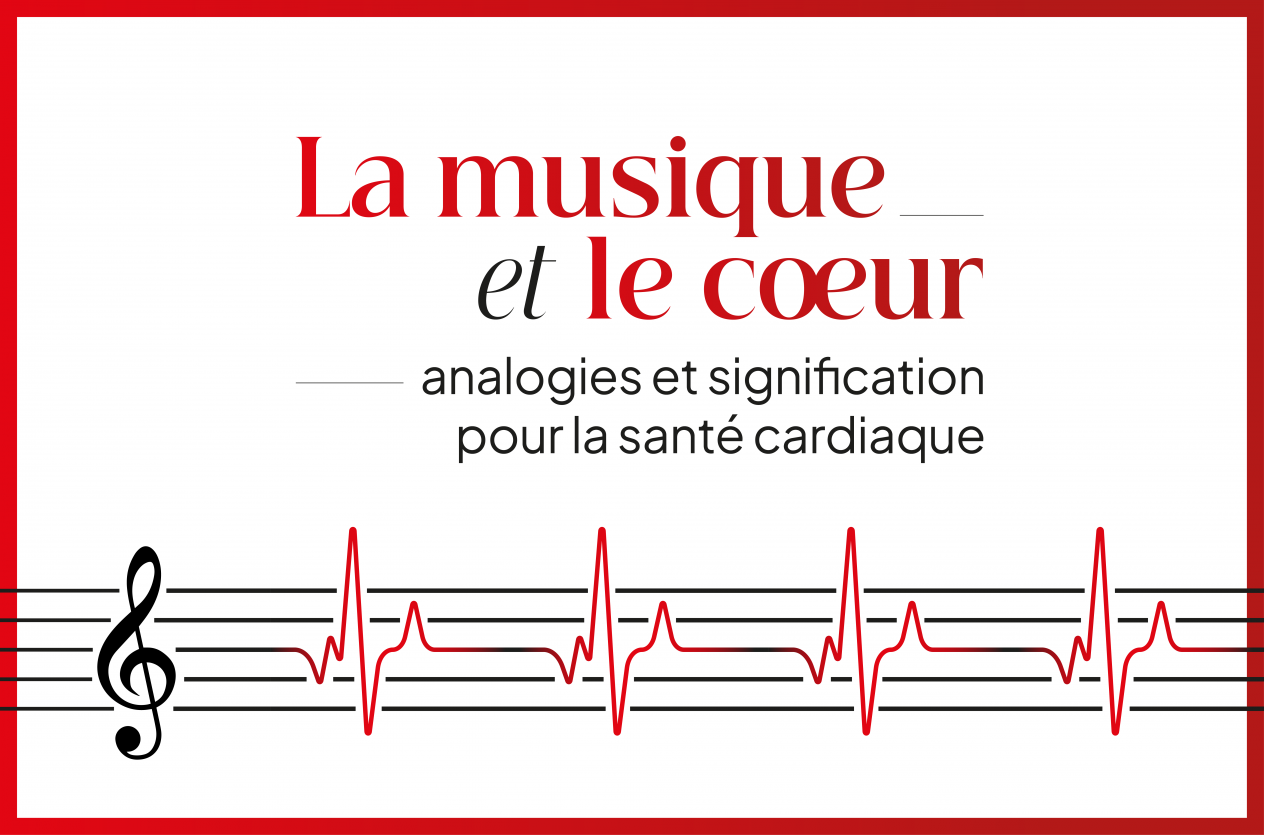
New event organized by Les Amis de l'IHES with Elaine Chew on Thursday April 16, 2026 at 5:30 pm in the Marilyn and James Simons Conference Centre and on Zoom.
IHES 2028 Summer School: call for expressions of interest
Since 2006, IHES has been hosting summer schools in mathematics or theoretical physics (on alternating years). These schools provide a hundred or so PhD students, postdocs and young researchers an overview of the latest developments.
Nous utilisons les cookies pour améliorer votre expérience sur notre site Web. En parcourant ce site, vous acceptez notre utilisation des cookies.
We use cookies to enhance your experience on our website. By browsing this site, you agree to our use of cookies.
This website uses cookies to improve your experience while you navigate through the website. Out of these, the cookies that are categorized as necessary are stored on your browser as they are essential for the working of basic functionalities of the website. We also use third-party cookies that help us analyze and understand how you use this website. These cookies will be stored in your browser only with your consent. You also have the option to opt-out of these cookies. But opting out of some of these cookies may affect your browsing experience.