Videoconference by Amandine Cornille, 1st July 2021
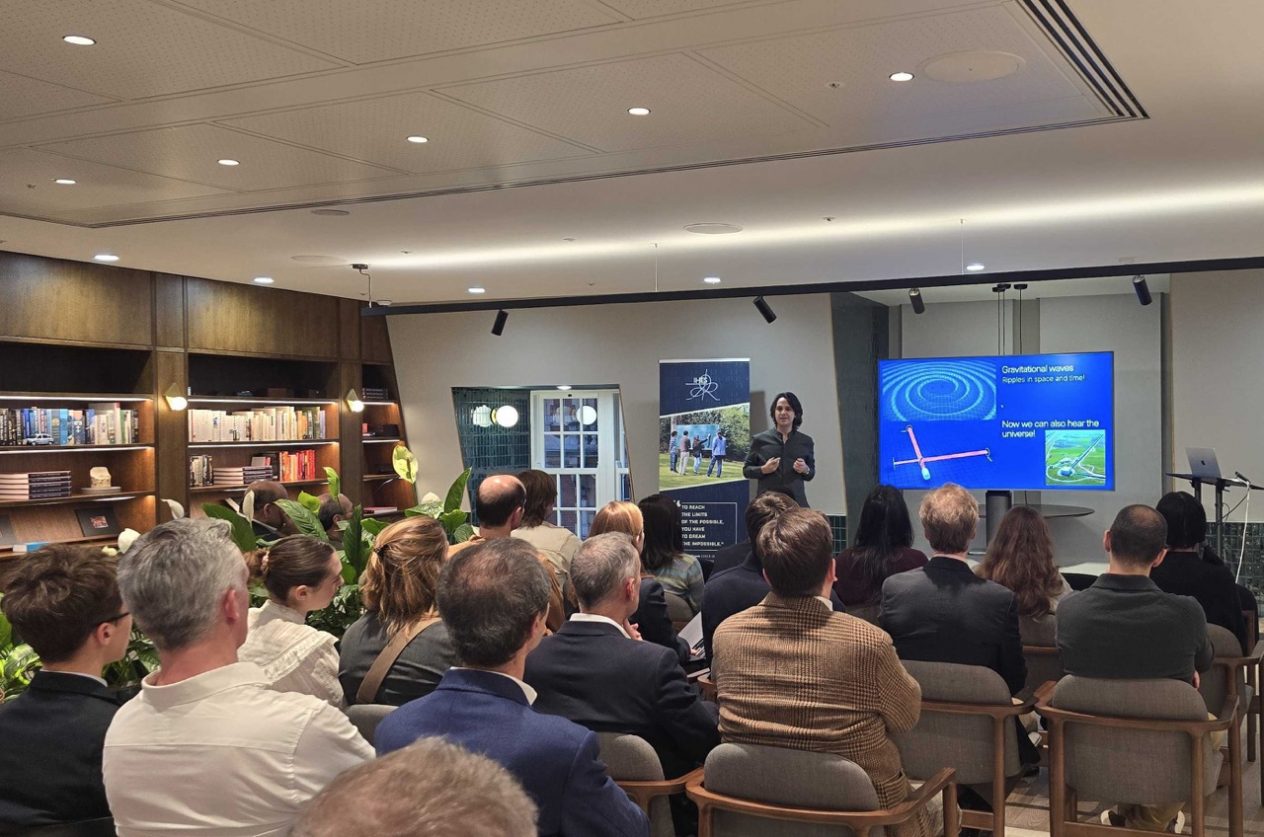
Les Amis de l'IHES organized a new videoconference with Amandine Cornille (CRCN CNRS) on Thursday 1 July 2021, 18:30 via Zoom.
New event organized by Les Amis de l’IHES on Thursday 1 July 2021, 18:30 (French Time)
Amandine CORNILLE (CRCN/CNRS researcher) gave a Zoom videoconference entitled:
“Of apples and men”
“What is the origin and the genetic make-up of the apple varieties you eat nowadays? Despite its economic, cultural and historical importance, the evolutionary histories of the cultivated apple and of its wild relatives still remained unresolved 10 years ago. The use of genetic markers on multiple wild and cultivated populations across Eurasia has since made great strides toward answering this question”.
The mathematical journal Publications mathématiques de l’IHES becomes diamond open access
Since January 1, 2021, the mathematical journal Publications mathématiques de l’IHES is available online for free.
Since January 1, 2021, the mathematical journal Publications mathématiques de l’IHES is available online and can be downloaded for free with no registration required. The printed version of Publications, still published by Springer and unchanged in its classic format dear to its readers, is available for sale at IHES.
This change reflects the will of the director of IHES, Emmanuel Ullmo, of the editor-in-chief, Nicolas Bergeron, and of the Institute’s scientific council, to make this prestigious international journal easily and quickly accessible to the entire mathematical community, that will thus be able to read the articles in their final version as soon as they are published.
Publications mathématiques de l’IHES is a high-impact international mathematical journal, launched in 1958 by the founder of the Institute, Léon Motchane. The scientific quality of the articles published, as well as the material quality of the printed volumes, the “blue notebooks”, meant that Publications mathématiques de l’IHES rapidly became a scientific journal of great renown, appreciated and respected by mathematicians all over the world.
During its 62 years of history, Publications mathématiques de l’IHES has had several editors-in-chief. Jean Dieudonné (1959-1979) was succeeded by Jacques Tits (1979-1999), Etienne Ghys (1999-2009), Sergiu Klainerman (2009-2012) and Claire Voisin (2009-2019). Nicolas Bergeron, professor at the École normale supérieure, took over in July 2019.
It is precisely on Nicolas Bergeron‘s initiative that Publications mathématiques de l’IHES became open access in January 2021. Below, he describes the publishing process for this journal and explains the impact of this change.
How did you become editor-in-chief of Publications mathématiques and why do you find it interesting?
It is my predecessor, former editor-in-chief Claire Voisin, who asked me to take over in 2019. I am very interested in editing, which becomes all the more meaningful when done for a journal as prestigious as Publications mathématiques de l’IHES. Since just a small number of articles are published every year, mathematicians submit only their best work, which makes the editorial process extremely stimulating. I am very positively impressed by the enthusiasm with which the members of the editorial board, as well as the referees, are willing to read in detail the articles we receive. This is yet another proof of the remarkable quality of the papers that are submitted to the journal.
What is the selection process for Publications mathématiques?
The articles are submitted directly to me. I make a first selection and then contact the members of the editorial board to get their opinion on the interest and quality of the papers. The works that are considered relevant for Publications mathématiques are then sent to two or three referees who will check them in detail. Only about ten articles among the fifty or so that I submit to the editorial board are published each year in the journal and it is a great responsibility for the board to choose those that really deserve to appear.
What changes has the journal gone through since you arrived?
When I arrived in 2019, I took on the task of renewing the editorial board. Historically, algebra, geometry, and dynamical systems have had a strong representation in Publications mathématiques de l’IHES. The recent arrival in the editorial board of Hugo Duminil-Copin, a probabilist, and Alessio Figalli, an analyst, will hopefully widen the spectrum of subjects covered in the journal.
Becoming open access at the beginning of this year is another important change, which marks our desire to make mathematics easily accessible to anyone interested in it.
Why is it important that Publications mathématiques be freely available?
For years now, mathematicians have been making their papers freely accessible on the internet. This is part of a global trend, in which funding agencies, such as the European Commission for research, are increasingly asking scientists to make their work easily available.
To do so, researchers either use open access platforms, such as arXiv, or their own web pages. The versions published in this way are often not the most recent and usually do not take into account the editing done during the reviewing process thanks to the work of the journals’ review committees. This deprives the scientific community of the possibility to read the latest and improved versions of the articles. That is why it is important that scientific journals at the level of Publications mathématiques de l’IHES are open access.
This comes with multifold advantages. Readers have direct access to a high-quality electronic version. Those who love to annotate the paper volumes can still do so, as printed copies are published by Springer and available for sale at IHES. Publications mathématiques de l’IHES being diamond open access, this means that the authors are not charged either, and making the electronic versions freely available also comes with perks for them: facilitating access to their papers increases their visibility and therefore their potential impact, while leaving the selection process unchanged.
“Women in fundamental research”, the 2021 Friends of IHES Gala
The 2021 edition of the Friends of IHES Gala will take place on November 16th and will be dedicated to the theme of “Women in fundamental research”.
This year, the gala will take on a hybrid format. We will offer a virtual event, which will feature pre-recorded footage as well as live speeches and, if the health context allows, a small, exclusive in-person component will take place at the French Consulate of NYC.
Women are still largely underrepresented in science and mathematics and much more must be done to ensure equal representation for female mathematicians and scientists, not least at IHES, where 2021 marks the arrival of Laure Saint-Raymond as the first female permanent professor. Through this gala, IHES intends to have a long-term impact on this issue and implement actions to improve and foster a better representation of women at the Institute.
This event will be an occasion to celebrate women at IHES as well as prominent female figures in tech, finance and science.While paying homage to their achievements, we will learn from their experiences and insights as to how to make the technology, science and business sectors more inclusive.
This year’s gala honoree will be Marilyn Simons, the co-founder of the Simons Foundation, which exists to advance the frontiers of research in mathematics and the basic sciences. Through her extraordinary commitment as a philanthropist and as President of the Simons Foundation (1994-2021), Marilyn Simons has contributed immensely to the development of science and technology over the past 25 years.
To learn more and buy your ticket please visit the gala website.
IHES develops… sustainably!
A vast renovation plan has been put in place to improve the IHES infrastructure in a perspective of sustainable development.
Every year, researchers from all over the world come to IHES to benefit from its exceptional working environment. Welcoming them in optimal conditions so that they can devote themselves fully to their work is at the heart of the Institute’s mission.
Since it settled in Bures-sur-Yvette, IHES has constantly improved its infrastructure, which includes the buildings in Bois Marie, dedicated to the scientific activity, as well as the accommodation infrastructure in the Ormaille residence, which the Institute has set up to house its researchers on site.
Since 2000, a vast renovation plan has been implemented thanks, among other sponsors, to the support of the Ile-de-France Regional Council and the decisive support of the Caisse des Dépôts et Consignations (CDC), which helped create an “infrastructure fund” as part of the Institute’s endowment.
The actions implemented since then are part of a wider sustainable development strategy that includes improving building insulation, as well as opting for more efficient heating and lighting systems in offices, conference rooms, and housing. All exterior lighting at the Ormaille has also been converted to LED.
More recently, as part of the Plan de relance launched by the French government in the wake of the Covid-19 pandemic, the Institute obtained €785k from the French Ministry of Economy, Finance and Recovery for the renovation of 6 of the 18 studios in one of the buildings in the Ormaille residence. The planned measures will result in an important reduction in the environmental impact of these apartments, through a 60% decrease in their energy consumption, as calculated by the project management team that IHES called upon to meet its housing improvement objectives. The flats will thus go from class D to class B as per the energy label, and from class F to class D on the carbon label.
These actions are part of an ambitious six-year rehabilitation program for the large building of the Ormaille residence, in which IHES is partnered by the Centre national de la recherche scientifique (CNRS). The program involves improving the building’s energy performance (insulation, exterior woodwork, airtightness) and technical equipment (ventilation, production, distribution and emission of heating, domestic hot water and electricity) as well as the interior renovation of the housing units.
As the number of visitors has been reduced since last year due to the global health situation, the Institute could accelerate these projects and much progress has been made since the Spring of 2020.
The benefits will be multifold: an optimization of operating costs, a modernization that allows the Institute to act within a sustainable development strategy and even better conditions for researchers. This will contribute to strengthening the attractiveness of the Institute, as well as that of its partners in the region, in particular the Université Paris-Saclay, which uses six of the 57 housing units at the Ormaille.
IHES acquires a digital board
The latest board to arrive at IHES is different from the blackboards that we are used to seeing at the Institute: it is a digital board.
Mathematics is abstract: unlike other scientists who depend upon experiments, sometimes requiring sophisticated equipment, mathematicians can only rely on the strength of their reasoning to build rigorous demonstrations of their theorems and distinguish what is true from what is not.
This is why a blackboard is such an indispensable tool: a surface on which mathematicians can materialize their ideas and share them with their collaborators, to help each other choose the most promising paths and detect flaws in their arguments. And if an idea doesn’t work, it’s not a big deal: what is written on the board can be quickly erased, and one is ready to start over.
At IHES, we know the importance of the role of blackboards, which are given pride of place. They cover the walls of offices, shared rooms and places where researchers normally meet: next to the coffee machine, in the tea room, in front of benches in the sun outside. These are blackboards because writing with chalk is often preferred by the mathematical community.
And to erase? With a brush it’s swiftly done! Except that sometimes the dust is so thick that it is better to use a machine to remove it.
Discover in pictures why mathematicians and theoretical physicists at IHES enjoy their blackboards so much:
The latest board to arrive at IHES is an exception: it is a digital board. A large screen attached to the wall, on which one can write with a special pen. The first board of this type at the Institute was specific to the meeting room, allowing video-conferences to be held, but this one is really a tool that joins the range of boards available to our researchers. If blackboards are generally the preferred tool of mathematicians, in this period of social distancing and online meetings, this new device has immediately gained many fans at the Institute. The board allows one to save their notes and share them with collaborators, or instantly translate handwritten formulas into lateX code, ready for the next paper. Maxim Kontsevich, a permanent professor at IHES since 1995 and a 1998 Fields madalist, is a great user of this new equipment and he explains its advantages in the video below.
Robert Penner’s recent findings could help to predict effective antiviral targets, more resistant to mutation
Robert Penner, René Thom Chair at IHES, has continued his study of SARS CoV-2, the virus that causes covid. In recent work he analyzed the English, South African and Brazilian mutations of concern that are currently spreading worldwide, among others.
Robert Penner, René Thom Chair at IHES, has continued his study of SARS CoV-2, the virus that causes covid. In recent work [1], he analyzed the English, South African and Brazilian mutations of concern that are currently spreading worldwide, among others. His methods allow the prediction of so-called backbone free energy (BFE), which is a measure of the springlike energy potential associated with a certain part of a protein. He has shown that BFE can help predict regions primed for rearrangement, based upon the geometry of a protein alone. The method was applied to the SARS CoV-2 spike glycoprotein, which is the target of all the vaccines thus far approved for France or the US, with particular attention to the protein regions that have mutated in the variants of concern, which are now predominant in many parts of France for example.
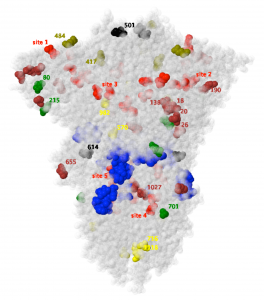
There are several key findings, including that 11 of the 19 mutated amino acid residues (18 of them illustrated in the figure) are either free from hydrogen bonds or lie in disorganized regions of the protein, giving a clue on where to expect future mutations. This is critical to the further development of vaccines, as we want them to remain effective as viruses continue to mutate, in particular against SARS CoV-2, and in general against the “next virus X”. Another novelty of this work is the prediction of likely function for several of the 8 other mutated amino acids as inferred from the behavior of BFE with varying acidity, a technique only recently feasible due to availability of protein structures uncovered using experimental breakthroughs in Cryo Electron Microscopy, which can now image proteins such as the spike at near-atomic resolution at different acidities.
Mutated sites of the SARS CoV-2 spike glycoprotein for the variants of concern. Yellow, brown and green residues are respective mutations for the U.K., Brazil and S. Africa variants, with olive residues 417 and 484 common to the latter two, black residues 501 and 614 common to all three, and red/blue active/passive sites of interest.
Penner’s earlier work had identified 5 so-called sites of interest in the spike glycoprotein as vaccine or drug targets that were promising due to large BFE conserved across all human coronavirus spikes (illustrated in red in the figure). However, these sites cannot be targeted using the mRNA or virus-vector methods of the current vaccines based on nucleic acids because the geometry of high BFE regions is too labile to survive display and response by the immune system. Corresponding nearby passive sites of interest of low BFE are reported (illustrated in blue in the figure) in the current work that do provide promising targets for nucleic acid vaccines. Moreover, Penner argues that these sites are unlikely to mutate going forward due to lack of evolutionary pressures, a takeaway that again applies not only to SARS CoV-2 but also to virus X. Another reason that targeted sites such as these are crucial is that increased disease morbidity indicates the insufficiency of native immune response to the full spike. Science must be sneakier than Nature in this case, whether for future covid or for the disease caused by virus X.
Penner is in communication with colleagues at Institut Pasteur and with the vaccine development team at Moderna who have both helped steer the current work.
[1] Penner, Robert. “Antiviral Resistance against Viral Mutation: Praxis and Policy for SARS-CoV-2” Computational and Mathematical Biophysics, vol. 9, no. 1, 2021, pp. 81-89. https://doi.org/10.1515/cmb-2020-0119
Thibault Damour awarded the 2021 Galileo Galilei Medal
Thibault Damour, permanent professor at IHES since 1989, is one of the three recipients of the Galileo Galilei Medal, together with physicists Alessandra Buonanno and Frans Pretorius.
Thibault Damour, permanent professor at IHES since 1989, is one of the three recipients of the Galileo Galilei Medal, together with physicists Alessandra Buonanno and Frans Pretorius “for the fundamental understanding of sources of gravitational radiation by complementary analytic and numerical techniques, enabling predictions that have been confirmed by gravitational wave observations and are now key tools in this new branch of astronomy”.
The prize thus recognizes the importance of the three researchers’ theoretical and numerical studies describing the behavior of coalescing black holes, that have been instrumental to the analysis of experimental data obtained by the gravitational wave detectors LIGO and by the Virgo Collaboration.
Prof. Buonanno, who is now the director of the “Astrophysical and Cosmological Relativity” Department at the Max Planck Institute for Gravitational Physics in Potsdam, was a post-doctoral researcher at IHES, when she worked with Prof. Damour to develop a new analytical model for binary black holes in 1998.
“Our model predicted that the spiraling process releases an enormous amount of gravitational radiation and provided the first analytical estimate of the full gravitational wave emitted during the last orbits and the coalescence of the two black holes,” explains Prof. Damour.
Prof. Pretorius, professor of physics at Princeton University and director of the Princeton Gravity Initiative, got interested in binary black holes in 2005 and came up with a first numerical solution to describe what happens when two black holes collide.
“The theoretical studies of Buonanno, Damour and Pretorius were fundamental for the start of a new era of gravitational astronomy and I am sure they will give even further prestige to the Galileo Galilei Medal,” explains Stefania De Curtis, the Director of the Galileo Galilei Institute in Arcetri, Italy, which together with the Italian National Institute for Nuclear Physics (INFN) and the University of Florence, participates in awarding the Prize. The Galileo Galilei Medal is awarded every two years to researchers who have made outstanding and seminal contributions to the advancement of research in theoretical physics. The Prize was created in 2019 and its first recipient is physicist Juan Martin Maldacena, member of the Institute for Advanced Study, Princeton.
Born in 1975, Laure Saint-Raymond was admitted to École normale supérieure (ENS) in 1994. She obtained a DEA (a doctoral degree delivered in France until 2011), in numerical analysis at Pierre and Marie Curie University and another in plasma physics at Versailles-Saint-Quentin-en-Yvelines University, as well as a teaching diploma (agrégation) in mathematics. She then earned a PhD on the kinetic theory of gases at the ENS Department of Mathematics and its Applications, under the supervision of mathematician François Golse. She was recruited as a researcher by CNRS in 2000.
Laure Saint-Raymond was then appointed professor at Pierre and Marie Curie University She was seconded to Ecole Normale Supérieure from 2007, where she headed the analysis team before taking over as deputy head of the mathematics department.
She was elected member of the French Academy of Sciences in 2013, then member of the Academia Europaea in 2014 and became a junior member of the Institut universitaire de France in 2015, after a sabbatical year in the United States, where she worked at both Harvard University and MIT. In 2016, she obtained a transfer to Ecole Normale Supérieure in Lyon as a university professor. In 2017, she was elected member of the European Academy of Sciences.
Laure Saint-Raymond’s work focuses mainly on the asymptotic analysis of systems of partial differential equations, in particular those governing the dynamics of gases, plasmas or fluids. In particular, she has made fundamental contributions to Hilbert’s sixth problem on the axiomatization of mechanics, one of the 23 problems proposed by David Hilbert at the 1900 International Congress of Mathematics, which has not yet been solved: with various collaborators, she has shown that there is a continuous transition between the models of non-equilibrium statistical physics and the equations of fluid mechanics, and more recently she has studied the validity of these statistical models based on Newtonian mechanics. She is working in parallel on models in fluid mechanics that describe ocean currents, including the effect of fluid rotation and stratification on wave propagation and boundary layer phenomena.
She has received numerous awards. In particular, she received the European Mathematical Society Prize in 2008, the Ruth Lyttle Satter Prize of the American Mathematical Society in 2009, the Irène Joliot-Curie “Young Female Scientist” Prize from the French Academy of Sciences and the French Ministry of Higher Education and Research in 2011, and the Fermat Prize from the Midi-Pyrénées region in 2015. In 2019, she was awarded the title of Chevalier of the French Legion of Honor and in 2020 she was awarded the Bôcher Prize by the American Mathematical Society.
Emmanuel Ullmo, Director of IHES, said: “We are delighted to welcome Laure Saint-Raymond, a brilliant mathematician whose innovative work has already been rewarded with numerous international prizes. Her arrival further broadens the fields of research developed at IHES.’’
Laure Saint-Raymond adds: ‘’I am seizing the opportunity I was offered to join IHES. This is indeed an institute that provides not only the ideal environment to carry out independent research, but also the means to develop collaborations and encourage a more collective work style. The institute has a long tradition in theoretical physics, algebra and geometry, and has more recently opened to probabilities. My own small challenge will be to also establish analysis, which brings other angles of approach to many problems at the interface with physics.’’
Two of Thibault Damour’s papers in the PRD 50th Anniversary Milestones collection
Two of Professor Thibault Damour’s papers, in collaboration with Alessandra Buonanno, have been selected to be published in a special collection of a few high-profile articles as part of the 50th Anniversary Milestones of Physical Review D.
Two of Professor Thibault Damour’s papers, in collaboration with Alessandra Buonanno, have recently been selected to be published in a special collection of a few high-profile articles as part of the 50th Anniversary Milestones of the prestigious scientific journal Physical Review D.
These articles introduced the Effective one-body approach to the two-body problem in general relativity and applied it to the study of binary black holes, thus “initiat[ing] a program that continues to be vigorously pursued to the present day and remains one of the few analytical approaches to the increasingly relevant problem of experimental detection of gravitational radiation from astrophysical binary coalescences. These results have already contributed to the experimental identification of binary coalescences via their gravitational wave signatures by LIGO.”
Alessandra Buonanno, who spent two years, as a postdoc, at IHES between 1997 and 1999 working with Thibault Damour, is currently a Director of the Max Planck Institute for Gravitational Physics (Albert Einstein Institute) in Potsdam, Germany.
You can find Thibault Damour and Alessandra Buonanno’s highlighted papers on Physical Review D:
After such a special year, IHES intends to emphasize through its greeting card the importance of exchanges, transmission and dissemination of knowledge.
For researchers, moments of sharing, both formal and informal, are essential. However, in 2020, it has been a real challenge to find the means and formats to preserve a scientific dialogue and the quality of the links with collaborators and colleagues.
This greeting card therefore aims to pay tribute to the researchers who, throughout the world, have adapted, tested new tools and explored alternative approaches, always with a view to maintaining and fostering their exchanges, to facilitate the blossoming and circulation of ideas that will lead to tomorrow’s discoveries and advances.
The Institute’s scientists who wished to do so – permanent and associate professors, invited researchers, postdoctoral and doctoral students – have thus chosen an equation that had a particular meaning for them. Those equations appear on the greetings card, alongside a famous Euler formula, often presented as one of the most beautiful equations in mathematics. You will find below a short presentation of the scientists who participated, as well as their explanations of their choice of equation.
Equation chosen by Thibault Damour, permanent professor at IHES since 1989
Thibault Damour is a theoretical physicist whose main research domains are General Relativity and Cosmology. His work was notably fundamental in the detection of the gravitational waves in 2015.
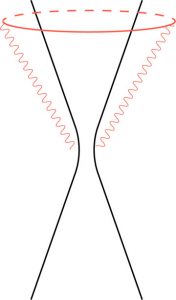
This equation concerns the scattering angle between two classical point masses (for example two black holes) interacting gravitationally according to Einstein’s theory. It says that when we add the effect of gravitational damping on the scattering angle, the result admits a high energy limit (HE) which coincides with the angle obtained with the so-called “eikonal” quantum approximation.
This physical process is illustrated in the figure on the right, which is a space-time diagram showing the collision (at a distance) of two black holes producing gravitational waves.”
Equation chosen by Arthur Parzygnat, postdoctoral researcher
Arthur Parzygnat is a mathematician whose main research domains are Applied Category Theory, Mathematical Physcics and quantum information. He has been a postdoctoral researcher at IHES for a year and a half and is part of the ERC QUASIFT led by Vasily Pestun.
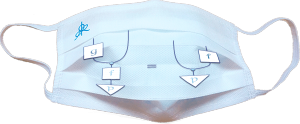
“This equation is called “Bayes’ rule/theorem,” though it is more common to see it written as P(A|B)P(B)=P(B|A)P(A). It is used to make inferences on outcomes based on evidence, such as diagnosing illnesses, it is the foundation of many machine learning algorithms, and some believe it drives how intelligent beings make decisions. The diagram drawn here is a recent categorical reformulation of Bayes’ rule, which does not rely on its probabilistic interpretation. Such a viewpoint allows one to use the more abstract concept as a definition (as opposed to a theorem) in a completely new context, where an equation such as P(A|B)P(B)=P(B|A)P(A) might not make any sense, but the diagram does. Considering how ubiquitous Bayes’ rule has been, it is very possible that we have only scratched the surface with its applications. What new insight can such a reformulation teach us? Where can it be utilized, and how can we interpret it?”
Equation chosen by Katie Vokes, postdoctoral researcher
Katie Vokes is a mathematician whose main research domains are Geometric Group Theory and Low-Dimensional Topology. She has been a postdoctoral researcher for almost two years and is part of the Huawei Young Talents Programme since October 2020.
“This equation is the statement of the Gauss–Bonnet theorem for a surface M without boundary. This is a beautiful and fundamental result in differential geometry which relates the integral of the curvature K of M to the Euler characteristic χ(M) = 2 − 2 genus(M). The Gauss–Bonnet formula encodes the answers to so many basic questions that we might have while thinking about surfaces. Why must any two hyperbolic surfaces (constant curvature K ≡ −1) of genus 5 have the same area? And why can’t we make a genus 2 surface out of a flat piece of paper without introducing singular non-manifold points? “
Equation chosen by Emmanuel Ullmo, Director of IHES
Emmanuel Ullmo is a mathematician whose research domain is Algebraic and Arithmetic Geometry.
“Let E be a (modular) elliptic curve defined over Q, the field of rational numbers. In the early 80’s, two mathematicians, Bryan Birch and Peter Swinnerton-Dyer, proposed this formula where r denotes the algebraic rank of E, which is assumed to be equal to the analytic rank of E, and X(E/Q) is also assumed to be finite.
Open for more than forty years, the conjecture has only been demonstrated in special cases. And widely recognized as one of the most difficult and deepest mathematical problems still open at the beginning of the 21st century. “
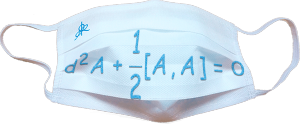
Equation chosen by Veronica Fantini, invited researcher, SISSA (Italy)
Veronica Fantini is a mathematician whose main research domains are Geometry and Mathematical Physics. She is visiting the Institute for 4 months.
“I choose the Maurer-Cartan equation d² A+½[A,A]=0, because depending on the contest and on the point of view it describes different objects. As the Maurer-Cartan equation has different interpretations, let’s look optimistically to 2021 even in this difficult time. “
Equation chosen by Robert C. Penner, René Thom Chair holder and IHES major donor
Robert C. Penner is a mathematician who is also interested in physics and biology. His main research domains are moduli spaces and their applications to physics and biology. His current work is providing important insights for the development of vaccines against Covid and other viral diseases. Robert Penner has been a regular visitor to the Institute for many years and has been the René Thom Chair holder since 2014.
“I think it is a really cool equation, with a pretty collection of symbols!
This formula expresses the Maurer-Cartan form ξ of the Lie algebra I have built for the topological group of orientation-preserving homeomorphisms of the circle, which I have been studying for 30 years. In other terms, it is the universal generalization of the Eisenstein form E2 (z) dz in hyperbolic what are sometimes called Penner coordinates λA . I am just now finishing a paper with Igor Frenkel where this formula figures prominently as a universal automorphic form intended to capture the Monster.“
Euler’s Identity
Leonhard Euler is an 18th century Swiss mathematician and physicist. He made important discoveries in fields as varied as infinitesimal calculus and graph theory. He is considered one of the greatest and most prolific mathematicians of all time.
“Euler’s identity was voted “most beautiful mathematical formula of all time” in 1988 by a college of mathematicians.
It has the particularity of linking together the five great constants of mathematics: 0, 1, pi, e and i and according to Cédric Villani, “it is the unlikely combination of these five constants that makes this equation beautiful”.
Indeed, these constants have nothing in common a priori. Over the centuries, they have appeared in the great history of mathematics in very different contexts, to solve problems that at first sight had nothing in common.
It also presents elementary operations: multiplication, addition and equality.
It combines arithmetic, geometry, algebra and analysis in an extraordinarily condensed statement. »
A Glimpse into IHES: A virtual event on 7 December, introduced by the French Ambassador to the US
The event was held held in the presence of Marilyn and Jim Simons, key sponsors for IHES, Michael R. Douglas, president and chairman of Friends of IHES, and Emmanuel Ullmo, director of IHES.
The friendship between IHES and the United States has been a privileged one since the Institute’s early days. Now more than twenty years ago, Friends of IHES was born to honor and strengthen the relationship between IHES and American scientists, partners and donors.
Such a relationship has been reinforced through regular meetings and events that normally take place throughout the year but have mostly been canceled in 2020 due to the restrictions on traveling and gatherings imposed by the current pandemic.
This year instead, Friends of IHES and IHES invited their whole network to take “A Glimpse into the Institut des Hautes Etudes Scientifiques”, an online event held in the presence of Marilyn and Jim Simons, key sponsors for IHES, Michael R. Douglas, president and chairman of Friends of IHES, and Emmanuel Ullmo, director of IHES. The event was introduced by the French Ambassador to the US, Philippe Etienne.
The event startedwith the premiere of “IHES, a Scientific Paradise Born of Franco-American Friendship”, a short movie taking the audience through some of the key milestones that have marked the history of the Institute, with a special emphasis on the relationship with the United States and the support of major donors.
Later on, Slava Rychkov, permanent professor at IHES, introduced the audience to one of the most fascinating phenomena observed throughout physics, the emergence of universality, in a talk titled “Universality in Physics”, followed by Q&A.
A virtual exhibition to discover the scientific heritage of IHES
IHES invites you to discover its history through a virtual exhibition entitled “The scientific heritage of IHES”, highlighting some of its archives.
IHES invites you to discover its history through a virtual exhibition entitled “The scientific heritage of IHES”, highlighting some of its archives.
Photos, extracts from letters, and official documents will give you a glimpse of how IHES has evolved over the years, since its foundation in 1958. The descriptions by Anne-Sandrine Paumier, a science historian, will help you to better appreciate these sources and to put them into context.
The exhibition is organized around ten chapters. By going through them in order, you will first discover the history of the Institute’s premises, you will meet Alexandre Grothendieck’s emblematic figure and you will get an idea of the central role played by IHES in the development of algebraic geometry. After a focus on the creation of the Institute and its early years, you will get a chance to meet some of the researchers who have shaped IHES, coming from all over the world. One chapter is also dedicated to the “Blue Books”, the renowned the Publications mathématiques de l’IHES.
The exhibition was designed by Anne-Sandrine Paumier. The archival materials presented, as well as a selection of historical archives of IHES, were digitized with the support of La Diagonale Paris-Saclay, the Fondation Mathématique Jacques Hadamard and the Crédit Agricole Île-de-France Mécénat. The digital version of this exhibition was realized with the support of Crédit Agricole Île-de-France Mécénat.
New event organized by Les Amis de l'IHES with Elaine Chew on Thursday April 16, 2026 at 5:30 pm in the Marilyn and James Simons Conference Centre and on Zoom.
IHES 2028 Summer School: call for expressions of interest
Since 2006, IHES has been hosting summer schools in mathematics or theoretical physics (on alternating years). These schools provide a hundred or so PhD students, postdocs and young researchers an overview of the latest developments.
Nous utilisons les cookies pour améliorer votre expérience sur notre site Web. En parcourant ce site, vous acceptez notre utilisation des cookies.
We use cookies to enhance your experience on our website. By browsing this site, you agree to our use of cookies.
This website uses cookies to improve your experience while you navigate through the website. Out of these, the cookies that are categorized as necessary are stored on your browser as they are essential for the working of basic functionalities of the website. We also use third-party cookies that help us analyze and understand how you use this website. These cookies will be stored in your browser only with your consent. You also have the option to opt-out of these cookies. But opting out of some of these cookies may affect your browsing experience.




 Arthur Parzygnat is a mathematician whose main research domains are Applied Category Theory, Mathematical Physcics and quantum information. He has been a postdoctoral researcher at IHES for a year and a half and is part of the
 Katie Vokes is a mathematician whose main research domains are Geometric Group Theory and Low-Dimensional Topology. She has been a postdoctoral researcher for almost two years and is part of the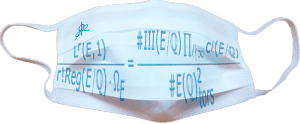

 Veronica Fantini is a mathematician whose main research domains are Geometry and Mathematical Physics. She is visiting the Institute for 4 months.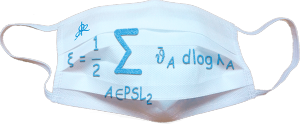


 Leonhard Euler is an 18th century Swiss mathematician and physicist. He made important discoveries in fields as varied as infinitesimal calculus and graph theory. He is considered one of the greatest and most prolific mathematicians of all time.