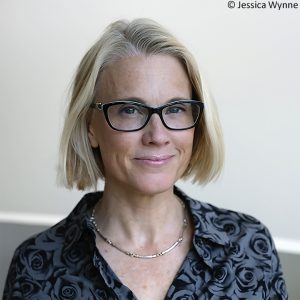
Conversation with Laure Saint-Raymond

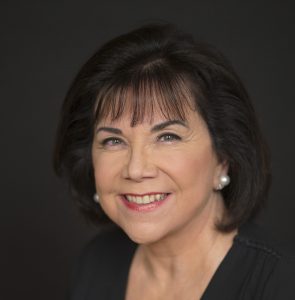
September marks the start of Laure Saint‑Raymond’s tenure as a professor at IHES. We recorded her thoughts a few days before her arrival.

IHES: You are starting a new stage in your career as a mathematician. How do you feel about it?

Laure Saint-Raymond: I can’t deny that I’m experiencing a twinge of sadness, as I leave the ENS de Lyon where I have spent five wonderful years. I enjoyed the dynamism of the mathematics laboratory, which is always at the forefront of its scientific development and its community commitments (dissemination and awareness of research, open publications, reduction of the carbon footprint, etc.). I also greatly appreciated the straightforward and exciting collaborations with the physics laboratory as well as the wealth and strength of the research network in Auvergne-Rhône-Alpes. I will maintain a small presence  there to continue to work on geophysical fluids and environmental issues, especially with the Institut des mathématiques de la Planète Terre.

Of course, I am also somewhat awestruck to be joining IHES, this prestigious institution which for the moment is more of a myth than a natural place in which to do my research. On the one hand, the list of permanent professors who have worked here sets the bar very high in terms of the depth and impact of their work. But on the other hand, the themes that have been developed here so far are quite foreign to me. In my mind, IHES refers to great names in mathematics that I don’t necessarily associate with faces, or to works that have revolutionized whole areas of the discipline but that I essentially don’t understand… It’s hard to identify something I can latch on to.

A blank page… perhaps that’s what really stimulates me! At the same time, this move represents great freedom, and the responsibility of making a new dynamic emerge, to make its own mark. I realize how lucky I am, even if it sometimes feels quite dizzying. IHES provides a very positive atmosphere for individual research work, while offering many opportunities to bring in foreign students or colleagues. Its scientific environment is extremely promising, bringing together the university in Orsay and the institutions and research centers in the Saclay area. I have no doubt that this mixture of calm and bustle will lead to unexpected encounters and will raise fruitful questions.

How would you describe your approach to mathematics?

I have neither the technical strength nor the will to tackle head-on the difficult conjectures to which some mathematicians devote their entire lives in a long arm-wrestling match. I prefer the side roads, the curiosities of physics, the surprising connections between apparently distant disciplinary fields… I like mathematics that formalizes simple intuitions, that can be shared.

In a way, mathematics is at the confluence of scientific reasoning and artistic creation. Not all mathematicians have the same tastes, but they attach importance to the notion of beauty. This is what I hope to be able to pass on to my students and more widely to the people I meet at events aimed at the general public.

One can try to convince people of the usefulness of mathematics, but that can be a slippery slope. However, one can without moderation marvel at all the ideas that slowly take seed and end up blooming where one did not necessarily expect them, at all the scattered abstract constructions that end up being strongly connected.

This magic of mathematics must make people dream… beyond the circle of mathematicians!
Laure Saint-Raymond’s homepage

Thibault Damour is awarded the 2021 Balzan Prize

Thibault Damour and Alessandra Buonanno have received the 2021 Balzan Prize in the field of “Gravity: Physical and Astrophysical Aspects”, awarded by the International Balzan Prize Foundation.

Thibault Damour and Alessandra Buonanno have received the 2021 Balzan Prize in the field of “Gravity: Physical and Astrophysical Aspects”, awarded by the International Balzan Prize Foundation.

The prize acknowledges “their leadership in the prediction of the gravitational wave signals produced when compact objects like neutron stars and black holes spiral together and eventually merge. Their work was instrumental in the detection of gravitational waves, providing an extremely accurate confirmation of General Relativity as the theory of gravitation, and allowing the LIGO and Virgo detector complex to promote a type of astronomy which uses gravitational waves as new, powerful messengers of the universe.” – the Foundation explained in a press release on September 13.

Every year, the Foundation awards four Balzan Prizes, two in the category “Literature, Moral Sciences and the Arts”, and two in “the Physical, Mathematical and Natural Sciences and Medicine”. The awards are given to scholars, artists and scientists who have achieved international recognition in their field. Since 2001, the Balzan Foundation asks that prize winners use half of the prize to finance research projects carried out by young scholars or scientists.

This is already the third prize that Thibault Damour and Alessandra Buonanno have received this year, together with the Galileo Galilei Medal and the Dirac Medal, highlighting the importance of their theoretical work in the detection of gravitational waves.

IHES congratulates them on this prestigious recognition and is proud of being the birthplace of their collaboration started at the end of the 1990s, when Prof. Buonanno was a postdoctoral researcher at IHES.

Empowering women in science and business

Starting from her personal experience and from a reflection on the film "Picture a Scientist", Martine Liautaud will be interviewed by Bruno Dranesas on the role of women in science and in the business world.


Women are still largely underrepresented in science, particularly in physics and mathematics, which remain male-dominated subjects both in higher education and in research.

While 2021 marks the arrival of the first woman permanent professor at IHES, Laure Saint-Raymond, there is still much to do, not least at IHES, to make these domains more egalitarian.

IHES and the Fondation Mathématique Jacques Hadamard (FMJH) are organizing an event to set focus on these essential topics of equality and inclusion:

“Empowering women in science and business”
Conversation with Martine Liautaud,
Founder and President of Women Initiative Foundation

The event will take place in French on Wednesday 15 September at 6:00pm, simultaneously at the Marilyn and James Simons Conference Center at IHES and online.

Starting from her personal experience and from a reflection on the film “Picture a Scientist“, Martine Liautaud, Founder and President of the Women Initiative Foundation, which has been promoting diversity and women in the business world, will be interviewed by Bruno Dranesas, Director of editorial strategies at ELEPHANT, which accompanies major French companies, on the role of women in science and in the business world . What lessons can higher education and research learn from the initiatives implemented by business companies?

By identifying the difficulties that women face in traditionally male-dominated fields, the objective of this discussion will be to reflect on concrete actions that can be taken to make these fields more attractive and accessible to women.

The film “Picture a Scientist” will be made available from September 13 to 16 upon request.

A public screening will take place at IHES on September 15 at 4:00 pm, before the discussion with Martine Liautaud. Access will be guaranteed to a limited number of people, upon reservation, and will be subject to the evolution of the health conditions. For those attending the event on site, masks will be mandatory and a health pass may be required (depending on health regulations on the day of the event).

Ideas pinpointed during this event will contribute to the panel discussion that will take place on women in mathematics on October 4. Its aim will be to reflect on relevant initiatives to promote women in mathematics both in higher education and in research, the domains that most closely pertain to the Institute and to the Fondation Mathématique Jacques Hadamard.

These important occasions of discussion will help IHES identify concrete actions to attract and promote brilliant women and girls to careers in mathematics and in science. Some of these initiatives could be funded through the next Friends of IHES gala, dedicated to “Women in Fundamental Research”.

Martine LiautaudMartine Liautaud is an investment banker, business angel, entrepreneur and philanthropist. She is the founder and president of Women Initiative Foundation (WIF), a foundation designed to support gender equality initiatives in the business world, and also a member of the Strategic Committees of CentraleSupélec and Université Paris-Saclay.
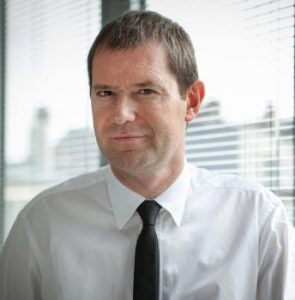


Bruno DranesasBruno Dranesas is a former business journalist, having served as editorial director of BFM Business and deputy director of the business newspaper La Tribune. In 2005 he joined the consulting and content production group ELEPHANT as director of editorial strategies.


Picture a Scientist is a documentary directed by Ian Cheney and Sharon Shattuck and produced by Manette Pottle, Ian Cheney and Sharon Shattuck. The movie provides new perspectives on how to make science more diverse, equitable, and open to all through the experiences of three women scientists, a biologist, a chemist, and a geologist.


Watch the interview with Martine Liautaud:

Find all the videos of the event

IHES upgrades the library N.H. Kuiper

After more than year of closing, the library N.H. Kuiper has reopened to the public.

After more than one year of closing, the N.H. Kuiper library has reopened to the public. A huge project to reorganize the collections has been realized on the 3 floors. It follows the modernization of the library which has begun several years ago.

In 2019, as part of the mutualization of documentary practices at Université Paris-Saclay, the IHES library acquired a research tool called “Focus”. It allows users to easily search the physical and electronic collections of the library’s catalog online while offering new services to readers. From their reader’s account, users can consult their loan history, extend current loans or reserve a document, or make a purchase suggestion.

In September 2020, in addition to Focus, a new shared library management system (SGBM) named “Alma” modernized documentary practices and services. Several libraries of Université Paris-Saclay work together to offer a common catalog. The mutualization of certain tasks allows the professionals using the tool to save time to focus on the quality of the bibliographic data in their catalog. Among the notable advances at IHES, the loan of documents is now computerized. In addition to the daily management, it is possible to produce statistics to analyze the documentary practices of the users and possibly propose new services to them, or to orient/adjust the documentary policy.

3 dates to keep in mind :

2019: launch of Focus: online discovery tool

2020: launch of Alma: mutualized library management system

2021: reorganization of collections

Laurent Lafforgue joins Huawei Technologies France

As of September 1, 2021, Laurent Lafforgue will join Huawei Technologies France to continue a closer collaboration with the company's research teams he has worked with so far.

Laurent Lafforgue, mathematician and permanent professor at IHES since 2000, is known worlwide in particular for his essential contributions to Langland’s program in the fields of number theory and analysis, which earned him the Fields Medal in 2002.

In recent years, his work on topos theory has led him to develop a collaboration with the research teams of Huawei Technologies France. Discussions between Laurent Lafforgue and Huawei researchers, which begun in 2017, first led to a two-year project, focused on topos theory and funded by Huawei, and then, in 2019, to the creation of the Huawei Chair in algebraic geometry at IHES, of which Professor Lafforgue was the first holder.

As of September 1, 2021, Laurent Lafforgue will join Huawei Technologies France to continue this work further in conjunction with the company’s research teams with whom he has worked so far.

IHES’ relationship with Huawei Technologies France will continue to develop, particularly within the framework of the Huawei Young Talents program, launched in the fall of 2020. Every year, this ten-year program funds on average 7 postdoctoral fellowships awarded by the Institute’s Scientific Council, thus supporting the work of researchers at the beginning of their careers.

Following Laurent Lafforgue’s departure, the Scientific Council will also appoint the new holder of the Huawei Chair in algebraic geometry at the Institute.

Do Not Erase: Mathematicians and Their Chalkboards – book event

IHES and Institut Henri Poincaré (IHP) are organizing a joint event around the book, in the presence of photographer and book author Jessica Wynne and of the mathematician Amie Wilkinson, former visiting professor at IHES, whose work is portrayed in the book.

Mathematicians love their chalkboards, which they often use as their favorite working tools to write down and share their ideas. While their abstraction and complexity often make them hard to decipher, mathematical symbols and equations scribbled on a dark board make for beautiful objects. Jessica Wynne, associate professor of photography at the Fashion Institute of Technology, New York, has captured all their beauty in a series of photographs that she took while visiting mathematics institutes across Europe and America over the past three years.

A book gathering a collection of some of her most poignant photographs has recently been published by Princeton University Press. Do Not Erase: Mathematicians and Their Chalkboards features young as well as established mathematicians, some of whom are related to IHES: Alain Connes, Leon Motchane Chair, Misha Gromov, professor emeritus, Ofer Gabber, CNRS research director at IHES, Jean-Pierre Bourguignon, former director (1994-2013) and current Nicolaas H. Kuiper Chair, Hélène Esnault, member of the Institute’s scientific council, John Terilla, member of the board of directors of Friends of IHES.

IHES and Institut Henri Poincaré (IHP) are organizing a joint event around the book, in the presence of the author, Jessica Wynne, and of the mathematician Amie Wilkinson, a regular visiting researcher at IHP and a former visiting professor at IHES, whose work is portrayed in the book.

The event will take place
on Monday, September 13, at 5:30pm,
at Institut Henri Poincaré, amphithéâtre Hermite, 11 Rue Pierre et Marie Curie, 75005 Paris.

As the number of seats is limited, registration is mandatory. Mask and sanitary pass will be required.

Register

Do Not Erase: Mathematicians and their Chalkboards is a photographic exploration of mathematicians’ chalkboards. In it, author Jessica Wynne offers more than one hundred stunning photographs of these chalkboards, gathered from a diverse group of mathematicians around the world. The photographs are accompanied by essays from each mathematician, reflecting on their work and processes. Together, pictures and words provide an illuminating meditation on the unique relationships among mathematics, art, and creativity.

Jessica WynneJessica Wynne is associate professor of photography at the Fashion Institute of Technology. Her photographs are in collections at the Morgan Library & Museum and the San Francisco Museum of Modern Art and have been exhibited at the Whitney Museum of American Art and the Cleveland Center for Contemporary Art. Her work has been featured in the New York Times, the Guardian, the New Yorker, and Fortune. Wynne is represented by Edwynn Houk Gallery and she lives in New York City.


Amie Wilkinson © Jessica WynneAmie Wilkinson is a professor of mathematics at the University of Chicago working in ergodic theory and smooth dynamics. She received her undergraduate degree at Harvard in 1989 and her PhD at Berkeley in 1995. She held post-doctoral positions at Harvard and Northwestern and rose to the level of professor at Northwestern before moving to Chicago in 2011. Wilkinson’ research is concerned with the interplay between dynamics and other structures in pure mathematics – geometric, statistical, topological and algebraic.

Thibault Damour is awarded the 2021 Dirac Medal

Professor Thibault Damour is one of the four recipients of this year’s Dirac Medal, together with Alessandra Buonanno, Frans Pretorius, and Saul Teukolsky.

Professor Thibault Damour is one of the four recipients of this year’s Dirac Medal, together with Alessandra Buonanno (Max Planck Institute for Gravitational Physics), Frans Pretorius (Princeton University), and Saul Teukolsky (Caltech & Cornell University).

The prize acknowledges the four physicists’ theoretical contributions “establishing the predicted properties of gravitational waves in the curvature of spacetime produced when stars or black holes spiral together and merge”. Their work has been key to the detection of gravitational waves by the LIGO and Virgo collaborations since the gravitational signal produced by a collision of binary black holes was detected for the first time in 2015.

The Dirac Medal is awarded every year by ICTP, the Abdus Salam International Centre for Theoretical Physics, to scientists who have made significant contributions to theoretical physics.

Earlier this year Thibault Damour, Alessandra Buonanno and Frans Pretorius were awarded the 2021 Galileo Galilei Medal by the Italian Istituto Nazionale di Fisica Nucleare.

IHES warmly congratulates Prof. Damour and his colleagues on this prestigious award, which is yet another recognition of the importance of their theoretical work.

Read the full press release from ICTP.

Publication of the 2020 Annual Report

Discover the IHES 2020 Annual Report, published for the first time in an interactive digital format.

Discover the 2020 Annual Report in a new format!

2020 was a special year, affected by the global Covid-19 pandemic which has had a direct impact on the organization of the Institute and required many adjustments such as the implementation of remote working for all or the development of online events.

With this in mind, and for the first time, IHES has reconsidered the format of its annual report by making it more accessible and easier to read. Discover it in an interactive digital format, fully compatible with smartphones and tablets.

Access to the 2020 ANNUaL Report


With this new format, you can:

  • share one or several pages, or even the whole document;
  • bookmark pages, then share, print, or extract them as a pdf;
  • use the table of contents at any time to navigate through the Annual Report;
  • access additional content through the available links;
  • download the document in pdf format.

Although its format has evolved, the content of the Annual Report remains the same. You will always find the activities of the Institute’s professors, the visiting researchers present, the events that were held, or the financial situation of IHES.

Enjoy your reading!

Laure Saint-Raymond, honorary member of the London Mathematical Society

Laure Saint-Raymond as well as Ngo Bao Chau, Peter Sarnak and Ya-xiang Yuan have just been elected as honorary members of the London Mathematical Society.

Laure Saint-Raymond as well as Ngo Bao Chau, Peter Sarnak and Ya-xiang Yuan have just been elected honorary members of the London Mathematical Society.
Laure Saint-Raymond’s work focuses mainly on the asymptotic analysis of systems of partial differential equations, in particular those governing the dynamics of gases, plasmas or fluids. In particular, she has made fundamental contributions to Hilbert’s sixth problem on the axiomatization of mechanics, by showing that there is a continuous transition between the models of non-equilibrium statistical physics and the equations of fluid mechanics, and more recently she has studied the validity of these statistical models based on Newtonian mechanics. She is working in parallel on models in fluid mechanics that describe ocean currents.
She has received numerous international awards.
In September, Laure Saint-Raymond will join IHES as a permanent professor.

Read here the official announcement made by the London Mathematical Society.

Math in France, a mathematical community open to the world

INSMI has just released a new updated version of the website "Math in France", designed for the international mathematical community, which allows to browse through opportunities of collaboration in mathematics.

The French National Institute for Mathematical Sciences and their Interactions (INSMI) – CNRS has just released a new updated version of the website “Math in France“.

Math in France is designed for the international mathematical community and it allows to browse through opportunities to foster collaborations in mathematics, to get an overview of the structuring of mathematical research in France and get in touch with the French mathematical community.

This site was created in 2016 before the European Congress of Mathematics in Berlin and it is updated before any international and European congress. It has recently been entirely redesigned with a new, engaging outlook and an easier access to information.

A gallery of about 80 portraits of mathematicians will give you a glimpse of the French mathematical community and of the different topics that are investigated by its researchers both in France and abroad. You will recognize several mathematicians related to IHES: Hugo Duminil-Copin, a permanent professor since 2016, Laure Saint-Raymond, who will join the Institute as a permanent professor starting in September 2021, Nicolas Bergeron, editor-in-chief of the mathematics journal Publications mathématiques de l’IHES, as well as Anna Erschler, Ya Deng, and Eleonora Di Nezza, all former post-doctoral fellows at the Institute.

Visit Math in France and spread the news to your collaborators!

Cécile DeWitt-Morette and Yvonne Choquet-Bruhat: a tribute to two of the women who shaped IHES

When looking back at the researchers that most importantly marked IHES, two women immediately come to mind: Cécile DeWitt-Morette and Yvonne Choquet-Bruhat. They are connected by a long history of friendship and collaboration and both their lives have intertwined with the Institute’s.

When looking back at the researchers that most importantly marked IHES, two women immediately come to mind: Cécile DeWitt-Morette and Yvonne Choquet-Bruhat.

Both of them were great scientists who contributed to theoretical physics and to mathematics at a time when it was extremely rare for women to succeed in a career in these domains. They are connected by a long history of friendship and collaboration and both their lives have intertwined with the Institute’s.

In May we had the chance to meet and discuss with two of Cécile DeWitt-Morette’s daughters, Christiane and Nicolette DeWitt, as well as with Yvonne Choquet-Bruhat’s son, Daniel Choquet. They helped us retrace Cécile’s and Yvonne’s connections to the Institute and shared some thoughts on how their mothers experienced their role as women researchers.

Cécile DeWitt Morette (1922-2017) was a French physicist, best known for having founded the Les Houches School of Physics, where generations of physicists have learned from some of the greatest scientists of the 20th and 21st centuries. Cécile helped to revive physics in Europe after World War II and she played a key role in the foundation of IHES: it is she who introduced the Institute’s founder, Léon Motchane, to Robert Oppenheimer, then Director of the Institute for Advanced Study. Their encounter gave rise to a strong relationship that lasted over the years and that allowed Léon Motchane to build IHES and his strategy as a Director.

“As a physicist, what mattered the most to her was to help other people learn and understand physics, and she would do whatever she could to help people, any person, in their endeavors.” – said Christiane DeWitt about her mother, and Nicolette continued: “She was a true public servant: she really wanted to help people in whatever endeavor they wanted to pursue”.

It is in this same spirit that for many years she played an important role as a Board member, supporting IHES through her many connections, both in France and in the United States, ensuring that the Institute succeeds in its mission.

Yvonne Choquet-Bruhat is a mathematician and a physicist. Her important contribution to the understanding of Einstein’s equations and their solutions have earned her international recognition. In particular, she was the first woman to be elected to the prestigious French Academy of Sciences. She arrived at IHES late in her career, when she had already retired and under the invitation of Thibault Damour. “For my mother, IHES was a haven of peace, a place where she always felt very welcome. The moments she enjoyed the most were the lunches at the cafeteria, which are nice occasions to interact with the visitors and other researchers in an informal context.” – Daniel Choquet explained.

Cécile and Yvonne were very close friends for many years and their relationship to IHES gave them the opportunity to meet and nurture their friendship and collaborations. They wrote several books together, among which the three volumes titled “Analysis, Manifolds and Physics”. “Certainly, the loss of Cécile was a very big loss for Yvonne.” commented Daniel Choquet. And anyone currently at IHES who had the chance to meet them would confirm how much these two strong, determined and heartwarming French ladies are missed at the Institute!

H.S.H. Prince Albert II of Monaco visited IHES

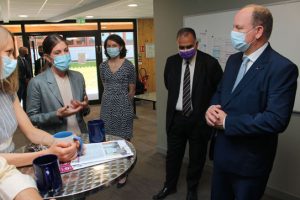
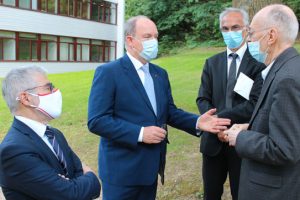
Friday 11 June 2021, H.S.H. Prince Albert II of Monaco came to the Institut des Hautes Etudes Scientifiques, along with Patrice Cellario, the Principality of Monaco’s Minister of Interior.

Friday 11 June 2021, H.S.H. Prince Albert II of Monaco came to the Institut des Hautes Etudes Scientifiques, along with Patrice Cellario, the Principality of Monaco’s Minister of Interior.

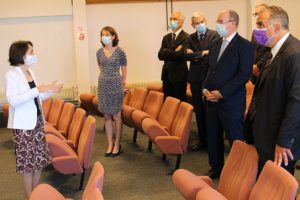
After having been formally greeted by Marwan Lahoud, President of IHES, Emmanuel Ullmo, Director of IHES, Alexander Grimaud, Sub-prefect of the district of Palaiseau and Jean-François Vigier, Mayor of Bures-sur-Yvette, they met three junior researchers currently at the Institute:

Visite de SAS le Prince Albert II de Monaco, 11 juin 2021, IHES

– Veronica Fantini, an Italian mathematician specializing in geometry and mathematical physics, is currently a visitor at IHES, where she will start a post-doc in September;

Vasilisa Nikiforova, a Russian post-doc in theoretical physics;

Alex Takeda, a Brazilian post-doc working on topics related to algebraic geometry and mathematical physics.

Visite de SAS le Prince Albert II de Monaco, 11 juin 2021, IHES

In the main scientific building of the Institute, H.S.H. Prince Albert II of Monaco was then able to discuss with Fanny Kassel, mathematician, a CNRS researcher based at IHES, and one of her PhD students, Balthazar Fléchelles. The Institute is thus part of a larger mathematical and scientific community: a founding member of Université Paris-Saclay, it works closely with several partners, including CNRS (the French National Research Center).

Visite de SAS le Prince Albert II de Monaco, 11 juin 2021, IHES

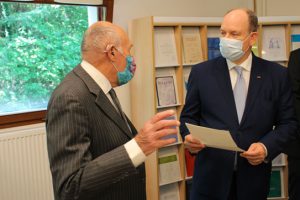
H.S.H. Prince Albert II of Monaco and Patrice Cellario also visited the IHES library, where they were able to greet David Ruelle, a physicist and permanent professor until 2000 and now professor emeritus at IHES, winner of the Albert 1er de Monaco prize in 1979, awarded by the Academy of Sciences.

Visite de SAS le Prince Albert II de Monaco, 11 juin 2021, IHES

Finally, before going to lunch, they met Luc Illusie, a mathematician specializing in algebraic geometry, who was on site for the conference organized in his honor on the occasion of his 80th birthday (81st in fact due to the pandemic!) from 8 to 11 June. Luc Illusie is a precious and faithful member of the Institute’s community: he attended the famous A. Grothendieck’s Seminar during IHES’ first years.

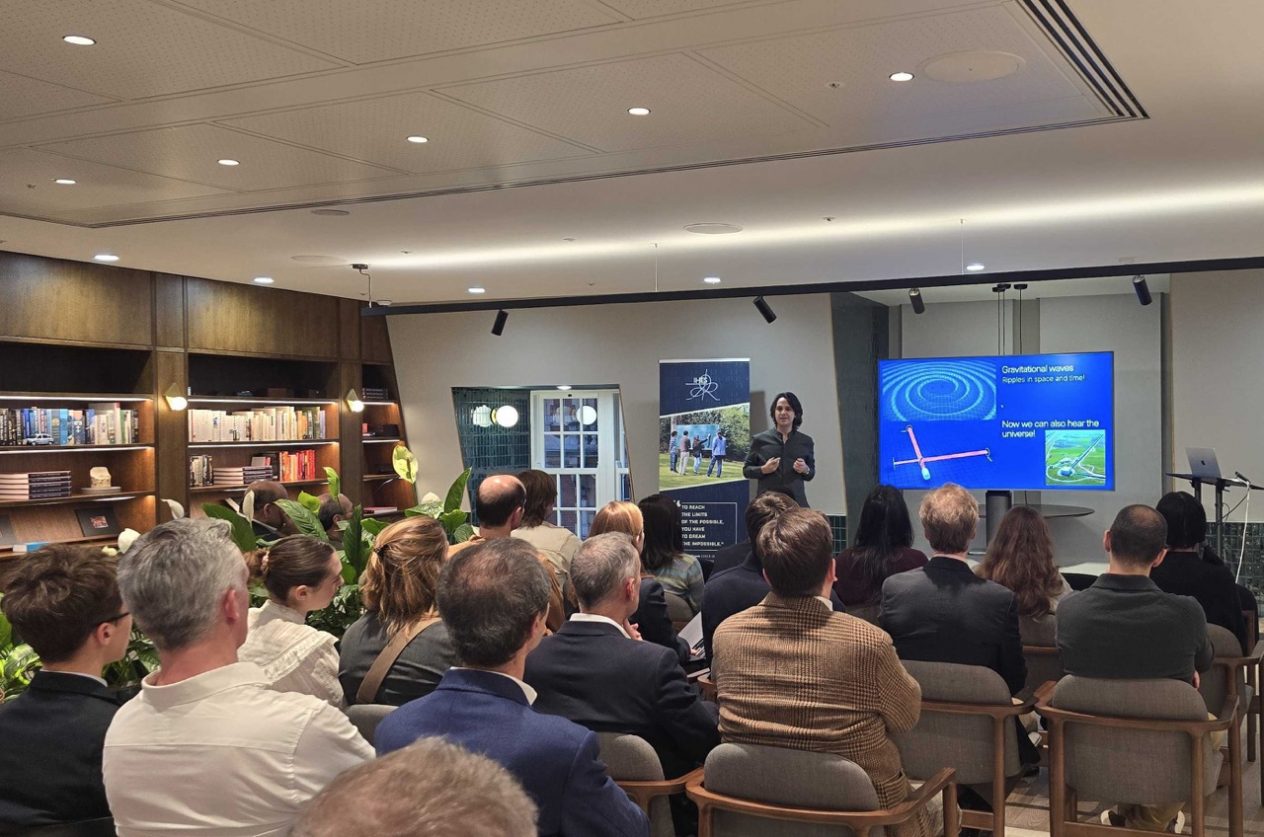
After having had lunch at the Institute’s cafeteria, H.S.H. Prince Albert II of Monaco and Patrice Cellario went to the Marilyn and James Simons Conference Center, where Thibault Damour, a physicist and permanent professor at IHES, gave a talk on gravitational waves. A good opportunity to get a sense of the scientific progress made since Albert Einstein’s first scientific work on this topic, with the most recent observational breakthroughs and their theoretical basis.