On the Proof of the Geometric Langlands Correspondance

In this text, Dennis Gaitsgory, holder of the Israel Gelfand Chair in Mathematics at IHES, explains certain aspects of the geometric Langlands correspondence.

Dennis Gaitsgory, holder of the Israel Gelfand Chair in Mathematics at IHES, supported by Squarepoint Foundation, and Sam Raskin, a regular visitor at IHES, lead a team of mathematicians who recently provided a proof of the unramified geometric Langlands conjecture in a series of five papers, totaling over 800 pages. Part of this work was carried out during numerous simultaneous visits by the authors to IHES. In the text below, Dennis Gaitsgory explains certain aspects of the geometric Langlands correspondence.
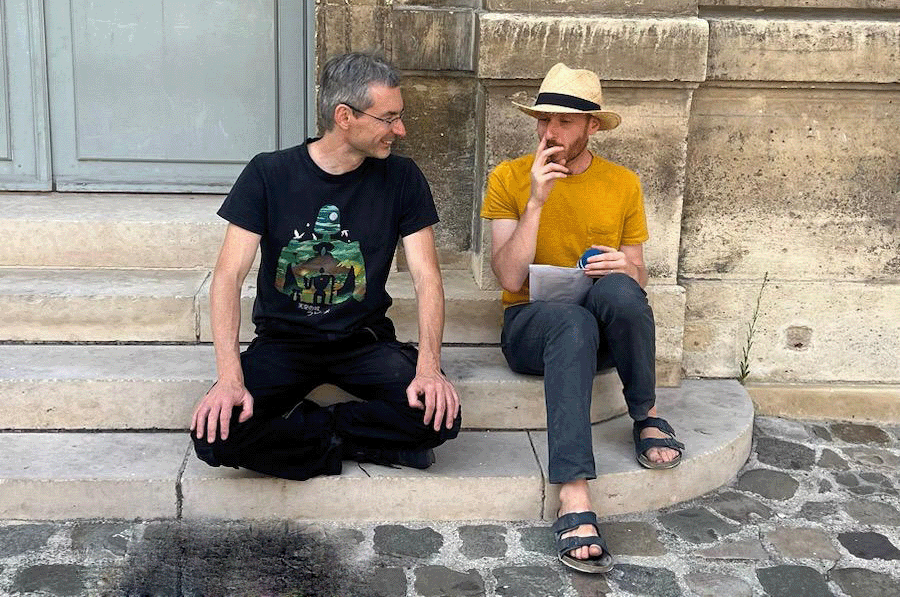
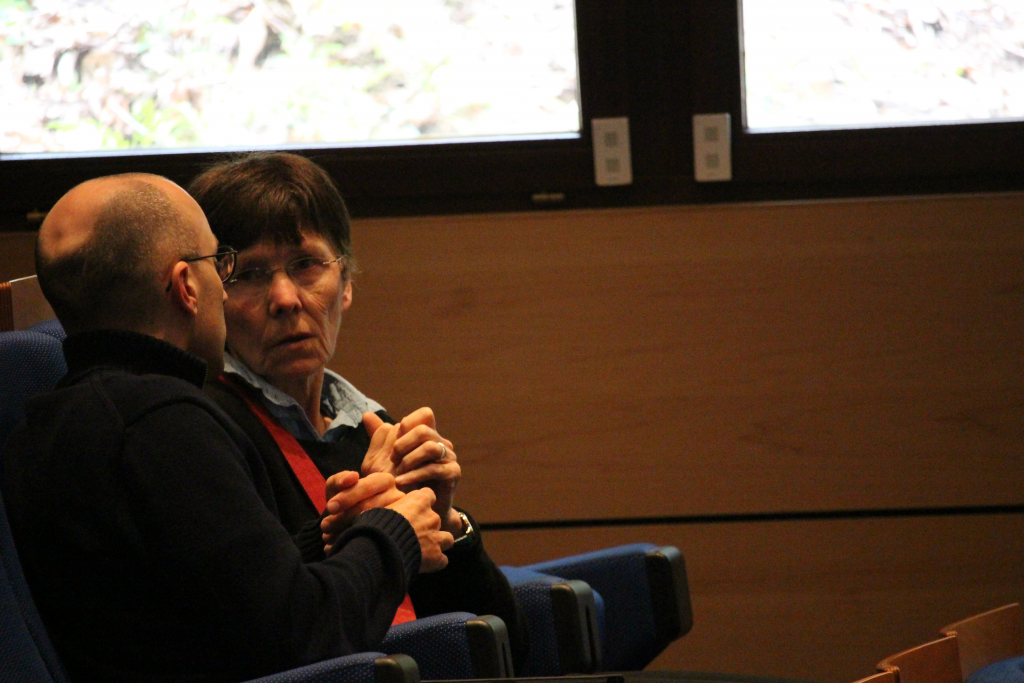
Dennis Gaitsgory and Sam Raskin in Paris. © Natasha Bershadsky

“The Langlands program (both classical and geometric) stems from a principle first articulated by Israel Gelfand, who identified basic symmetries—i.e., simple Lie groups (or, more generally, reductive groups)—as one of the pillars of modern mathematics.

Gelfand realized that pairing instances of these basic symmetries with a field of dimension 1, a basic input in number theory, often generates intriguing mathematical objects and questions.

One such pairing is that of a reductive group with a function field (or number field), resulting in an object known as the automorphic space. In the 1960s, Robert Langlands discovered an involution defined on the set of basic symmetries, allowing for a new way of coupling these data. This pairing is now known as the classical Langlands correspondence, which relates number theory to geometry and representation theory.

The geometric Langlands correspondence, on the other hand, arises from pairing a reductive group with a Riemann surface (or its algebraic-geometric incarnation, i.e., an algebraic curve over a given ground field)—a geometric object that can be visualized as a sphere with a certain number of handles.

There are three different settings for the geometric Langlands correspondence, which are closely related but distinct:

1. Over the algebraic closure of a finite field with l-adic coefficients (in this case, there is a direct link to the classical Langlands correspondence over function fields);
2. Over the complex numbers, in the Betti setting;
3. Over an arbitrary field of characteristic 0, in the de Rham setting.

In all these settings, the geometric Langlands correspondence gives rise to the following two objects.

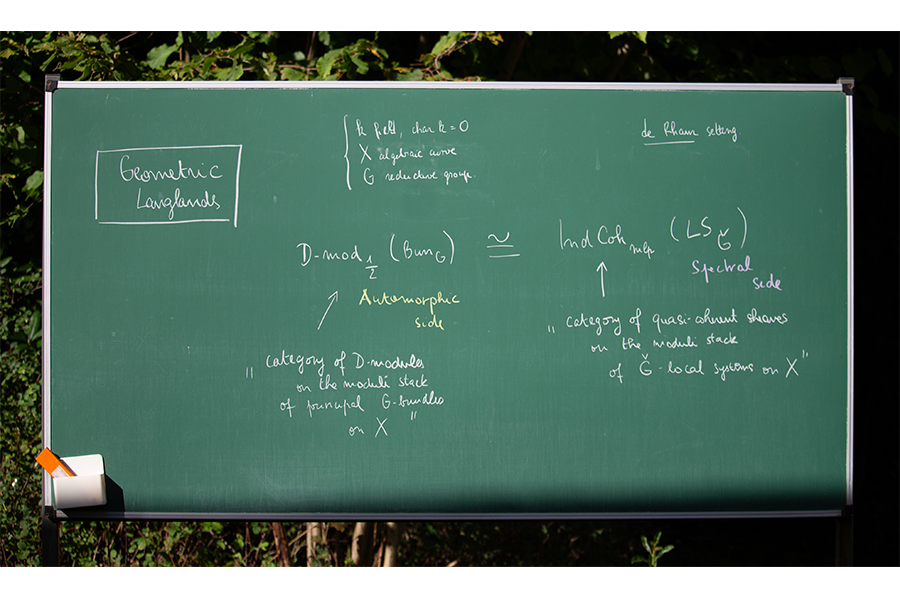
On the automorphic side, we get the moduli space of principal G-bundles on the Riemann surface (or the algebraic curve), while on the spectral side, we get the moduli space of local systems (with respect to the Langlands dual group) on the same Riemann surface (or algebraic curve).

These two geometric objects are not isomorphic—there is no direct relation between them. The goal of the geometric Langlands program is to establish a relationship between these objects. This is achieved via an equivalence of certain categories, which I will now describe.

On one side, we consider the category of D-modules on the moduli space of principal G-bundles on the Riemann surface (or algebraic curve). On the other side, we consider the category of quasi-coherent sheaves on the moduli space of local systems (with respect to the Langlands dual group) on the Riemann surface (or algebraic curve).

In our work, we proved that, in the unramified case, these two categories are equivalent.

In the setting most closely related to the classical Langlands program—working over the algebraic closure of a finite field with l-adic coefficients—we discovered that the appropriate category to consider is the category of l-adic sheaves with nilpotent singular support. The significance of this category was recognized early on by Gérard Laumon in 1987, but it remained dormant for a long time and was rediscovered by David Ben-Zvi, David Nadler and Zhiwei Yun in the topological context, which our work was inspired by.

On the spectral side, the challenge was to make sense of the stack of local systems; a priori it is not clear what it means to vary l-adic local systems in algebro-geometric families.

The equivalence between these two categories has not been shown in full generality, but if one accepts it, we have shown that one can work one’s way back to the classical setting taking the trace of the Frobenius endofunctor. This gives an isomorphism of vector spaces, which is in some sense the best wish of Langlands as it allows one to completely describe the space of automorphic functions in terms of the spectral side. It is the space of sections of the dualizing sheaf on the moduli space (and not simply the space of functions, as one might have naively guessed).

Let me now say a few words about the techniques we have developed in the last 30 years while working on the proof the geometric Langlands correspondence.

These tools emerged as we tried to encompass two historical approaches to proving the geometric Langlands correspondence.

On one side, Vladimir Drinfeld discovered an explicit way to pass from the spectral side to the automorphic side, arriving at what is known as the Whittaker model, from which one could hope to descend to the automorphic space. This approach was further developed by Laumon.

On the other side, Alexander Beilinson and Drinfeld attempted to prove the geometric Langlands correspondence using techniques of localization of Kac-Moody representations onto the moduli space of bundles, drawing on ideas from conformal field theory and geometric representation theory.

In our work, we sought to generalize and integrate both approaches, constructing categories that encompass the classical objects considered initially.

Ultimately, we played both approaches against each other to provide a proof of the (unramified) geometric Langlands conjecture. This idea came to me about a year before Laumon’s 60th birthday, and I first presented my strategy of proof at his birthday conference. Around that time, in a joint work with Dima Arinkin, we gained a clear understanding of the exact statements needed to prove the geometric Langlands correspondence.
In the future, my team and I hope to develop the ramified version, which would provide insight into the relationship one might expect in the number field case.”

Photo credit for the cover picture: The Oberwolfach Photo Collection

IHES Exceptional Event in Monaco

On July 3, 2024, IHES visited Monaco to celebrate its unique model of free research and organized an exceptionnal event aboard Archimedes, the yacht of Marilyn and Jim Simons, the Institute’s major donors.

This special event was held under the High Patronage and in the presence of Prince Albert II of Monaco. Marilyn Simons personally welcomed the Institute’s supporters from around the world on Archimedes. IHES’ major donor thanked the Institute’s guests and invited them to support IHES and contribute to the Friends of IHES endowment fund in the United States, established by Marilyn and Jim Simons in 2022, in addition to the existing endowment fund of the Institute in France.

Organized in collaboration with the Prince Albert II of Monaco Foundation, this event also served as an opportunity to pay tribute to Jim Simons, who passed away on May 10, 2024. Marwan Lahoud, the President of IHES, expressed the Institute’s immense gratitude to Jim Simons for all the support he provided to IHES, and more generally to mathematics and fundamental research. Pierre-André Chiappori, the Minister of Finance and Economy of Monaco, also paid tribute to Jim Simons, whom he had the opportunity to know during his years as a professor of economics at Columbia University.

Laure Saint-Raymond, a Permanent Professor at IHES and Director of the Mathematics Institute for the Planet Earth, gave a talk intitled “Polar Expeditions: The Mystery of Dead Water” during the evening.

IHES is delighted to have celebrated science and fundamental research in the presence of the Sovereign, following his visit to the Institute in June 2021.

From left to right: Emmanuel Ullmo, Director of IHES, Prince Albert II of Monaco, Marwan Lahoud, President of IHES.

Hugo Duminil-Copin participates in University Paris-Saclay’s astrophysics summer school at the Haute-Provence Observatory

From July 15 to 20, 2024, IHES Permanent Professor Hugo Duminil-Copin, recipient of the 2022 Fields Medal, visited the Haute-Provence Observatory (OHP) in Saint-Michel-l’Observatoire to participate in the annual astrophysics summer school of the University of Paris-Saclay.

From July 15 to 20, 2024, IHES Permanent Professor Hugo Duminil-Copin, recipient of the 2022 Fields Medal, visited the Haute-Provence Observatory (OHP) in Saint-Michel-l’Observatoire to participate in the annual astrophysics summer school of University Paris-Saclay.

This summer school, organized by Martine Chane-Yook, Hervé Dole, and Cateline Lantz from Université Paris-Saclay’s Institut d’Astrophysique Spatiale (IAS), aims to introduce undergraduate and first-year master’s students in physics to modern methods of astrophysical data collection and analysis. During the school, students use the various advanced instruments and facilities of the Observatory, including a 1.2m and a 0.8m telescope for imaging and photometry, as well as astronomical refractors, cameras, and infrared spectrometers.

© OSUPS / Hervé Dole

OHP is a prominent site for French and European astronomy. The large telescope and the “Elodie” spectrograph notably enabled the discovery of the first exoplanet in 1995 by Michel Mayor and Didier Queloz, who were awarded Nobel Prize in Physics for their discovery in 2019 and are colleagues of Hugo Duminil-Copin at the University of Geneva. “I have always been passionate about astrophysics, and I still remember the Nobel Prize announcement for the discovery of 51 Pegasi b five years ago. It is exciting to see the instruments that led to its discovery in real life. The observations and interactions with the students have taught me a lot about how physicists explore our universe,” says Hugo Duminil-Copin.

For the students, work mainly takes place at night, with observations in small groups from 8:30 PM to 5:00 AM. With the collected data, they contribute to a joint project using the 1.2m telescope, aiming to cover a large area of the sky in multi-color imaging, similar to the major astrophysical survey projects such as EUCLID conducted from space or the ground in recent years.

Unlike the OHP telescopes, Euclid is a satellite telescope designed to map the extragalactic sky. Hervé Dole, professor in physics at IAS, explains, “For now, we only know about a tiny part of our universe, but Euclid will allow us to collect data on billions of galaxies!” Thanks to the images and data collected by Euclid, scientists hope to learn more about the mysterious dark matter that makes up more than 25% of our universe. On this matter, and as part of the OHP’s Astro Summer lecture series, Hervé Dole and Hugo Duminil-Copin gave a joint public lecture on Wednesday, July 17, entitled “EUCLID and the Dark Side of the Universe”.

© OHP

Throughout the week, students were able to observe various objects of interest to astrophysicists, including trans-Neptunian objects, asteroids, comets, a quasar (the bright nucleus of a distant galaxy), several exoplanets, nebulae, as well as star clusters and galaxies.

In addition to the scientific work accomplished, the summer school provided an excellent opportunity for students to informally discuss their backgrounds, experiences in academia, and future career possibilities.

© Hervé Dole

Publication of the 2023 Annual Report

The 2023 Annual Report is now available online, with an editorial by IHES President Marwan Lahoud.

The 2023 Annual Report is now available online. Read the editorial by IHES President Marwan Lahoud below.

“When Léon Motchane founded IHES in Paris in 1958, he was absolutely convinced of the vital role fundamental scientific research played in contemporary society, and in particular, the rebuilding of France and Europe. Drawing inspiration from the Institute for Advanced Study in Princeton, Léon Motchane enjoyed support and advice from the scientists there, and especially its director, Robert Oppenheimer, a member of the IHES Scientific Council until his passing in 1967. From the very start, international scientific cooperation and a quest for borderless research were the two mainstays of IHES.

Aware of its history and the responsibility it entails, IHES welcomed the first meeting of support for the creation of the new International Centre for Mathematics in Ukraine (ICMU) in January 2023. Founded in November 2022 by a group of Ukrainian mathematicians gravitating around Masha Vlasenko and Maryna Viazovska, 2022 Fields medalist and former IHES postdoctoral researcher, ICMU aims to preserve mathematical research in Ukraine, and promote the emergence of scientific talent.

As is the case for IHES, ICMU has also included the values of scientific excellence and academic freedom in its statutes. And now, in the same way that IHES received support from IAS as the former was starting out, the Institute is proud to help launch the new ICMU. In addition to guidance on governance, several IHES scientists have become personally involved in the project, including Ahmed Abbes and Jean-Pierre Bourguignon, former IHES Director and now Honorary Professor, who was elected the first member of the ICMU Board of Directors.

Such commitments suggest lasting relationships between IHES and ICMU, as well as sustained scientific discussions. These are milestones in the life of an institute, as shown by IHES’ experience in the United States. To this day, a majority of IHES invited researchers come from American institutions, and the Institute can count on the loyal support of its partners and donors in the US. The unparalleled success of the Friends of IHES New York Gala in November 2023 is a perfect example. More than 1.2 million dollars was raised during a wonderful evening with an enchanting mix of jazz and physics. I would like to take this opportunity to warmly thank all IHES sponsors, as well our extended community of scientists, staff, Board members and friends of the Institute, who contributes to the sustainability of its model of curiosity-driven research – a source of inspiration for those who share these values.”

Photo credit: Chris Peus / IHES

Five-year Anniversary of the Gretchen and Barry Mazur Chair

2024 marks the five-year anniversary of the Gretchen and Barry Mazur Chair. This Chair, reserved for a mathematician visiting IHES, is endowed by gifts from Margaret and William R. Hearst III made to Friends of IHES, the partner organization of IHES in the United States.

2024 marks the five-year anniversary of the Gretchen and Barry Mazur Chair. This Chair, reserved for a mathematician visiting IHES, is endowed by gifts from Margaret and William R. Hearst III made to Friends of IHES, the partner organization of IHES in the United States. William R. Hearst III, who holds a bachelor’s degree in mathematics from Harvard, chose to name the Chair as a testimony to his friendship with the couple and his admiration for his former mathematics professor.

Barry Mazur (c) IHES

Gretchen and Barry Mazur have been coming to IHES since 1962, the year the Institute first moved to its current location in Bures-sur-Yvette, south of Paris. Barry recalls: “When I first came to IHES, I knew almost no mathematics. I am grateful that I learned so much and felt the inspiration of this very special Institute. Gretchen and I are truly honored to be associated with one of its Professors’ Chairs.” Initially interested in differential topology, Barry was drawn to algebraic geometry by Alexander Grothendieck, a Permanent Professor in Mathematics at IHES from 1958 to 1970, whose theory of schemes laid the foundations for modern algebraic geometry. In his paper “Modular Curves and the Eisenstein ideal”, published in “Les Publications mathématiques de l’IHES” in 1977, Barry successfully used Grothendieck’s ideas and methods to solve problems arising in number theory.

“Barry’s work truly revolutionized arithmetic geometry. Without it, Andrew Wiles’ proof of Fermat’s Last Theorem would have been impossible. It is one of the most seminal papers I have ever read,” says Emmanuel Ullmo, mathematician and Director of IHES. Alongside his work on the classification of rational points and the arithmetic of the Eisenstein ideal, Barry also made major contributions to the theory of deformations of Galois representations, Iwasawa theory, and Diophantine stability. For his achievements, Barry was awarded numerous prizes, including the Cole Prize, the National Medal of Science, and the Chern Medal.

Alexander Goncharov, first holder of the Gretchen and Barry Mazur Chair from 2019 to 2022, was deeply honored by his appointment: “I first met Barry in the 1990s at Harvard, and his universal knowledge, not only in mathematics but also in philosophy and poetry, has inspired my work ever since.” During his time at IHES, Alexander Goncharov particularly enjoyed discussing mathematics with many people at IHES, and especially Maxim Kontsevich, whom he first met as a student in Israel Gelfand’s seminar at Moscow State University. Together, they have notably worked on a non-commutative generalization of cluster varieties, objects appearing in geometry, representation theory, and mathematical physics.

Find out more about Alexander Goncharov in the interview IHES conducted with him in 2019.

Following Alexander Goncharov, IHES is delighted to announce Curtis T. McMullen as the new holder of the Gretchen and Barry Mazur Chair. Just like Gretchen and Barry, Curtis has a long history with the Institute. He first visited IHES in 1984 as a graduate student to work with Dennis Sullivan, a Permanent Professor in Mathematics at IHES from 1974 to 1998. During his visit, Curtis McMullen met Steve Smale, who ended up giving him his thesis problem on solving polynomial equations by iteration. For his doctoral work and subsequent research on Riemann surfaces, dynamics and hyperbolic 3-manifolds, he was awarded the Fields Medal in 1998. His more recent research has ranged from the geometry of numbers to the dynamics of billiards in polygons. From the mid 1980’s to the mid 1990’s, Curtis regularly visited IHES over the summer. He is enthusiastic to return to the unique scientific community at IHES and to connect with colleagues in the Paris region.

Curtis T. McMullen (c) Marianna Cook

“Alexander Goncharov and Curtis T. McMullen are setting very high standards for future holders of the Gretchen and Barry Mazur Chair, and we are glad to see that in its first five years the Chair was able to attract such incredible mathematical talent to IHES. The Institute is deeply grateful to Margaret and William R. Hearst III for their support and the funding of this Chair,” concludes Emmanuel Ullmo.

Scientific Breakfast with Yilin Wang in London

Following the scientific breakfast organized in July 2023 with Thibault Damour, theoretical physicist and Professor Emeritus at IHES, who gave a talk entitled “Proust and Einstein: In Search of Time,” the Institute returned to the British capital in June 2024.

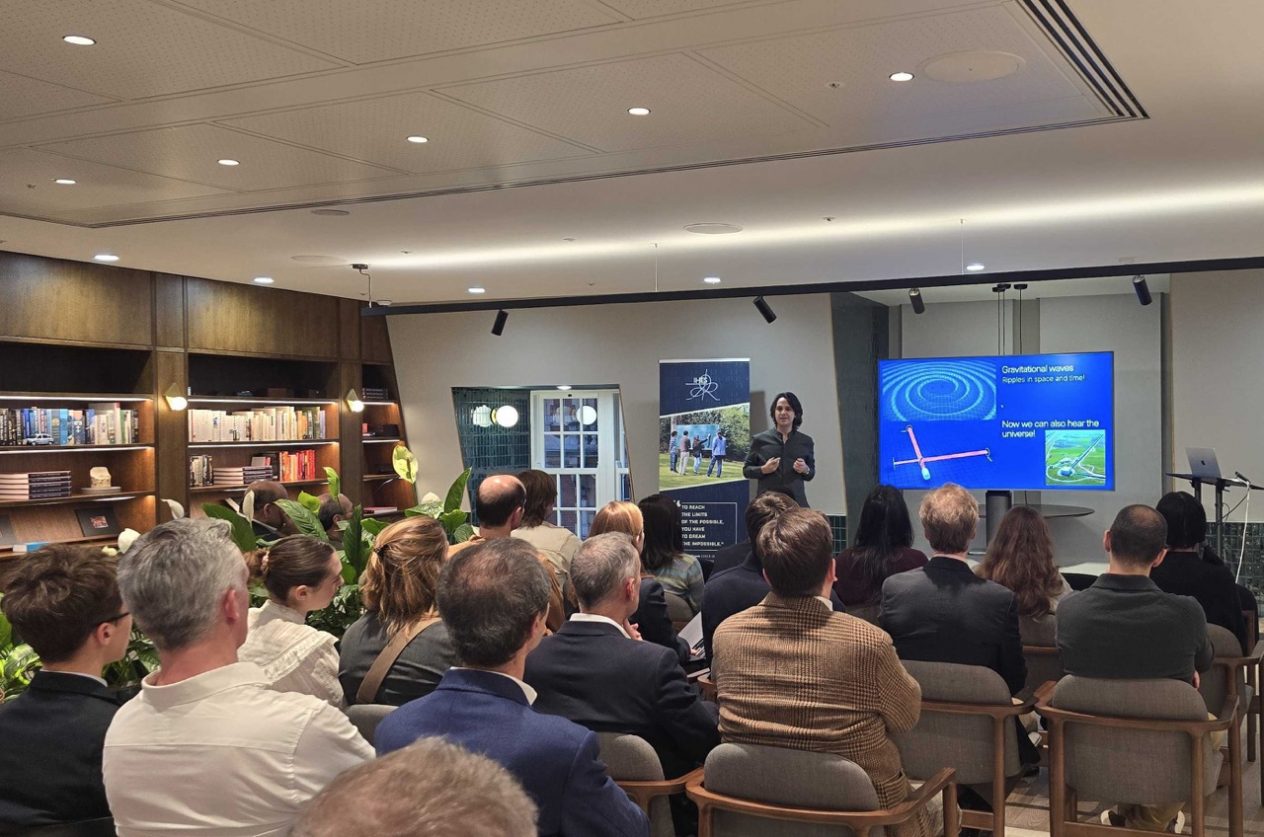
The Institute gathered its London community on June 19th for a scientific breakfast with Yilin Wang, junior professor of mathematics at IHES since 2022. Yilin Wang, introduced by Rama Cont, Professor of Mathematics and Chair of Mathematical Finance at the University of Oxford and regular visitor at IHES, proposed a talk entitled “Fractals in Nature and Mathematics.” More than fifty friends of the Institute gathered to discover the fractals that surround us, as well as their place in mathematical research.

This event was organized with the support of the Department of Higher Education, Research, and Innovation of the French Embassy in the United Kingdom for the second year in a row, thus strengthening the collaboration between the Institute and the French Embassy in the United Kingdom.

Julio Parra-Martinez joins IHES as a Permanent Professor in Physics

Julio Parra-Martinez joined IHES as a Permanent Professor in Physics on May 7th, 2024. His research interests lie in quantum and effective field theory.

Julio Parra-Martinez joined IHES as a Permanent Professor in Physics on May 7th, 2024.

After completing his undergraduate studies in physics with highest honors at the University of Valencia, Spain, and spending a year abroad at Imperial College in London, Julio Parra-Martinez pursued Part III of the Mathematical Tripos at Cambridge. He completed his PhD in 2020 under the supervision of Zvi Bern at the University of California, Los Angeles. Following three years as a Sherman Fairchild Postdoctoral Fellow at the Walter Burke Institute for Theoretical Physics at Caltech, Julio Parra-Martinez became an Assistant Professor of Physics at the University of British Columbia in Vancouver, Canada, in 2023.

His research interests lie in quantum and effective field theory. Continuing work initiated during his PhD, Julio Parra-Martinez is using scattering amplitudes to understand the behavior of black holes – objects not intuitively thought to relate to the quantum world. However, under certain conditions, the separation of scales allows one to think of black holes as point particles, enabling the application of powerful methods from particle physics. By adapting these techniques to the gravitational setting, Julio is shedding new light on our understanding of the two-body problem in general relativity, an interest he shares with Thibault Damour, Professor Emeritus in Physics at IHES, who introduced the “Effective One Body Method” to calculate the orbital motion and gravitational radiation of coalescing black hole binary systems.

In 2018, I urged experts in quantum scattering amplitudes to apply their techniques to the gravitational interaction, and radiation, of binary black holes. To my great satisfaction, this has led to many impressive new results, and Julio has been one of the leading contributors to this new field of research. I am thrilled he joined IHES,” comments Thibault Damour.

Julio Parra-Martinez says his scientific inspiration is mostly triggered through interaction. To him, meeting and working with people is an essential part of research. With its large visitor program, welcoming around 200 scientists a year, he considers IHES to be the perfect place to carry out his work. “If I am at the Institute, it is to interact with others. My door is always open, and I am particularly fond of the daily social events at IHES, such as lunch and tea time. I learn something new from my colleagues and the institute’s visitors every day.”

At the Institute, Julio Parra-Martinez experiences the right balance between the excitement he gets when exchanging new ideas with his peers and the calmness he needs to step back and understand things more deeply. “At IHES, I feel like I can be a postdoc forever. I have total freedom of research and no administrative duties whatsoever.” In the future, he hopes to contribute to the development of physics at the Institute, notably by attracting more PhD students and postdocs.

Emmanuel Ullmo, Director of IHES, says: “We are delighted to have Julio at IHES. At age 31, he is the future of physics at the Institute, and we are looking forward to seeing the innovative contributions he will make to our understanding of the fundamental laws of the universe”. 

Annual High School Students’ Visit to the Institute

On Saturday, May 25th, IHES welcomed over 80 high school students, including more than 50 girls, for a visit to the Institute.

On Saturday, May 25th, IHES welcomed over 80 high school students, including more than 50 girls, for a visit to the Institute followed by lectures by IHES Junior Professor in Physics Clément Delcamp and Xenia Flamm, a postdoctoral researcher in mathematics.

This yearly visit to the Institute, organized by school inspectors Xavier Gabilly, Pierre Michalak, Evelyne Roudneff, and Christine Weill, gives students passionate about science an opportunity to dive into the world of fundamental research.

The event started with a tour of the Institute, including stops at the tea room, the scientific buildings, the library, and the Marilyn and James Simons Conference Center. During the visit, students learned about the history and functioning of IHES, and particularly about the importance of the IHES visitors’ program and the Institute’s famous afternoon tea, highlighting the importance of cooperation in modern science.

Students visiting IHES

The presence of wild boars in the park prevented the students from seeing the Skolem sculpture, which illustrates the sequences first introduced by the eponymous Norwegian mathematician. Luckily, they were still able to admire a real-life model of a flexahedron in the Institute’s library. This mathematical model is a constructive solution to the question of the existence of a polyhedron that can be deformed while keeping all of its faces rigid. The existence of such an object was first proven by Robert Connelly in the late 1970s while visiting IHES. The Institute’s flexahedron, designed by Pierre Deligne and Nicolaas Kuiper, has 11 vertices. Today, it is still an open question whether it is possible to construct a flexahedron with fewer than 9 vertices.

Clément Delcamp lecturing

After the tour of the Institute, the students were welcomed by Emmanuel Ullmo, the current Director of IHES, for two 30-minute lectures at the Marilyn and James Simons Conference Center. Clément Delcamp started by showing how knot theory is used in theoretical physics to design topological models of quantum computers, which are more stable and less error-prone than other models of quantum computing. Xenia Flamm then lectured on the notion of infinity in mathematics. In her presentation, she first explained how one can count the number of elements in an infinite set and then showed that there are infinite sets of different “sizes” such as the set \mathbb{Q} of rational numbers and the set \mathbb{R} of real numbers. She ended her talk by mentioning Gödel’s incompleteness theorems and the continuum hypothesis. The lively Q&A sessions after each presentation testified to the quality of the talks and the interest they sparked among the students.

Xenia Flamm lecturing

IHES warmly thanks all the participants for attending the event.

Interview with Hélène Esnault

In the week of April 22, 2024, IHES hosted a conference in honor of mathematician Hélène Esnault, a world-renowned specialist in the field of arithmetic geometry. Read our short Q&A with Hélène Esnault below.

The picture above shows Marco D’Addezio, Hélène Esnault and Alexander Petrov.

In the week of April 22, 2024, IHES hosted a conference in honor of Hélène Esnault, a world-renowned specialist in the field of arithmetic geometry. Read our short Q&A with Hélène below.

Hélène, your first scientific visit to IHES dates back to 1988. You were also a member of the IHES scientific council from 2015 to 2023. Could you tell us more about your relationship with the Institute?

I first came to IHES in the early 1980s to discuss the second part of my habilitation (“thèse d’État” at this time in France) with Pierre Deligne.

The thèse d’État consisted of two parts. The first part involved presenting one’s own research. For the second part (“deuxième thèse” in French), you were assigned a topic other than the one you were directly working on and were expected to report on the state of research in that field. The idea was to ensure that future researchers were capable of broadly understanding topics with which they were not directly familiar.

Jean-Louis Verdier had offered to be the advisor for the first part of my thèse d’État. He suggested that I go see Pierre Deligne at IHES for the second part. It was very intimidating. To my surprise, Deligne immediately agreed to be my supervisor, and I ended up working on the preservation of perversity by the vanishing cycles functor. This is a very technical subject, and I didn’t fully grasp all its subtleties back then, and perhaps still now don’t. In particular, my understanding of one point was quite vague, and Deligne feared that Ofer Gabber might challenge me on it during the defense. He explained to me how to respond to a potential question by Ofer on this point. Ofer’s question indeed came quickly, but the response Deligne had suggested helped me manage the situation. I can still see the smile on Deligne’s face at that question. His welcoming attitude, kindness, and intellectual trust have given me moments of mathematical joy throughout my career. He also helped me overcome difficult times, such as when Eckart Viehweg, my partner and later my husband, passed away in 2010. Pierre invited me to his house in Princeton, offering me his time and wonderful discussions.

Over the years, I have come to IHES several times for scientific visits, sometimes with Eckart. At the beginning, Marcel Berger was still the Director of the Institute. We were very different in many ways—we didn’t work on the same kind of mathematics, and our political and cultural views were far apart—but we got along. He even kindly invited me to dinner at his house one evening. Later, Jean-Pierre Bourguignon succeeded him as the Director of the Institute. Jean-Pierre is interested in Germany and also speaks German, which created a sense of complicity. I have always maintained good relations with the Institute. It was a pleasure for me to accept the invitation from Emmanuel Ullmo, the current Director, and from the Permanent Professors of IHES, to join the Institute’s Scientific Council in 2015.

Here, I once again met wonderful people. Let me tell you a story that illustrates this well. The physicist Slava Rychkov had offered to drive me to Bures on a Saturday morning for a Scientific Council meeting, as his apartment was not far from where I was staying. In the car, we talked about poetry and, getting carried away, we started reciting verses out loud in Russian, German, and French. It was wonderful, but we ended up missing the highway exit… We were sheepishly arriving (a little) late.

In general, I feel truly at ease at IHES. The kindness and attention of the entire staff are a ray of sunshine to me. Being able to interact with Dustin Clausen, Maxim Kontsevich and Emmanuel Ullmo who are working in fields of research close to mine, is truly a privilege and a pleasure.

We just celebrated your birthday with a conference that was very successful. We have never received so many participation requests for a scientific conference. What do you take away from this week at IHES?

First of all, that mathematics is a wonderful human adventure! As a matter of fact, mathematics has long been a collective, international endeavor. This aspect is particularly close to my heart, and I am happy to see that this diversity was visible during the conference. The role of the social and cultural background is much less significant in mathematics than in other disciplines. For me, mathematics has played a key role in my emancipation. I am always fascinated to see how mathematical activity brings together people from very different origins. It is also striking to see that mathematics transcends age. Generational barriers do not exist in mathematics! The work of young mathematicians never ceases to amaze me, and I had the immense luck to mentor my students and some young researchers at the beginning of their career. I have learned so much from them! It is also mainly thanks to my students that this conference took place, and I wish to warmly thank them for organizing this extraordinary week. I also do not forget my long-time colleagues, some of whom I have worked with for over 40 years! As mentioned earlier, our relationships go far beyond mathematics. The piano concert by Yves André on the first day of the conference is a touching testimony of these friendships that deeply moved me.

Finally, the quality of the lectures was remarkable. I think the conference showed that arithmetic geometry is a particularly dynamic field, at the forefront of mathematics. Many new methods have recently been introduced in arithmetic geometry, and their potential is yet to be fully explored.

Piano concert by Yves André at the conference in honor of Hélène Esnault

Your work with Michael Groechenig enabled Jonathan Pila, Ananth N. Shankar, and Jacob Tsimerman solve the André-Oort conjecture in 2021. What are examples of open problems in arithmetic geometry that you continue to think about today?

I would like to further understand the connections between the geometry of certain smooth projective varieties and the existence of rational points on these varieties when the base field is a C1 field (generalizing the notion of an algebraically closed field). This research program was initiated by Yuri Manin in the 1960s and marks the beginning of the exploration of interconnections between certain geometric and arithmetic properties. For example, the Lang-Manin conjecture predicts that a rationally connected smooth projective variety has a rational point over a C1 field. We have partial results for certain kinds of fields known to be C1. For instance, I proved the conjecture for finite fields in 2002. We also know that the conjecture is true over some other fields. However, we do not have an exhaustive list of C1 fields. There are very “trendy” fields conjectured to be C1, such as the field of functions of the twisted projective line or that of the Fargues-Fontaine curve.

In another area, more closely related to the methods mentioned in your question, Vikram Mehta and I proved a conjecture by David Gieseker in 2010 stipulating that a smooth geometrically simply connected projective variety over a perfect field in characteristic p does not admit non-constant stratified bundles. A conjecture by Johan de Jong predicts a similar result for isocrystals. With Atsushi Shiho, we obtained a small result in this direction, but we are still far from understanding the conjecture in its full generality. One might think there is a link between this conjecture, the Langlands program, and, hopefully, thoughts we currently develop with Michael Groechenig.

These are some questions I wish I knew more about. There are other thoughts related to my work with Moritz Kerz that I could talk about, but they are more difficult to sketch out for this interview.

Hélène Esnault and Moritz Kerz

Tribute to Jim Simons by Thibault Damour

In this text, Thibault Damour, Professor Emeritus of Physics at IHES, pays tribute to the late Jim Simons, the Institute's greatest benefactor and donor.

Writing this tribute, I’ve come to realize the profound influence of Jim Simons’ support for fundamental research and science on my daily work.

It begins early in the morning when I browse through the new preprints posted on the arXiv the night before. This platform, greatly sponsored by the Simons Foundation, provides free online access to millions of scientific articles and has become an indispensable tool in the dissemination of scientific research.

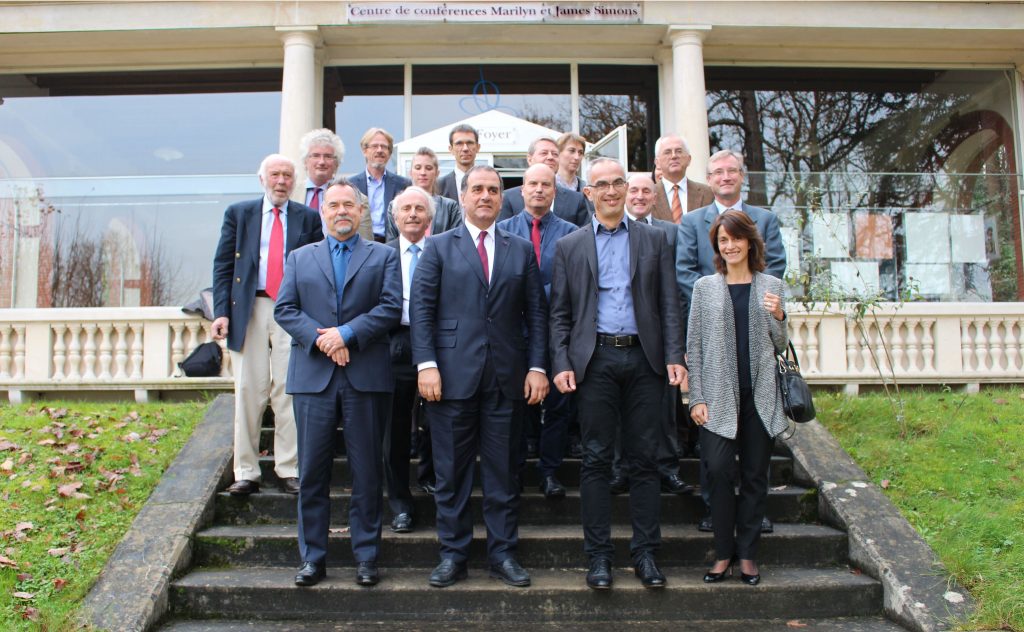
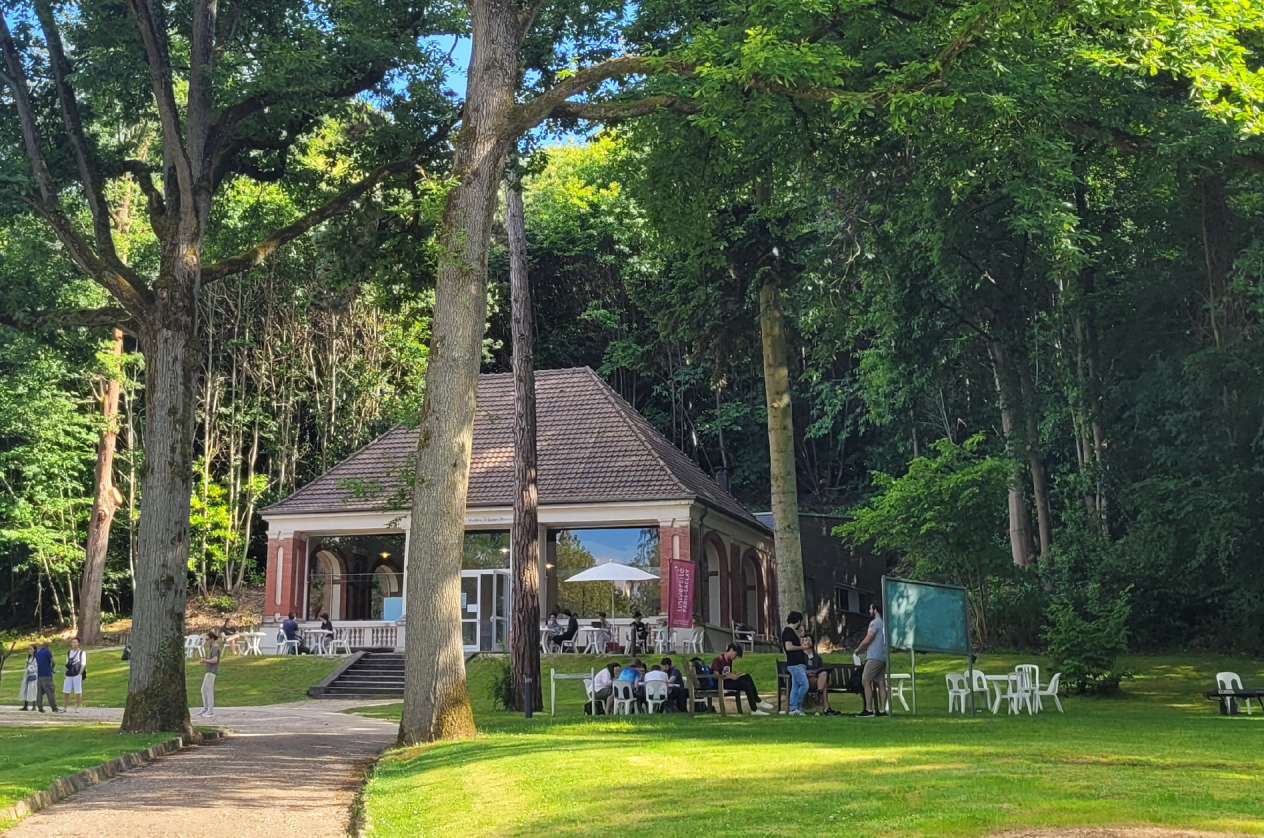
After my morning reading at home, I make my way to my office at IHES, walking by what is now called the Marilyn and Jim Simons Conference Center (pictured above). I can’t help but reflect on the history of this beautiful building, once the music pavilion of the Comar family, the previous owners of the Bois-Marie estate that now accomodates the Institute. It is in this pavilion that Alexander Grothendieck and Jean Dieudonné ran the famous Séminaire de géométrie algébrique, which played a pivotal role in establishing the Institute’s reputation. When I first arrived at IHES, the building had been converted into the library. Thanks to the generous support of Marilyn and Jim, the pavilion has been renovated and expanded to accommodate IHES’ largest lecture hall, where most seminars, conferences, and summer schools are now held year-round.

As I finally enter the scientific building of the Institute, its hallway reveals the photo gallery of IHES permanent scientists and visitors, many of whom are sponsored by the various support programs of the Simons Foundation. I, along with all other Permanent Professors, have personally benefited from the generous, unparalleled, and transformative funding provided by Marilyn and Jim to the Institute.

IHES holds a special place in fostering the creativity of scientists over the long run, and Jim will always be remembered as the most influential and visionary donor of IHES. His contributions have been instrumental in securing the Institute’s future in times of and change and uncertainty. May he rest in peace.

Thibault Damour,
Bures-sur-Yvette, May 2024

Science at the service of athletes’ performance, by Amandine Aftalion

Join us on June 13th 2024 for the new Amis de l'IHES conference presented by Amandine Aftalion

New event organised by Les Amis de l’IHES on Thursday 13 June 2024, 6:00 pm (French time) at IHES.

Amandine AFTALION, (CNRS, Centre d’analyse et de mathématiques sociales, EHESS) gave a conference in French, entitled:

“Science at the service of athletes’ performance”

Why is it better to run behind someone?
How can you best adjust your speed to achieve the best time?
It all depends on the effort provided, the energy expended and one’s motivation.
Human beings are not robots and their movements are controlled by their brain.

Amandine Aftalion will address to these questions and a few others (like: Why does a golf ball have dimples? Why does one swim better slightly underwater? ) using notions of physics and mathematics presented in a simple and enjoyable way, allowing us to better understand some of the rules to improve the sporting performance of athletes and your own.

The conference will be followed by a friendly drink and a signing of Amandine AFTALION’ s book published in 2003 (CNRS editions):
« Be a champion, 40 facts you didn’t know about sports and science »

Upload the poster

Contact: Ingrid Peeters

Tribute to Jim Simons by Emmanuel Ullmo

When I became the director of IHES in 2013, one of my challenges was to maintain the high-quality of our relationships with the Institute’s main sponsors, starting with Jim and Marilyn Simons, our greatest donors.

When I became the director of IHES in 2013, one of my challenges was to maintain the high-quality of our relationships with the Institute’s main sponsors, starting with Jim and Marilyn Simons, our greatest donors.

Jim, a brilliant mathematician and a specialist in differential geometry, knew IHES very well, which he first visited in the 1970s. On scientific matters, he had very close ties with the two directors who came before me at the Institute. Jim distinguished himself on topics directly linked to the research carried out by Marcel Berger, who was a broad spectrum Riemannian geometer and the director of IHES from 1985 to 1994. As head of the mathematics department of the State University of New York in Stony Brook, now the Stony Brook University, Jim had also been a mentor to Jean-Pierre Bourguignon, and invited him there. I come from another specialty, algebraic and arithmetic geometry, so I first knew Jim mainly as a major donor, especially as regards basic science. Which makes me even more grateful to him for the trust he placed in me, and the unfailing personal support he gave me.

Having made a considerable mark on mathematics and finance, he distinguished himself once again, this time as a philanthropist, together with Marilyn with whom he co-founded the Simon foundation. Jim wasn’t only exceptionally generous, he also became personally involved in the institutions he championed, by providing them with advice and expertise, giving them his time and introducing them to his network of contacts. In 2014, I was very honored to see Jim joining the IHES Board of Directors and taking part in our twice yearly meetings, even though they were held in the morning in France when it was still dark in New York! The Board members all remember him logging on at four o’clock in the morning, coffee in one hand, cigarette in the other. When he could, Jim even came to France to attend the Board meeting in person. It was to be his last trip to the Institute, with Marilyn, in May 22, less than two years ago.

In addition to the very significant financial support he gave IHES, he was constantly seeking to help the Institute in any way he could, both in Europe and in the United States. Readily available and always loyal, Jim and Marilyn attended all the gala dinners of Friends of IHES, our partner organization in the United States, and they personally hosted several events organized for our donors. They also took part in fundraising events in California, Boston and in London. With his trademark humor and straight talk, Jim directly approached potential supporters and encouraged them to fund us in turn. In fact, many of our donors discovered the Institute and supported us, thanks to him. On several occasions, Jim and Marilyn also pledged challenge gifts and matching gifts to IHES or Friends of IHES, with specific targets to be met for the donations to be fulfilled – a fantastic opportunity for us to extend our network and approach new donors. In doing so, they took us to another level and helped us with our philanthropy endeavors, way beyond monetary gifts.

In 2021, Jim and Marilyn joined the Friends of IHES Board of Directors, before taking over as Co-Chairs in 2022. It was in that context that Jim decided to launch an endowment fund for IHES in the United States, in addition to the Institute’s endowment fund in France, with more dynamic management from an investment committee he initially led. This project, which will have a lasting impact on the Institute, has been an instant success and is now a real boost for Friends of IHES’ fundraising operations.

In the course of his three careers as mathematician, pioneer of quantitative finance and philanthropist, Jim was a truly charismatic and extraordinary visionary. He leaves a huge gap in our community but those who knew him are also filled with gratitude. The legacy he has left is immense.